-
by sayum
05 August 2026 3:07 PM







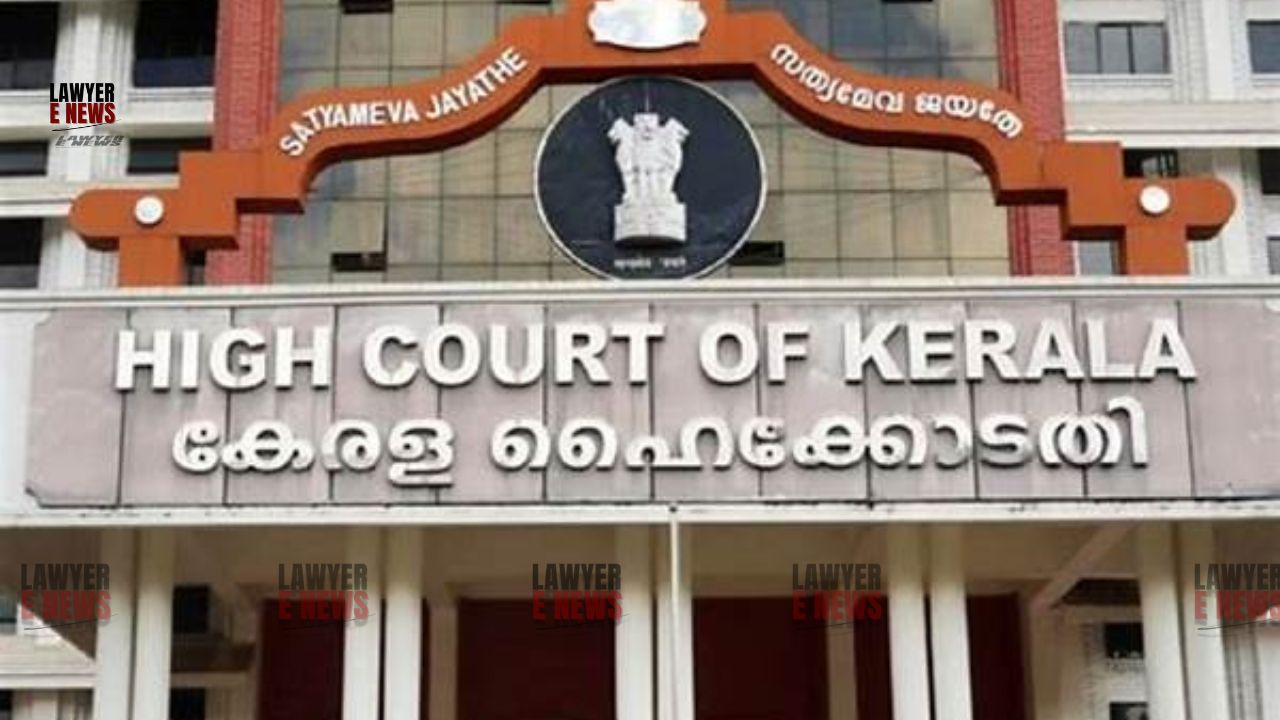
“Tantri’s Decision is Final in All Ritual Matters Unless Contrary to Law” – In a judgment that reinforces judicial restraint in matters of ritualistic practice, the Kerala High Court refused to interfere with the Guruvayur Devaswom Managing Committee’s decision to shift the venue of the ‘Illam Nira’ ceremony from the Namaskara Mandapam to the area near the temple’s Flag Mast (Kodimaram).
The Bench of Justice Anil K. Narendran and Justice Muralee Krishna S. held that: “Whether Illam Nira is a religious ceremony or only an offering is a disputed issue that must be established by evidence in a Civil Court. Such factual adjudication is beyond the scope of a writ petition under Article 226 of the Constitution.” [Para 39]
The ruling came in the case of P.C. Krishnan & Others v. Guruvayur Devaswom Managing Committee & Others, where the petitioners—members of the temple's hereditary Tantri family—challenged the change in venue of the annual Illam Nira ceremony, asserting it was a time-honoured religious ritual whose sanctity would be compromised by the relocation.
The petitioners, nine male members of the Puzhakkara Chennas Mana, approached the High Court under Article 226, claiming that ‘Illam Nira’—the ceremonial offering of the first yield of paddy (Nelkathir)—had been performed at the Namaskara Mandapam since time immemorial, and that shifting it outside the Naalambalam to the Kodimaram area would undermine the ritual’s spiritual sanctity.
The Devaswom Committee, however, resolved to shift the venue through Resolution No. 49 dated 07.08.2024, citing practical constraints such as limited space, increasing number of devotees, and the growing scale of offerings.
Supporting the Committee's decision, the Tantri of the temple, P.C. Dineshan Namboodirippad, issued an opinion on 05.08.2024, stating:
“I have sought Devahitham and found that the shifting of the venue of Illam Nira from Namaskara Mandapam to the area near Valiya Balikkallu is not against the wishes of Lord Guruvayoorappan.”
On the Nature of ‘Illam Nira’: Ritual or Offering?
The petitioners contended that “Illam Nira is not just an offering but a sacred ritual intrinsic to the spiritual architecture of the Guruvayur Temple.” They described the Namaskara Mandapam as the “throat (Jeevanadi) of the Kshetrapurusha”, essential to preserving the temple’s Chaithanyam (divine energy).
The Tantri and the Devaswom Committee disputed this, submitting that ‘Illam Nira’ is not part of the daily pooja schedule, nor is it Nivedyam offered to the deity. Instead, it involves a Lakshmi Pooja performed by the Melshanthi, and is distinct from ‘Thriputhari’, which is the recognised ritual connected with harvest and nivedyam.
“Illam Nira is only an offering performed once a year. It is not a ritual connected with temple nithya poojas,” the Tantri stated in his affidavit. [Para 12]
On Maintainability under Article 226:
The Court noted that the dispute involved highly fact-intensive questions about religious customs and ceremonies, which cannot be adjudicated without evidence, witnesses, and full-fledged trial.
Citing the Supreme Court's ruling in Srivari Daadaa v. Tirumala Tirupati Devasthanams, the Court observed:
“Whether any ritual or seva is being performed in a prescribed way or whether there is any deviation from established practice would raise disputed questions of fact which cannot be decided in a writ petition.” [Para 33]
Accordingly, the High Court concluded: “In a writ petition filed under Article 226, such a disputed question of fact that has to be decided on evidence cannot be finally adjudicated.” [Para 39]
On the Authority of the Tantri under Section 35 of the Guruvayur Devaswom Act:
The Court reinforced the finality of the Tantri’s decision on religious matters under Section 35(2) of the Act, which provides:
“The decision of the Tantri on all religious, spiritual, ritual or ceremonial matters pertaining to the Devaswom shall be final, unless such decision violates any provision of law.”
Finding that the Tantri’s decision was neither arbitrary nor contrary to any law, the Court stated:
“Since the decision of the Managing Committee was taken after obtaining the opinion of the Tantri, even if the Illam Nira ceremony is a religious act or only a Vazhipadu, there is no statutory violation in that decision.” [Para 40]
Upholding the Committee’s decision, the Court refused to issue any direction against the venue shift:
“We find no reason to interfere with Ext.R1(a) decision taken by the 1st respondent Guruvayoor Devaswom Managing Committee to shift the venue of Illam Nira from Namaskara Mandapam to the place near the Flag Mast.” [Para 40]
Importantly, the Bench clarified: “We have not expressed anything regarding the dispute as to whether Illam Nira is a religious ceremony or only an offering, which is an issue that has to be decided only by a competent Civil Court.” [Final Para]
This ruling strikes a balance between religious autonomy, devotee convenience, and judicial deference, reinforcing a long-standing legal principle that rituals and customs are best interpreted by religious authorities, and not the courts—unless civil rights or laws are violated.
It reiterates that the Tantri is the spiritual authority in the temple and that courts must not rush into matters requiring religious expertise or interpretation of faith-based customs.
Date of Decision: 29 July 2025