-
by sayum
30 August 2026 7:03 AM







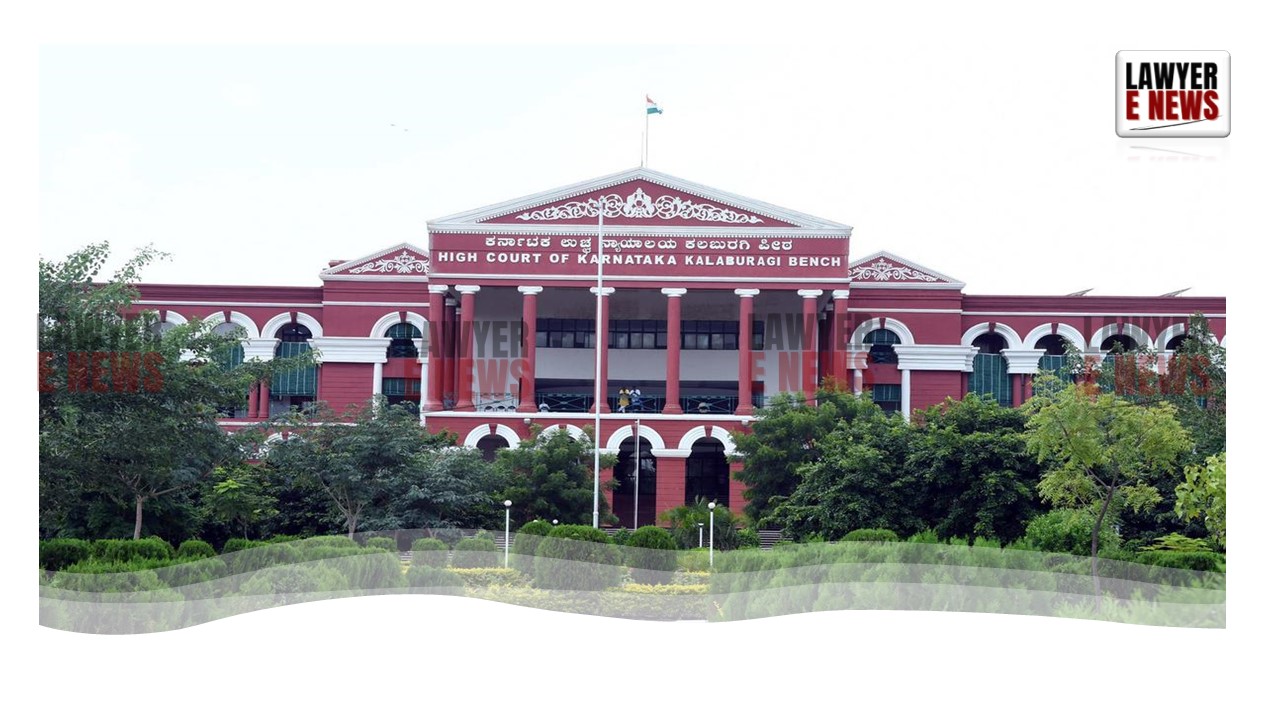
“Judicial Verdict Overrides Committee Summons”: the Karnataka High Court delivered a decisive judgment reinforcing the supremacy of judicial determinations over legislative committee interventions. Justice Suraj Govindaraj, while allowing Writ Petition filed by C. Bhavani @ Hamsa, quashed the direction issued by the Petitions Committee of the Karnataka Legislative Council concerning alleged encroachment of a Rajakaluve and public road.
The High Court’s ruling came in the backdrop of the Division Bench’s conclusive finding in the case of Shriram Properties Pvt. Ltd. v. State of Karnataka & Others (WP No.47747/2017 and connected cases, decided on 19.01.2021), where it was categorically held that no encroachment existed on the said land. Justice Govindaraj succinctly stated, “That being so, the finding of the Division Bench of this Court, though subsequent to the direction issued by Respondent No.1, would be binding even on the Committee.”
The case revolved around directions issued by the Petitions Committee on 8th March 2017 based on a complaint by a third-party, one Sri C. Ramesh, alleging encroachment on public pathways at Sy.No.83/2, Byatarayanapura village. The petitioner, represented by Advocate Shivaprasad Shantanagoudar, pointed out that the same allegations had already been adjudicated before a Division Bench, where the court had thoroughly examined records, conducted spot inspections, and relied on the report of the Assistant Executive Engineer, BBMP, who unequivocally stated that there was “no existence of any Rajakaluve in Sy.No.83/2.”
The High Court remarked, “When the Division Bench has categorically concluded that no encroachment exists, any contrary direction by the Committee not only loses significance but stands nullified by judicial pronouncement.”
The judgment also highlighted the constitutional discipline binding upon quasi-legislative bodies. “Findings of constitutional courts under Articles 226 and 227 on factual and legal issues are binding on all subordinate authorities including legislative committees. Any act inconsistent with such binding findings is inherently unsustainable,” the Court underscored.
The judgment not only quashed the impugned direction of 08.03.2017 but also served as a stern reminder that legislative committees cannot overreach the decisions of judicial fora, especially when determinations are made after due process involving inspections and submissions from competent authorities.
In conclusion, Justice Govindaraj allowed the petition and ruled, “The impugned direction dated 8.3.2017 issued by Respondent No.1 is hereby quashed. The writ petition succeeds, and all pending interlocutory applications stand disposed of as infructuous.”
This verdict draws a clear constitutional line — when the High Court speaks authoritatively on factual disputes like encroachments, all parallel proceedings including legislative committee directions must yield.
Date of Decision: 1st July 2025