-
by sayum
25 August 2026 11:12 PM







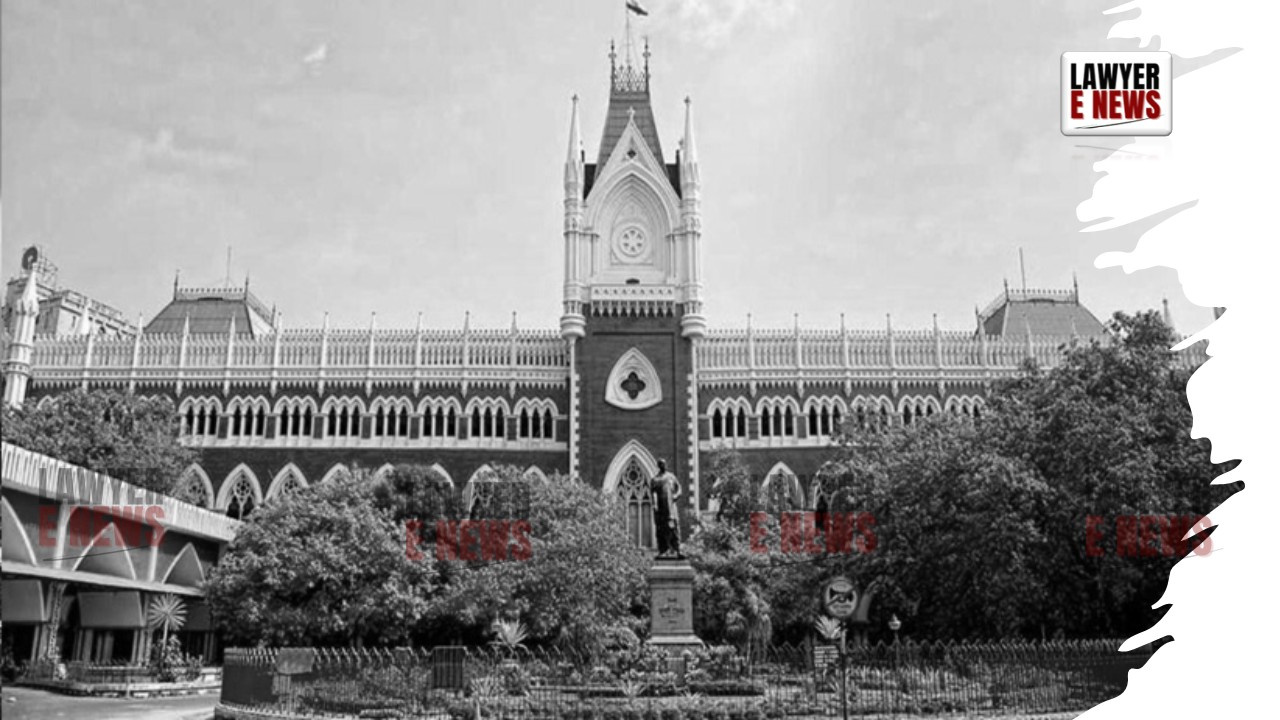
“Eviction suits for removal of licensees are maintainable before the City Civil Court – Absence of exclusive possession is a hallmark of licence, not an admission of possession by the plaintiff”, Calcutta High Court delivered a significant judgment clarifying the legal distinction between lease and licence, the jurisdictional competence of civil courts, and the power of appellate courts to grant decrees without remand. The Division Bench of Justice Sabyasachi Bhattacharyya and Justice Supratim Bhattacharya held that where licensees have no exclusive possession, they are not tenants, and regular eviction suits are maintainable before the City Civil Court, not the Presidency Small Cause Court.
The judgment is a strong reaffirmation of civil court jurisdiction in suits involving eviction of licensees, and settles long-standing doubts regarding the effect of Rent Controller’s orders, the role of trial courts in misappreciating pleadings, and the scope of Order XLI Rule 24 CPC in appellate powers.
“Trial Court’s Logic That Plaintiff Had No Cause of Action Is Contrary to Law” – Absence of Exclusive Possession Shows Licence, Not Lack of Possession
The core dispute arose from leave and licence agreements dated August 18, 2005, entered into by NICCO Corporation Ltd., which subsequently went into liquidation. The rights were acquired by Radhika Singh, who was substituted as appellant under Order XXII Rule 10 CPC. The suits sought eviction of licensees from office premises.
The Trial Court had dismissed both suits ex parte, holding that since the plaintiff claimed the defendants had no exclusive possession, it meant plaintiff was in possession and hence had no cause of action.
The High Court rejected this reasoning as “not only cryptic but perverse”, observing:
“It is well-known that one of the essential ingredients of a licence is that the licensee does not have any exclusivity of possession or control over the suit premises. Hence, such pleading is a necessary part of the averments in the plaint in any suit for eviction of licensee.”
The Court made it clear that mere absence of exclusive possession does not imply surrender of possession or extinguish cause of action:
“If it were to be so, there would be no necessity for the plaintiff to take the trouble of filing the suit… but could just walk into the suit premises without litigation.”
“Appellate Court Must Act As Final Court of Facts – Remand Would Only Revive Lost Rights of Absent Defendants”
Despite the Trial Court’s failure to decide the case on merits, the High Court declined to remand the matter, invoking Order XLI Rules 24 and 33 CPC. The suits had remained pending since 2009, and the Court emphasized that a remand would:
“open up the opportunity to the defendants to file their defences, which right was lost by them in the first place.”
Instead, the Bench adjudicated the disputes finally, holding: “The first appellate court is the last court of facts. The evidence on record, being sufficient, allows us to decide the suits without unnecessary delay.”
This approach reinforces that appellate courts must use their full powers to avoid protracted litigation, especially where the record is complete and suits are of a commercial nature.
“City Civil Court Had Jurisdiction – Small Cause Court’s Summary Remedy Not Exclusive or Mandatory”
The respondents had contended that the Presidency Small Cause Court had exclusive jurisdiction under Sections 41–49 of the Presidency Small Cause Courts Act, 1882, to entertain eviction actions.
But the High Court decisively rejected this argument. Citing Section 19(d) of the 1882 Act, it held: “The Small Cause Court is categorically barred from entertaining suits for recovery of immovable property… The summary proceedings under Sections 41 to 43 are optional and parallel remedies.”
The Court emphasized that: “Regular eviction suits against licensees are maintainable before the City Civil Court under Section 9 CPC. There is no bar under the 1882 Act or the West Bengal Premises Tenancy Act to such suits.”
This ruling clarifies a grey area in jurisdiction, especially in cases where licensees misuse the ambiguity of status to stall eviction.
“Clause 14 of Leave and Licence Agreement Is Conclusive – No Tenancy Rights Created”
The High Court undertook a detailed analysis of the licence agreements, dismissing the respondents’ claim that the arrangement was in substance a lease.
Clause 14 of the agreement was held to be decisive: “NOTWITHSTANDING ANYTHING CONTAINED HEREINBEFORE, nothing in this agreement shall be construed to confer tenancy rights in favour of the Licensee.”
Referring to the language of the clause, the Court said: “Clause 14 is the umbrella clause and a culmination of all the terms and conditions… It unambiguously clarifies that nothing in the agreement creates tenancy rights.”
The Court also noted that:
Licensees were not given independent electric meters.
Common amenities like toilets, water, and lifts were shared.
Licensor retained unfettered right of entry into the premises.
The licence was terminable at will.
It concluded:
“The agreements were not tenancy agreements but permits to use office space without any interest in the property. Legal possession and control remained vested in the licensor.”
Even applying the tests laid down in Associated Hotels of India v. R.N. Kapoor, the Court found the relationship to be one of licensor-licensee.
“Orders of Rent Controller Do Not Determine Civil Rights – Civil Court’s Declaration Prevails”
Respondents had placed reliance on orders passed under Sections 27 and 36 of the West Bengal Premises Tenancy Act, 1997, claiming that they were accepted as tenants.
But the Court held: “The Rent Controller under the 1997 Act is not a civil court. Its decisions do not conclusively determine the status of applicants as tenants. That exclusive domain belongs to the civil court.”
Accordingly, any reliance on rent control orders was found to be legally misplaced, especially in light of the unambiguous agreements and absence of exclusive possession.
“Right to Continue Appeal Is Not Time-Barred – Transferee Pendente Lite Has Locus Under Order XXII Rule 10 CPC”
The appellant, Radhika Singh, had acquired the property through liquidation proceedings and was substituted during appeal under Order XXII Rule 10 CPC.
The respondents argued that the substitution was belated and barred by Article 137 of the Limitation Act. But the Court rejected this, holding:
“Appeal is a continuation of proceedings. Right to prosecute the appeal against a licensee is a continuous right that arises de die in diem.”
Further, the Court clarified that no competent forum had set aside her title, and she was fully entitled to step into the shoes of the original plaintiff.
Decrees of Eviction Granted – Licensees Given 90 Days to Vacate
With all issues decided in favour of the appellant, the High Court set aside the ex parte dismissal of both suits and granted decrees of eviction in favour of the appellant, observing: “The learned Trial Judge acted in a perverse manner in dismissing the suits on frivolous grounds. The jural relationship was clearly one of licensor and licensee.”
Licensees were given 90 days to vacate the premises, failing which the decree may be executed in accordance with law. The Court did not impose any costs.
Date of Decision: 09 December 2025