
-
by sayum
25 August 2026 12:32 PM







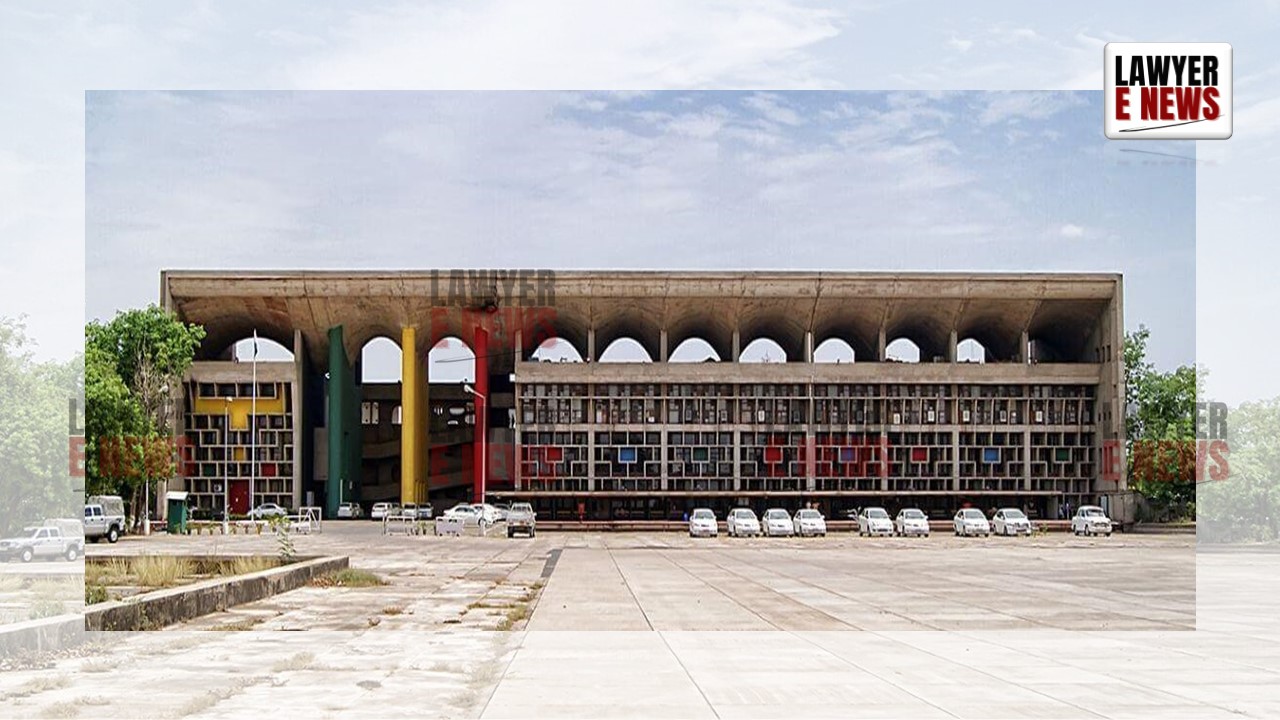
“A Rapat Entry Is Merely Administrative and Cannot Defeat a Prior Statutory Mortgage”, Punjab & Haryana High Court. The Court held that a Sub-Registrar cannot refuse registration of a sale deed arising out of a SARFAESI e-auction on the basis of a subsequent attachment for State tax dues, reiterating that a secured creditor’s prior charge enjoys precedence over State Government dues unless a statute expressly creates a first charge.
Allowing the writ petition filed by State Bank of India (SBI), the Court issued a writ of mandamus directing registration of the sale deed, quashed the revenue attachment created in favour of the State, and imposed costs of Rs.25,000 on the State of Haryana for unjustifiably delaying liquidation of the secured asset.
The controversy arose after State Bank of India, having advanced a credit facility of Rs.8.10 crore in 2013 to borrower M/s Mahavir Cereals, initiated proceedings under the SARFAESI Act, 2002 upon default. The borrower had created a mortgage by deposit of title deeds on 04.07.2013, thereby giving SBI a secured interest over the property.
Pursuant to SARFAESI proceedings, SBI conducted an e-auction on 21.09.2021, in which M/s Mahadev Foods emerged as the successful bidder, deposited the entire sale consideration of Rs.738 lakh, and was issued a sale certificate on 29.09.2021.
However, the Sub-Registrar, Sub-Tehsil Nighdu, Karnal, declined to register the sale deed, citing an attachment order dated 28.11.2018 entered in revenue records in favour of the District Food and Supply Department, State of Haryana, allegedly for outstanding tax dues arising from a Custom Milling Agreement.
Despite SBI’s representation dated 09.11.2021, the registration was withheld, compelling the Bank to approach the High Court under Articles 226 and 227 of the Constitution.
“Who Has Priority — The Bank or the State?”: Legal Issue Before the Court
The principal question before the High Court was the determination of priority between a secured creditor under the SARFAESI Act and State Government dues, especially where:
the Bank’s mortgage was created in 2013, and
the State’s attachment was recorded much later in 2018, and
no statute conferred a first charge on the State for such dues.
Closely allied to this was the issue of whether a Sub-Registrar can refuse registration of a SARFAESI sale deed solely on the basis of a subsequent revenue entry.
“No Statute Gives the State a First Charge for Such Dues”: Court’s Observations on Priority
The Bench noted that it was undisputed that the Bank’s charge was created much earlier in time, whereas the State’s charge came into existence only on 28.11.2018. The Court emphasized that priority must follow the time of creation of charge, unless displaced by a statutory first charge.
The Court categorically observed that the State failed to point out any statute creating a first charge in its favour in respect of dues arising from Custom Milling Agreements, holding that: “Such dues, even if validly claimed, remained contractual or policy-based recoveries and do not enjoy statutory status.”
Thus, in absence of legislative backing, State dues could not override the Bank’s mortgage.
“A Rapat Entry Does Not Decide Rights of Parties”: Effect of Revenue Attachment
Dealing with the Sub-Registrar’s justification, the Court made a crucial clarification on the legal effect of revenue entries, holding that:
“The rapat entry itself does not decide rights of parties, it is merely an administrative note and cannot defeat a prior statutory right of mortgage of petitioner Bank.”
The Bench found that the Sub-Registrar committed a patent illegality by relying on a later-in-time attachment entry to refuse registration of a SARFAESI sale deed, which flowed from a valid statutory process.
“Secured Creditor’s Right Prevails Even Over Crown Debts”: Reliance on Supreme Court Precedents
Reaffirming settled law, the Court reiterated that the right of a secured creditor to recover its dues has precedence even over Government or crown debts, unless expressly displaced by statute.
The Bench placed reliance on a consistent line of Supreme Court judgments, including:
Dena Bank v. Bhikhabhai Prabhudas Parekh
Union of India v. SICOM Ltd.
Rana Girders Ltd. v. Union of India
Punjab National Bank v. Union of India
and held that Government dues cannot leapfrog a prior secured interest by administrative measures or revenue entries.
“Section 26E May Not Apply Here, But the Law Is Clear Going Forward”: SARFAESI Amendment Clarified
While noting that Section 26E of the SARFAESI Act, which grants statutory priority to secured creditors, was notified later and therefore not directly applicable to the facts of the present case, the Court took the opportunity to clarify the legal position for future disputes.
The Bench observed that for transactions after 24.01.2020, once the security interest is registered, Section 26E would operate with full force, mandating that:
“the debts due to any secured creditor shall be paid in priority over all other debts and all revenues, taxes, cesses and other rates payable to the Central Government or State Government or local authority.”
Concluding that the Bank’s prior charge unquestionably prevailed, the High Court allowed the writ petition and issued the following directions:
The Sub-Registrar was commanded to register the sale deed in favour of the auction purchaser within two months, with a compliance report to be filed before the Registry.
The revenue attachment (rapat No.117 dated 28.11.2018) in favour of the District Food and Supply Department was quashed.
Liberty was reserved to the State of Haryana to recover its dues only after satisfaction of the Bank’s claim or through any other lawful means.
Notably, the Court imposed costs of Rs.25,000 on the State of Haryana, observing that the delay in liquidation of the secured asset was “for no justified cause”, directing part of the costs to the petitioner-Bank and part to the Bar Association.
This judgment reinforces a crucial principle governing banking recoveries and SARFAESI enforcement — that secured creditors cannot be obstructed by belated State attachments lacking statutory backing. By holding that administrative revenue entries cannot trump a prior mortgage, the Punjab & Haryana High Court has once again underscored the supremacy of secured credit and statutory recovery mechanisms over ad-hoc governmental claims.
The ruling is a significant reaffirmation for banks and financial institutions facing routine resistance at the stage of registration of SARFAESI sale deeds, and sends a clear message that procedural roadblocks cannot dilute substantive statutory rights.
Date of Decision: 10 December 2025





