-
by sayum
26 August 2026 12:18 PM







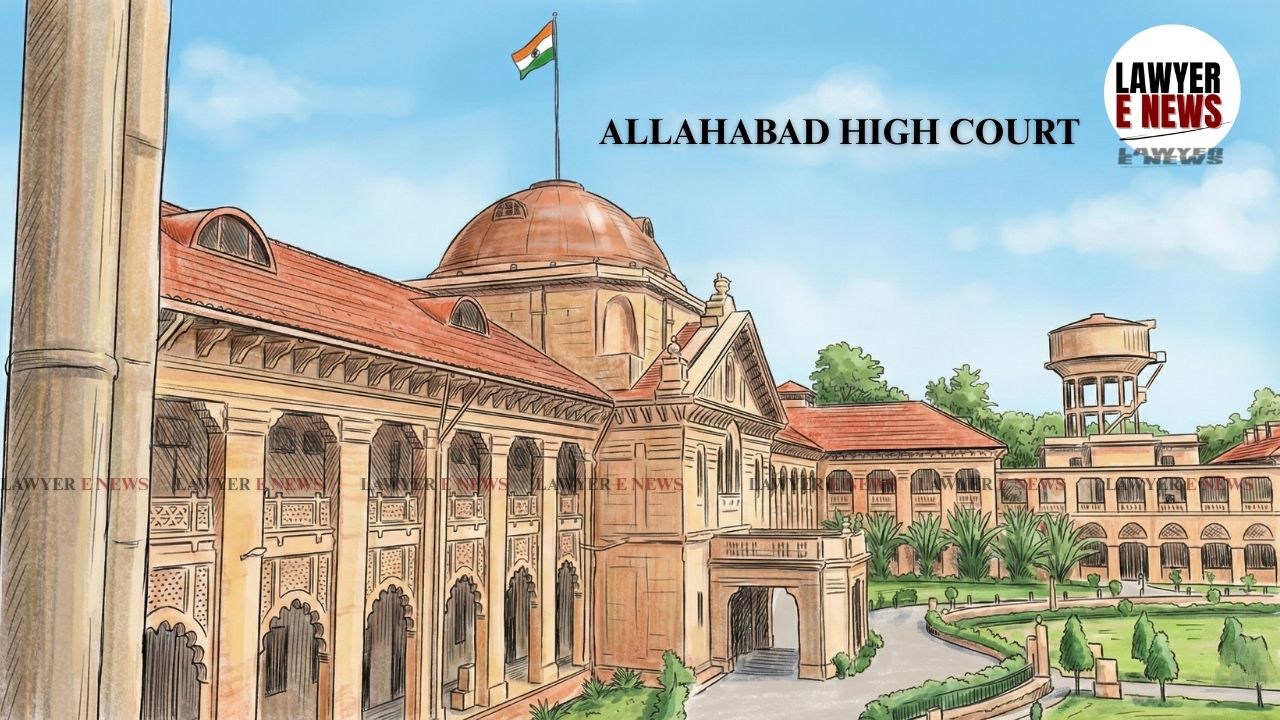
“It is well settled that in such cases, judicial conscience must be satisfied that the alleged Will was indeed executed by the testator... but in the present case, the judicial conscience has not been satisfied.” – Allahabad High Court
In a significant decision on testamentary succession, the Allahabad High Court dismissed two appeals that challenged the rejection of probate for an unregistered Will dated 25.05.2002 and upheld the grant of probate for an earlier registered Will dated 20.09.1996, holding that the later Will was surrounded by suspicious circumstances, was not proved in accordance with law, and failed to satisfy the Court’s judicial conscience.
“Where the execution of Will is shrouded in suspicion, it is a matter essentially of the judicial conscience of the Court.” – Supreme Court in Shivakumar v. Sharanabasappa, relied on by HC
The Registered vs. Unregistered Will Dispute: A Legal Battle Between Two Testamentary Instruments
The case concerned two competing Wills allegedly executed by Parmanand Lal Srivastava, a retired BHU official who passed away on 22.11.2002. The earlier Will, dated 20.09.1996, was registered, and bequeathed equal shares of the testator’s movable and immovable property to his surviving daughter Sudha Srivastava and the three sons of his deceased daughter Radha. On the other hand, the later unregistered Will dated 25.05.2002, which was propounded by the testator’s nephews (sons of his elder brother), allegedly revoked the earlier Will, giving immovable properties to the nephews and movables to the daughters and grandsons.
The Trial Court had rejected the probate of the unregistered Will, branding it as fabricated and suspicious, while granting probate to the earlier registered Will. The appellants sought reversal of this decision, arguing that the later Will reflected the testator’s true intention.
A Forensic Dissection of Suspicion, Contradictions and Legal Requirements
At the core of the High Court's judgment lies a meticulous application of Sections 63 of the Indian Succession Act, 1925, and Sections 45, 47, 67, and 68 of the Indian Evidence Act, 1872, particularly in light of the apex court’s guiding decisions in H. Venkatachala Iyengar (1958), Shashi Kumar Banerjee (1963), and Shivakumar (2021).
Justice Jain emphasized:
“It is apparent from the above law... that such suspicion or suspicions cannot be removed by mere proof of sound and disposing state of mind of the testator and his signature coupled with the proof of attestation.”
The Court undertook a multi-layered factual examination, and found the unregistered Will of 2002 entirely unconvincing, flagging the following six major suspicious circumstances:
Testator’s Ill Health and Incapacity: “It was virtually impossible for the testator to himself type the Will.”
It was undisputed that Parmanand Lal was over 80 years old and bedridden due to hip fracture for almost two years prior to his death. While the propounder claimed that the Will was typed by the testator himself at his home, this was directly contradicted by the evidence in mutation proceedings, where he had earlier claimed it was typed in the civil court.
The Court noted:
“It is virtually impossible for the testator to himself type the Will at his Nawabganj residence.”
Contradictions in Place of Execution: “The propounder has made two contradictory statements regarding the place of execution of the Will.”
DW-1, the propounder, claimed that the Will was typed at the testator’s Nawabganj residence. However, in prior mutation proceedings, he had deposed that it was typed in the Civil Court at Varanasi. Contrarily, DW-2 Lalji (attesting witness) stated that the Will was prepared at Durgakund residence. These contradictions eroded the credibility of the propounder’s story.
Active Role of Propounder in Preparation: “The propounder had taken active part in the preparation of the Will.”
The Court was particularly cautious about the active involvement of Rakesh Srivastava, a major beneficiary under the 2002 Will, in the drafting and execution process. The witnesses were brought in by him, and the drafting was supervised by an advocate connected to the family.
Such involvement, the Court held, “raises a presumption of undue influence or at least creates suspicion,” which the propounder failed to dispel.
Concealment in Mutation Application: “Why was the Will not mentioned at all if it really existed?”
Perhaps the most damning was the non-disclosure of the 2002 Will in the mutation application dated 12.12.2002, made shortly after the testator’s death. Ownership was claimed only on the basis of inheritance, not on the strength of the alleged Will. That application was also drafted by the same advocate (Mansha Ram Mishra) who allegedly prepared the disputed Will, further deepening the suspicion.
The Court observed:
“This fact itself proves that at the time of moving the mutation application on 12.12.2002, the alleged Will was not in existence and it was subsequently put up to counter the mutation application moved by the plaintiff.”
Attesting Witness Found Unreliable: “DW-2 admitted he didn’t know the contents of the affidavit he signed.”
Lalji, the attesting witness to the 2002 Will, confessed under cross-examination that he did not prepare his own affidavit, nor was he aware of its contents. His relationship with the propounder – including a land sale from Rakesh Srivastava to Lalji’s wife – cast further doubt on his neutrality.
The Court referred to A. Kamala Bai v. B. Kanna Rao, where the Supreme Court held that if the sole attesting witness does not inspire confidence, the Will must fail.
Unconvincing Reason for Revocation: “No satisfactory explanation of fraud was furnished.”
The alleged basis for revocation of the 1996 Will was a claim that the testator had been “defrauded” into executing it. Yet, the Court found no supporting evidence. On the contrary, it was admitted that Sudha Srivastava, one of the beneficiaries under the earlier Will, had been looking after the testator throughout his illness.
“The reason assigned by the testator for revoking his earlier Will are not at all convincing.”
The Verdict: High Court Dismisses Appeals, Upholds Earlier Registered Will
Having found the later Will dubious, untrustworthy, and surrounded by multiple suspicious circumstances, the Court dismissed both First Appeals, affirming the Trial Court’s order granting probate to the 1996 registered Will and denying probate to the 2002 unregistered Will.
“The execution of the alleged Will is shrouded in grave suspicion, which has not been dispelled by the propounder to the satisfaction of this Court.”
A Cautionary Tale in Will Disputes – Mere Signatures and Attestation Are Not Enough
This judgment is a robust reaffirmation of the principles laid down in Venkatachala Iyengar and Shivakumar, that Wills surrounded by suspicion must pass the high threshold of judicial conscience, and that active involvement of beneficiaries in the making of a Will is a red flag.
It also reinforces that unregistered Wills, while legally valid, carry a heavier evidentiary burden, especially when they contradict earlier registered Wills and are introduced belatedly.
“A suspicious Will cannot be legitimized merely by proving handwriting or attestation. The conscience of the Court must be satisfied.” – Allahabad High Court
Date of Decision: 16 December 2025