-
by sayum
28 August 2026 10:07 AM







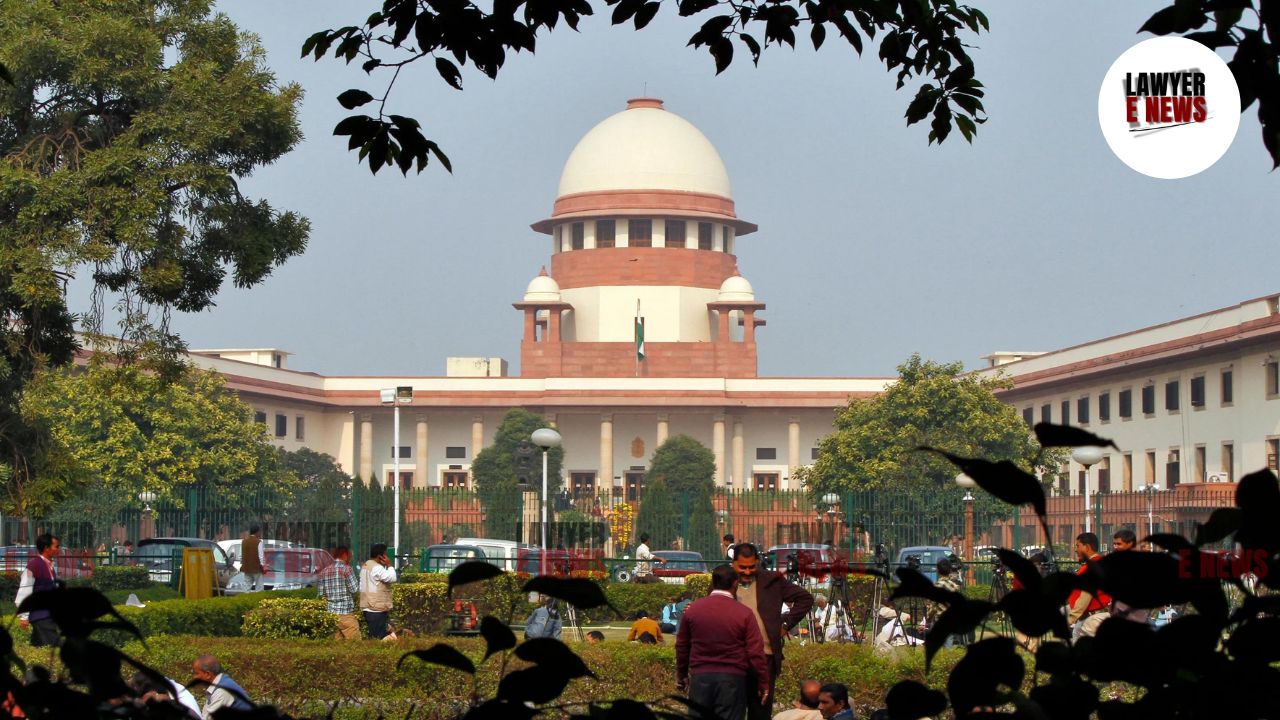
“Police Must Act, Not Wait”: Supreme Court Orders FIR and SIT After Maharashtra Cops Ignore Assault on Teen Riots Survivor. In a strong rebuke to institutional apathy and bias in police functioning, the Supreme Court of India directed the formation of a Special Investigation Team (SIT) to probe the assault on a 17-year-old Muslim boy during the Akola riots of May 2023, and further directed disciplinary proceedings against erring police officers, including the Superintendent of Police, Akola, for failing to register a First Information Report (FIR).
“Law Requires Its Sentinels To Be Vigilant, Not Selectively Silent”: Court Calls Out Police Inaction
Delivering the judgment, Justice Sanjay Kumar, speaking for the Bench also comprising Justice Satish Chandra Sharma, declared: “Neither the officers of the Old City Police Station, Akola, nor the Superintendent of Police, Akola, lived up to the expectation that reposed in them as upholders of the law… The police authorities never followed up on Medico-Legal Case No. 5580 involving the appellant, though they had information of the same at 2:15 AM on 14.05.2023.”
The Court held that once information regarding a cognizable offence reaches the police, registration of an FIR is mandatory under Section 154 CrPC, and the police cannot remain passive.
“Attacked for Mistaken Identity During Riots, Ignored by Police After”
The case stems from the communal violence in Akola, Maharashtra on 13th May 2023, triggered by a social media post. The appellant, Mohammad Afzal, then a 17-year-old, alleged that while returning home around 10:30–11:00 PM, he witnessed four men brutally assaulting another man in an autorickshaw on Raj Rajeshwar Setu Bridge. When he stopped, he was told “you are next,” and was himself attacked with a sword and iron pipe.
The injured boy was admitted to Icon Hospital, Akola, and later filed a complaint asserting that he was not just a victim but an eyewitness to a hate crime — the killing of Vilas Mahadevrao Gaikwad, who was allegedly mistaken as a Muslim because he drove an autorickshaw bearing a “Garib Nawaz” sticker.
Despite giving statements and later identifying one assailant on a political flex board, no FIR was registered regarding the attack on him. Instead, a chargesheet was filed against other community members based on a different FIR.
“Duty to Register FIR Under Section 154 CrPC Is Not Optional”: Supreme Court Cites Lalita Kumari Mandate
Citing the landmark Constitution Bench ruling in Lalita Kumari v. Government of U.P. (2014) 2 SCC 1, the Court held:
“If the information received revealed commission of a cognizable offence, it is mandatory to register an FIR.”
The Bench underlined that once police knew that Afzal had suffered a head injury, and that a medico-legal case had been filed (MLC No. 5580), they were duty-bound to register an offence under Sections 324, 325, or 326 IPC, and conduct a lawful investigation.
“It was not for the victim to pursue the police to do their job. The police, once informed of a cognizable offence, must act decisively and without bias.”
“Bias and Inaction Are Incompatible with Uniformed Duty”: Court Lashes Out at Police Dereliction
The judgment made a searing indictment of systemic indifference, observing: “When members of the police force don their uniforms, they are required to shed their personal predilections and biases, be they religious, racial, casteist or otherwise… Unfortunately, in the case on hand, this did not happen.”
Further, the Superintendent of Police, Akola, who received a complaint dated 01.06.2023, failed to act under Section 154(3) CrPC, which mandates action by the SP when the Station House Officer refuses to register an FIR.
“No senior official of the State chose to file an affidavit before this Court. The dereliction is patent, either deliberate or by sheer carelessness.”
“When a 17-Year-Old Says He Witnessed a Murder and Was Beaten — You Investigate, Not Doubt His Motives”
The Court also condemned the approach of the Bombay High Court, which had dismissed Afzal’s writ petition, alleging “ulterior motives.” The High Court had questioned why the victim hadn’t gone to the police station himself, or why his relatives delayed the complaint.
The Supreme Court rejected this reasoning: “Neither the Police Inspector nor the High Court are correct in their assumption that it was for the appellant or his relatives to pursue the police… Once the police knew of the injury and the MLC, their duty was clear.”
The Court also stressed the relevance of age, noting: “The appellant is stated to have been 17 years of age at the relevant time… He asserted that he was an eyewitness to a communal murder and himself a victim. That claim required thorough investigation — not dismissal based on suspicion.”
“Form SIT with Officers of Both Hindu and Muslim Communities”
The Court issued the following binding directions:
FIR to be registered immediately in connection with the assault on Mohammad Afzal on 13.05.2023.
Special Investigation Team (SIT) to be constituted by the Secretary, Home Ministry, Government of Maharashtra.
The SIT must include senior police officers from both Hindu and Muslim communities.
Appropriate disciplinary action to be initiated against:
The Inspector, Old City Police Station, Akola.
The Superintendent of Police, Akola (Sandip Ghuge).
Training and sensitization programs to be instituted for the police force on their legal duties under Section 154 CrPC.
SIT’s final report to be submitted to the Supreme Court within 3 months.
In a landmark order that restores faith in constitutional accountability, the Supreme Court has emphatically reaffirmed the duty of law enforcement agencies to act without prejudice, especially in sensitive communal contexts. The judgment is not just a relief for one young man wronged by silence but also a wake-up call for police machinery across the country.
“Law requires, nay, ordains, that its sentinels be vigilant, prompt, and objective. This case reveals a failure on all three fronts.”
This judgment is likely to set a precedent for enforcing police accountability where victims of communal violence face systemic neglect, procedural apathy, or targeted bias.
Date of Decision: September 11, 2025