-
by sayum
29 August 2026 3:15 PM







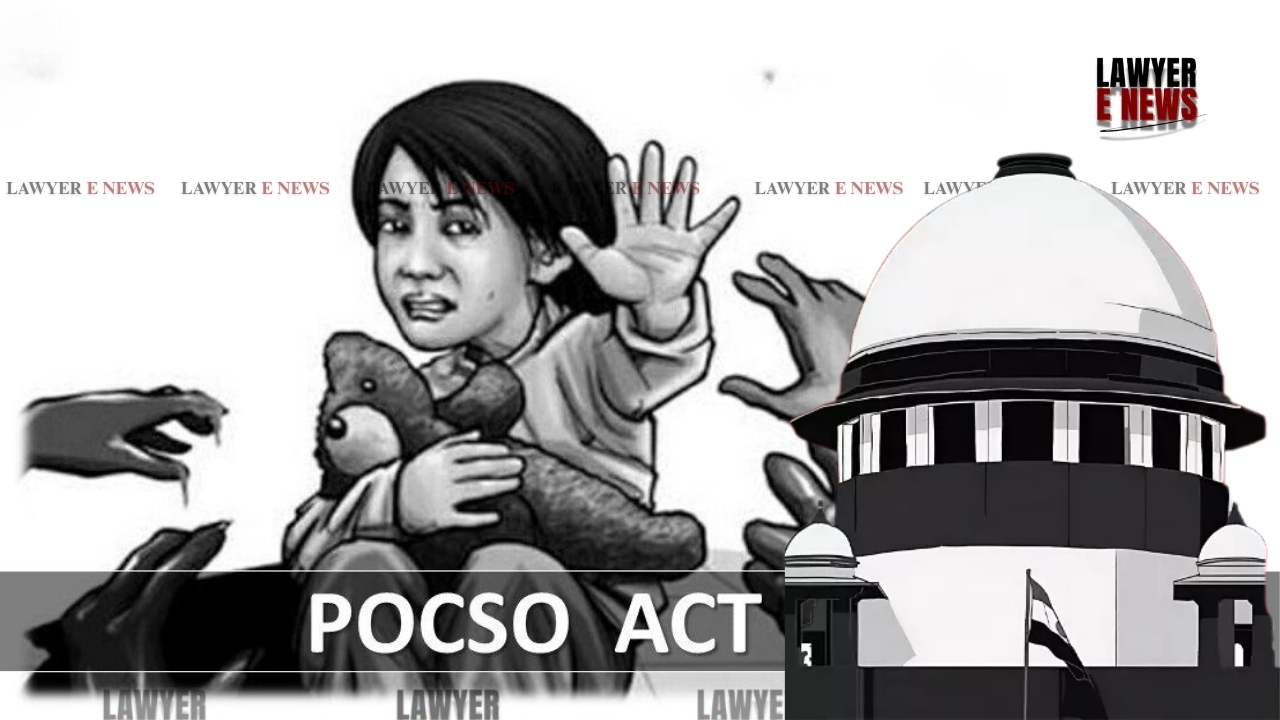
“Entertaining bail in such a case would be a judicial insult to the sanctity of womanhood”, - Supreme Court of India dismissed, at the very threshold, a Special Leave Petition filed by Bhanei Prasad @ Raju, who stood convicted of repeatedly committing aggravated penetrative sexual assault on his 10-year-old daughter.
A Bench of Justice Aravind Kumar and Justice Sandeep Mehta refused to interfere with the concurrent findings of guilt and life sentence recorded by the trial court and affirmed by the Himachal Pradesh High Court, holding that the evidence was “unimpeachable” and the statutory presumption of guilt under Section 29 of the POCSO Act stood wholly unrebutted.
The Court recorded that the victim’s testimony was “unwavering, medically corroborated, and free from embellishment,” further supported by her elder sister’s statement and clinching DNA evidence.
“The home, which should be a sanctuary, cannot be permitted to become a site of unspeakable trauma,” the Bench observed, stressing that the law must speak in a voice “resolute and uncompromising” when a parent is the offender.
Rejecting the defence plea of false implication due to strained domestic relations, the Court remarked: “No daughter, however aggrieved, would fabricate charges of this magnitude against her own father merely to escape household discipline.”
The Bench emphasised that credible testimony of a child victim requires no corroboration in law, but here, the prosecution case was further strengthened by medical and forensic proof.
On sentencing, the Court declared that familial sexual abuse “assumes a demonic character” and warrants the severest condemnation, refusing any scope for leniency or mitigation:
“To pardon such depravity under any guise would be a travesty of justice and a betrayal of the child protection mandate embedded in our constitutional and statutory framework.”
Quoting an ancient Sanskrit verse — “Yatra nāryastu pūjyante ramante tatra devatāḥ…” — the Bench linked the protection of women’s dignity not merely to cultural values but to the “constitutional vision” of non-negotiable respect for womanhood.
The prayer for interim bail was rejected in strong terms, the judges warning that granting such relief after conviction would “undermine the majesty of the law” and constitute “a judicial insult to the sanctity of womanhood and a blow to every mother who teaches her child to believe in justice.”
Significantly, invoking Article 142 of the Constitution, the Supreme Court also turned its attention to the victim’s rehabilitation. Referring to the NALSA “Compensation Scheme for Women Victims/Survivors of Sexual Assault/Other Crimes, 2018” and the enhancement mandated for minors, the Court directed the State of Himachal Pradesh to pay ₹10,50,000 in compensation.
Of this, ₹7,00,000 will be placed in a fixed deposit for five years in the victim’s name, with quarterly interest payable to her, and ₹3,50,000 will be transferred directly to her account. The Himachal Pradesh State Legal Services Authority was tasked with monitoring compliance and ensuring the maturity proceeds are duly transferred.
“Justice must not be limited to conviction; it must include restitution,” the Court said, reaffirming that the criminal process should end not only with punishment but also with “substantive, compassionate, and complete” redress for survivors.
Concluding that there was “no infirmity or perversity” in the concurrent findings, the Supreme Court dismissed the petition in limine, closing the door on any further challenge to the life sentence.
Date of decision: 04/08/2025