-
by sayum
30 August 2026 4:28 AM







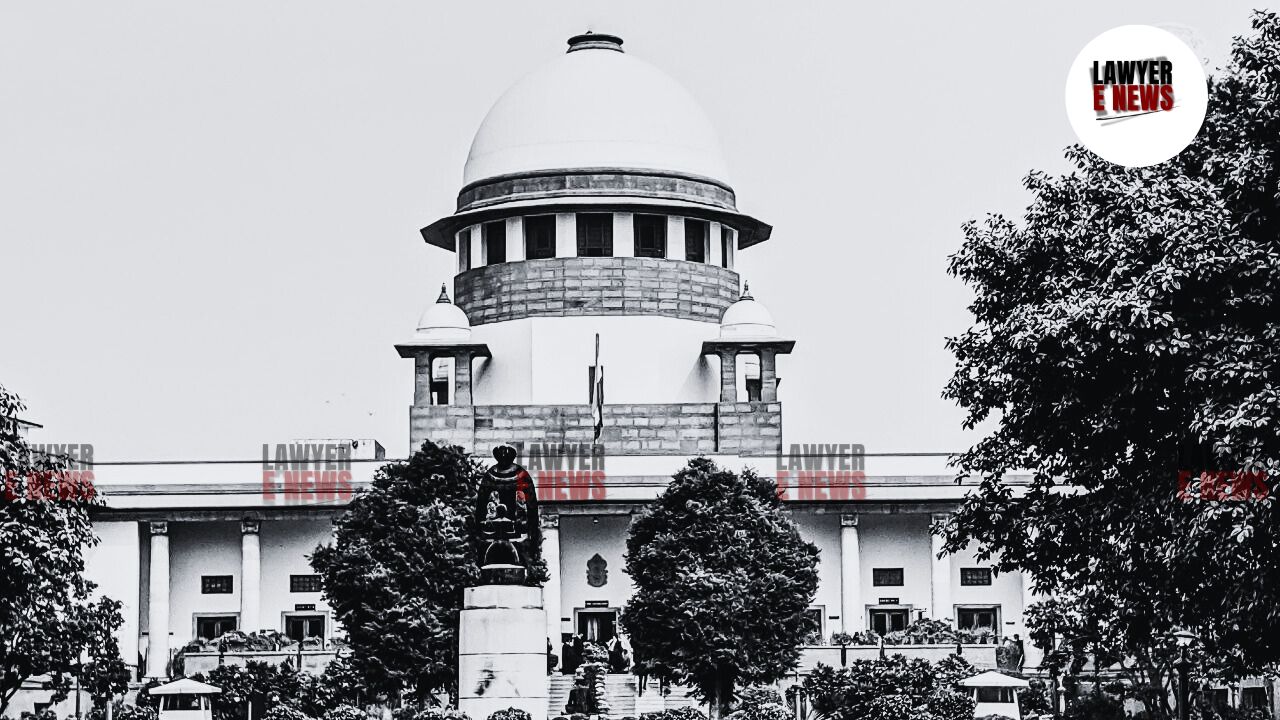
Supreme Court of India modified its earlier order dated August 4, 2025, in deference to a written request from the Chief Justice of India. The Bench of Justice J.B. Pardiwala and Justice R. Mahadevan deleted two controversial directions that had restricted the judicial assignments of a sitting Allahabad High Court judge, while reiterating that the judiciary’s dignity and institutional credibility must remain paramount.
In its August 4 order, the Supreme Court had set aside an order of the Allahabad High Court and remanded the matter for fresh consideration. While doing so, it issued strong directions — in paragraphs 25 and 26 — to the Chief Justice of the Allahabad High Court, effectively directing that the concerned judge should not be assigned any criminal matters until retirement and should, if sitting singly, not be given criminal jurisdiction at all.
The Court had justified these directions by noting: “The impugned order is not the only erroneous order of the concerned Judge that we have looked into for the first time. Many such erroneous orders have been looked into by us over a period of time.”
However, the Chief Justice of India later sent an undated letter requesting the Bench to reconsider these administrative restrictions.
Justice Pardiwala, clarifying that the Court’s intent was never to cause personal embarrassment, said: “Our intention was not to cause embarrassment or cast aspersions on the concerned Judge. We would not even think of doing so.”
The Bench stressed that when the “dignity of the institution is imperiled,” it becomes the Court’s constitutional responsibility to intervene. The directions were motivated not by a single error, but by a perceived pattern of orders that risked undermining public faith in the judiciary.
The Court underlined that High Courts are not ‘separate islands’ apart from the Supreme Court and that the judiciary must be viewed as one institution in the eyes of the people.
Deletion of Directions and Role of the Chief Justice of High Court
Acknowledging the administrative primacy of a High Court Chief Justice, the Supreme Court deleted paragraphs 25 and 26 from its earlier order, stating:
“We fully acknowledge that the Chief Justice of a High Court is the master of the roster… our directions are absolutely not interfering with the administrative power of the Chief Justice of the High Court.”
The Bench left it to the Chief Justice of the Allahabad High Court to “look into the matter” and take any necessary administrative steps.
The order also carried a strong caution for the future: “We hope that in future, we may not have to come across such perverse and unjust orders from any High Court. The endeavour of the High Courts should always be to uphold the rule of law and maintain institutional credibility.”
The Bench observed that 90% of litigants in India treat the High Court as their final court of justice, and that orders must not be “absurd or irrational,” for failure to uphold the rule of law within the court system itself would “be the end of the entire justice delivery system.”
Quoting from a recent decision in Rikhab Birani v. State of Uttar Pradesh (2025 INSC 512), the Court noted the persistence of improper criminal proceedings for civil disputes and imposed costs on the State of Uttar Pradesh in that matter — a reminder of systemic concerns.
While softening its earlier administrative restrictions, the Supreme Court’s ruling serves as both an act of institutional courtesy towards the Chief Justice of India’s request and a firm reiteration that judicial accountability and the preservation of public faith in the courts are non-negotiable.
Date of Decision: August 8, 2025