-
by sayum
28 August 2026 10:07 AM







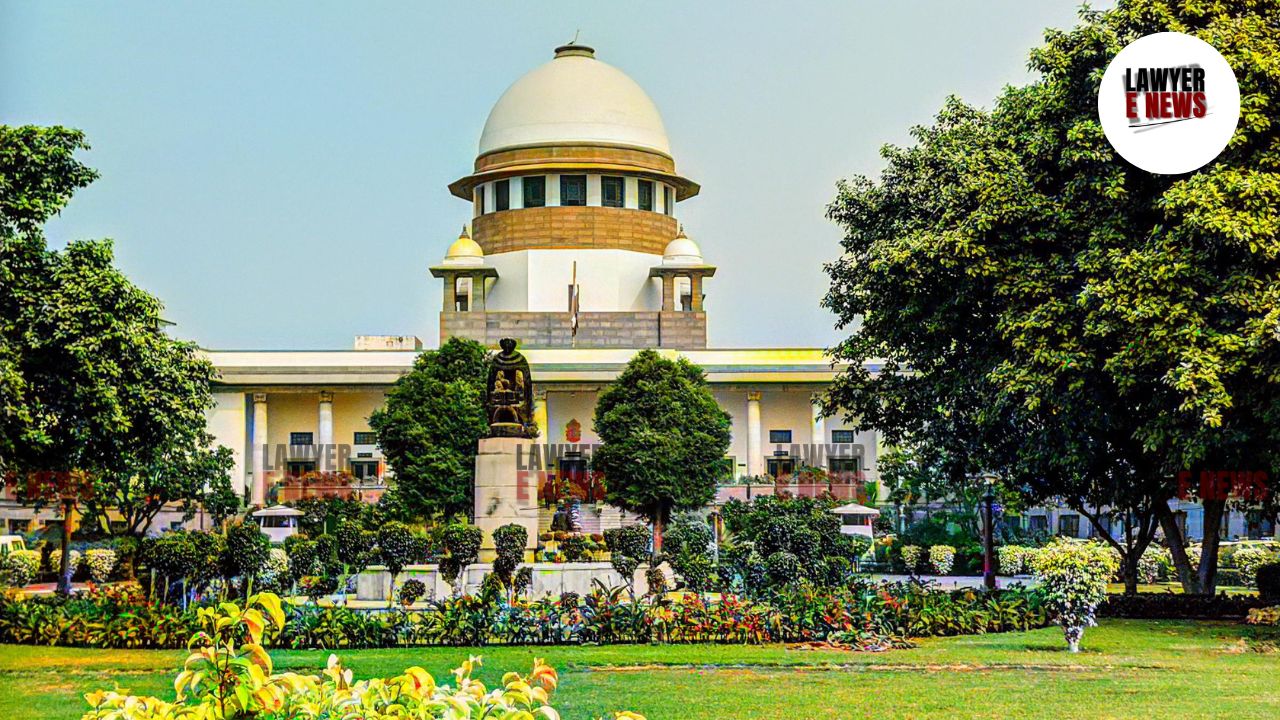
“Having Signed, Received, and Encased the Cheque Without Protest, Petitioner Cannot Reopen the Case”, Supreme Court of India, in the case of Urmila Chand v. Sonu Chand and Others, dismissed an appeal filed by the mother of a deceased accident victim challenging the rejection of a delayed review application related to apportionment of compensation under the Motor Vehicles Act, 1988. The Court upheld concurrent findings of the Motor Accident Claims Tribunal (Tinsukia) and the Gauhati High Court, ruling that the delay of over six months was unexplained and unjustified, and that the petitioner could not resile from a joint disbursal order she had consciously consented to and benefited from.
Tribunal's Disbursal Order Challenged After Six Months—Claim of Injustice Rejected
The case arose from a Motor Accident Claim Petition (MACP No. 125 of 2009) filed by the appellant Urmila Chand (mother), along with her deceased son’s wife and children, seeking compensation for the death of Priyank Chand in a vehicular accident. The Tribunal awarded a total sum of ₹11,82,000/-, and on April 21, 2015, passed a disbursal order allocating:
₹1,00,000/- to the appellant (mother)
₹6,26,000/- to respondent no.1 (daughter-in-law)
₹3,00,000/- each to two minor children (in fixed deposit)
The order was passed on a joint application signed by all claimants, including the appellant, and cheques were accordingly disbursed and accepted.
However, after six months and 22 days, the appellant moved a review petition alleging unfair apportionment and personal hardship, which was dismissed by the Tribunal due to delay and absence of medical proof of illness. The High Court affirmed the dismissal, and the appellant then approached the Supreme Court.
Court on Limitation and Lack of Medical Evidence: “Delay Was an Afterthought”
The Supreme Court agreed with both courts below that the delay in filing the review petition was not supported by credible evidence. The appellant had claimed that she was unwell and underwent surgery between May and December 2015, which prevented her from acting in time.
“The Tribunal dismissed the review application holding that the appellant was unable to show any document to substantiate the ground of medical illness or about having undergone the surgery.” [Para 3.4]
The High Court had also found that no medical records were submitted, and that the Right to Information application used to obtain the disbursal order was part of a “ploy to create a story to cover up for the laches and delay”. The Supreme Court concurred.
Estoppel by Conduct: Having Accepted Her Share, Appellant Cannot Later Claim Unfairness
One of the strongest findings against the appellant was based on the principle of estoppel—a party who voluntarily accepts a benefit under an order cannot later challenge it. The Court noted that the appellant:
Signed the joint disbursal application
Accepted ₹1,00,000/- by cheque
Put her signature on the Tribunal’s order sheet
Did not protest at the time of receipt
Did not apply for certified copy of the order immediately
“The petitioner had signed the order sheet dated 21.04.2015 and… is deemed to know of the contents of the said order. Thus, having accepted the order… the plea that the petitioner was not aware… falls through as unacceptable.” [Para 5.4]
“The appellant could not be permitted to resile from her own conduct. She cannot be accounted to approbate and reprobate.” [Para 6.2]
The Court emphasized that the appellant had acted with full knowledge and her subsequent change of mind could not undo her earlier acceptance.
Review Jurisdiction Is Not an Appeal: Procedural Rules Must Be Strictly Followed
The Court observed that Order XLVII Rule 1 of the CPC, which governs review petitions, requires strict adherence to limitation and sufficient cause. The appellant failed to meet these standards, and no question of fraud or suppression was made out.
“Looking to the facts and the conduct of the appellant in jointly applying and thereafter accepting the compensation and encashing the cheque, no error could be booked in the order passed by the Tribunal as well as by the High Court.” [Para 6.3]
Supreme Court Refuses to Intervene—Dismisses Appeal
After considering the entire record, the Supreme Court declined to interfere with the findings of the High Court and the Tribunal, ruling:
“The operative facts do not permit this Court to take any different view.” [Para 6.3]
“The appeal fails and the same is dismissed.” [Para 7]
Delay, Acquiescence, and Estoppel Sink the Review Petition
The judgment reiterates core principles of limitation law, finality of judicial orders, and estoppel. It underscores that a party who has accepted benefits under a judicial order with knowledge and without protest cannot later question its legality or fairness. Furthermore, review jurisdiction cannot be used to revisit an order merely because a party regrets consenting to it. The judgment is a clear warning against afterthought litigation in compensation cases.
“A party who voluntarily accepts benefits under a court order cannot later dispute its validity – No question of fraud or suppression arose.” [Headnote]
Date of Decision: September 3, 2025