-
by sayum
27 August 2026 3:32 PM







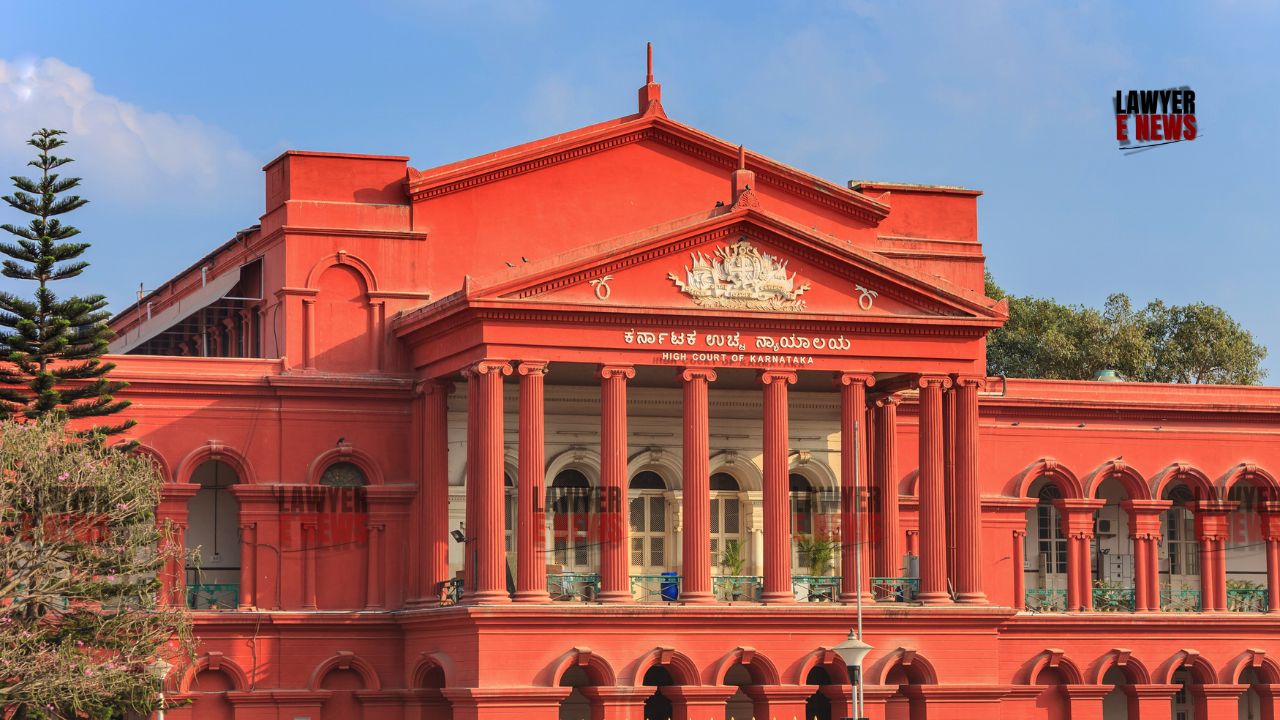
"In the absence of mentioning as to which particular caste the defacto complainant belonged, no prima facie case falling under Section 3(1)(r)(s) of SC/ST (POA) Act, 2015 is made out," Karnataka High Court, in an order dated April 27, 2026, held that vague allegations of caste-based abuse without identifying the specific name of the victim's caste are insufficient to establish a prima facie case under the SC/ST (Prevention of Atrocities) Act.
A single-judge bench of Justice M.G.S. Kamal observed that such omissions, coupled with the absence of the accused from the scene of the crime, warrant the grant of bail. The Court was dealing with an appeal against a Sessions Court order that had denied bail to an individual accused of waylaying a complainant on the grounds of "moral policing."
The prosecution alleged that on January 24, 2026, the complainant was intercepted by a group of 12 to 15 persons while riding his two-wheeler with a female friend from another community. The group allegedly questioned his presence with the girl, abused him in the name of his caste, assaulted him, and snatched a gold chain. The appellant, Sameer, was named as an accused after the complainant overheard a member of the group instructing another to call him over the phone.
The primary question before the Court was whether a prima facie case under Section 3(1)(r)(s) of the SC/ST Act can be sustained when the specific caste of the victim is not mentioned in the FIR or complaint. The Court also sought to determine if the appellant’s involvement was established, considering the complaint suggested he was not present at the spot during the initial assault.
Instruction To Call Accused Over Phone Suggests His Absence At Spot
The Court closely examined the averments made in the complaint filed by the de facto complainant. It noted that the complainant himself stated that one of the members of the mob had instructed another person to "call one Sameer over phone." The bench observed that this specific detail in the prosecution's own narrative indicated that the appellant was not physically present at the scene when the incident commenced.
Evidence Indicates Lack Of Physical Involvement
Justice Kamal pointed out that beyond this reference to a phone call, there was no material evidence to place the appellant at the site of the alleged assault and robbery. The bench noted that the complaint failed to describe any overt act or specific role played by the appellant in the commission of the offences under the Bharatiya Nyaya Sanhita (BNS) 2023 or the SC/ST Act.
"Except this, there is nothing in the complaint to indicate either the presence of appellant at the time of alleged incident at the spot or his involvement in the matter."
Failure To Mention Specific Caste In Complaint Negates Prima Facie Offence
Turning to the charges under the SC/ST (Prevention of Atrocities) Act, the Court highlighted a significant procedural and substantive gap in the prosecution's case. While the complainant alleged that the group "abused him in the name of his caste," the complaint did not specify the name of the caste the victim belonged to. The Court held that for Sections 3(1)(r) and 3(1)(s) to be attracted, the intentional insult or intimidation must be linked to the victim’s identity as a member of a specific protected community.
Court Explains Requirement Of Specificity Under SC/ST Act
The bench emphasized that in the absence of a specific reference to the complainant's caste, a prima facie case for caste-based atrocity cannot be made out. This lack of specificity, the Court reasoned, weakens the prosecution's claim that the insults were directed specifically at the victim’s status under the Act.
"Though allegation is made that the said group of persons had abused him in the name of his caste, nothing is mentioned as to which particular caste the respondent No.2-defacto complainant belonged."
Filing Of Charge Sheet Obviates Need For Custodial Interrogation
The Court further took into account that the investigation in the matter was complete and the charge sheet had already been filed by the respondent police. Since the evidence was primarily documentary and the investigation had concluded, the bench found no reason to keep the appellant in judicial custody. The Court dismissed the State's concerns regarding witness tampering, noting that such risks could be mitigated through stringent bail conditions.
Final Directions and Bail Conditions
The High Court set aside the order of the Principal District and Sessions Judge, Chamarajanagar, and allowed the appeal. The appellant was ordered to be enlarged on bail upon executing a personal bond of Rs. 1,00,000 with a local surety. He was directed to appear regularly before the Trial Court and was strictly prohibited from threatening witnesses or involving himself in similar offences in the future.
The ruling reinforces the principle that criminal allegations under special statutes like the SC/ST Act must meet the threshold of specificity and physical involvement. By granting bail, the Court clarified that vague references to caste abuse without identifying the specific caste do not meet the legal requirements for a prima facie case.
Date of Decision: 27 April 2026