-
by sayum
27 August 2026 3:32 PM







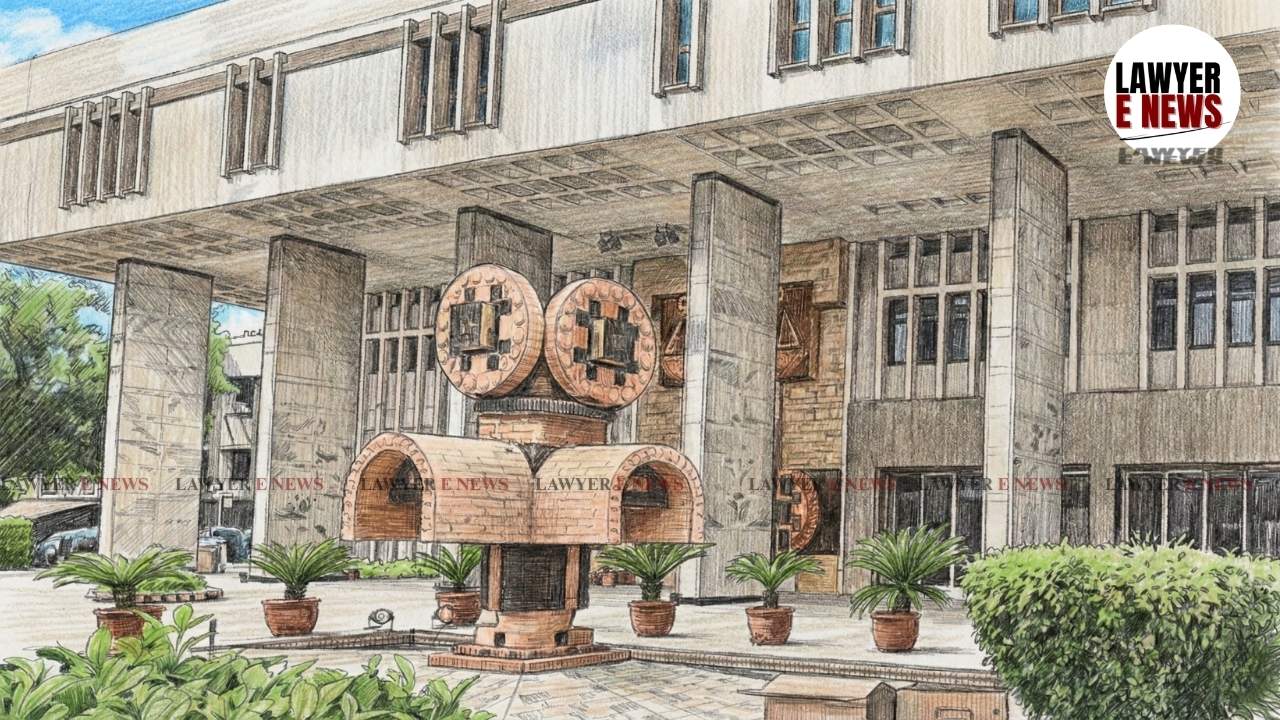
"Recovery of a valid journey ticket from the person of the deceased constitutes strong and direct evidence of bona fide travel," Delhi High Court, in a significant ruling, held that the recovery of a valid journey ticket from the body of a deceased person constitutes strong evidence of being a "bona fide passenger," shifting the burden of proof to the Railways.
A bench of Justice Manoj Kumar Ohri observed that the Railway Claims Tribunal cannot dismiss claims by elevating mere "inference" of a track run-over to the level of "proof" without concrete evidence. The Court emphasized that in the absence of material showing trespass, an accidental fall from a train squarely falls within the ambit of an "untoward incident."
Tribunal Dismissed Claim Terming Incident A Case Of Run-Over
The appellants, the parents of the deceased Shahid, challenged a 2019 order of the Railway Claims Tribunal which had dismissed their claim for compensation. According to the claimants, the deceased had purchased a ticket from Garhi Harsaru to Hathras Junction but died after falling from a running train near Pora Railway Station. The Tribunal had rejected the claim, concluding that the incident was a "run-over" case and not an accidental fall, without returning a finding on whether the deceased was a bona fide passenger.
Court Defines Scope Of Untoward Incident Under Railways Act
The primary question before the court was whether the death of the deceased constituted an "untoward incident" under Section 123(c) read with Section 124-A of the Railways Act, 1989. The court was also called upon to determine if the recovery of a journey ticket from the deceased was sufficient to establish his status as a bona fide passenger.
Court Rejects Speculative Reasoning Regarding 'Run-Over' Theory
The High Court noted that the Tribunal had treated the case as one of "run-over" primarily due to the location of the body on the tracks. However, Justice Ohri pointed out that the record lacked any direct evidence, such as eyewitness accounts or statements from the train guard or driver, to support this. The Court observed that the finding was purely inferential and lacked a factual basis in the investigative record.
Medical Evidence Must Categorically Rule Out Fall To Deny Claim
Regarding the nature of the injuries, the Court observed that the post-mortem report attributed the death to shock and hemorrhage but did not state that the injuries were "exclusively consistent" with a run-over. The Court remarked that the medical evidence did not rule out a fall from a running train. It held that the hypothesis of a homicidal death or trespass was wholly conjectural in the absence of investigative material indicating otherwise.
Liability Of Railways For Accidental Fall Is Strict
"The claim cannot be defeated on mere speculative reasoning."
Citing the landmark Supreme Court judgment in Union of India v. Prabhakaran Vijaya Kumar, the Court reiterated that the accidental falling of a passenger from a train is an "untoward incident." It held that once the occurrence is shown to be related to train movement on railway premises and no statutory exceptions are proved, the liability of the Railways becomes strict in nature.
Recovery Of Ticket Shifts Burden Of Proof To Railways
"The recovery of a valid journey ticket... constitutes strong and direct evidence of bona fide travel."
The Court found that a valid journey ticket was indeed recovered from the deceased, a fact recorded in the Railway's own DRM report and inquest papers. Referring to the Supreme Court's ruling in Union of India v. Rina Devi, Justice Ohri held that once the foundational facts of bona fide travel are established by the claimant, the burden shifts to the Railways to disprove it. In this case, the respondent failed to provide any evidence that the ticket was fabricated or unrelated.
Claims Must Be Decided On Preponderance Of Probabilities
The Court criticized the Tribunal's approach of seeking "strict proof" akin to a criminal trial. It observed that the sequence of travel—purchasing a ticket, boarding, and changing trains—was entirely consistent with the location where the body was discovered. The bench noted that where documentary material points towards a fall and there is no evidence of trespass, the claim must be adjudicated on the preponderance of probabilities.
Tribunal Erred In Elevating Inference To Proof
The High Court concluded that the Tribunal erred in its appreciation of evidence by rejecting the case of an accidental fall without contrary evidence. The Court found that the deceased was a bona fide passenger and his death resulted from an untoward incident. Consequently, the Court set aside the impugned judgment and remanded the matter to the Tribunal to assess and disburse the compensation within two months.
Date of Decision: 29 April 2026