-
by sayum
19 August 2026 1:58 PM







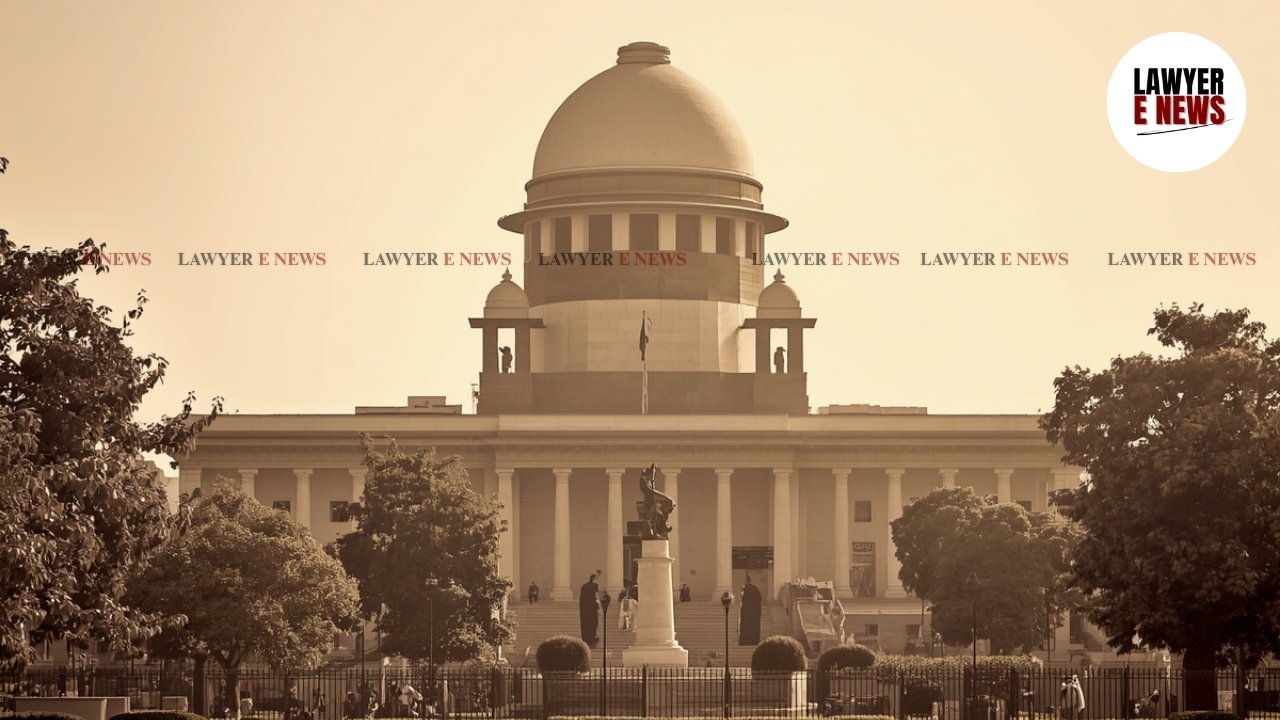
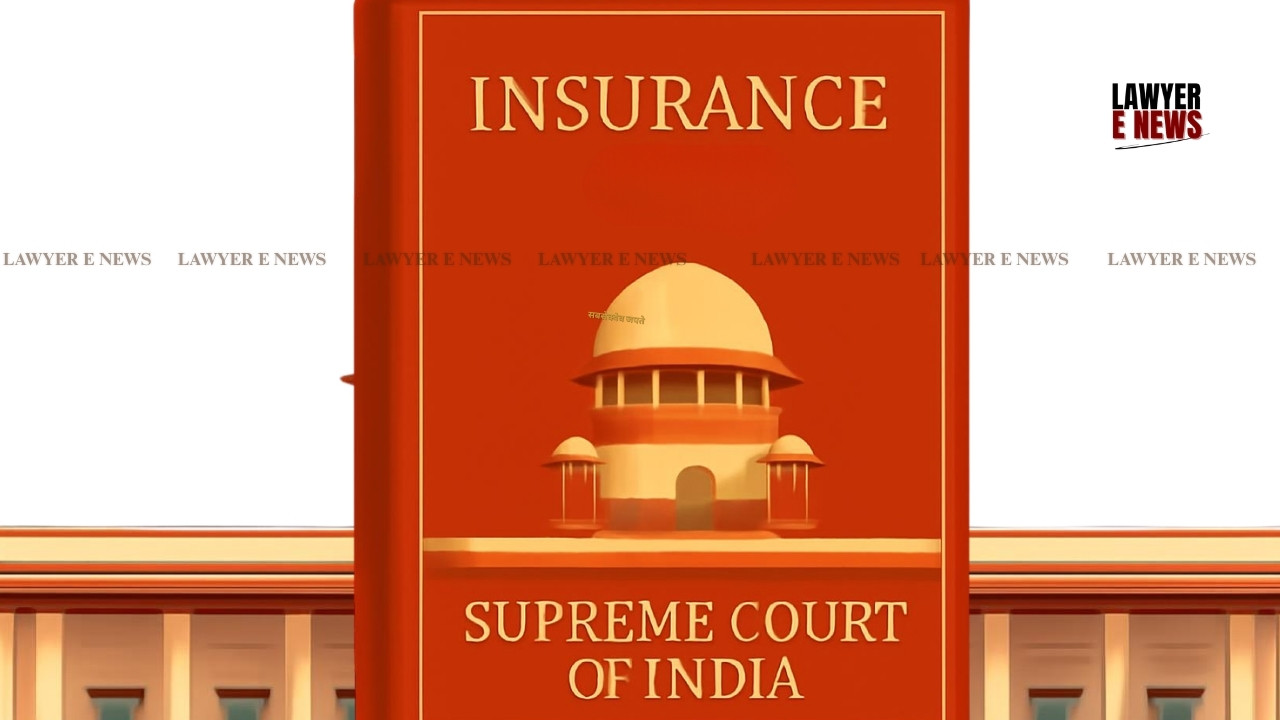
"Variation in the two dying declarations in the manner she died casts doubt on their veracity, but we find the second declaration more believable than the first one because it appears that the first one was recorded after the deceased was tutored to give statement in a particular manner," Supreme Court of India, in a significant ruling, held that a conviction cannot be sustained based on a dying declaration that appears to be the result of tutoring.
A bench of Justice Aravind Kumar and Justice N.V. Anjaria observed that while a dying declaration carries great weight, its reliability is compromised when multiple declarations are contradictory and evidence of external influence exists. The Court emphasized that for a dying declaration to be the sole basis of conviction, it must be uninfluenced, free from concoction, and consistent with the surrounding circumstances.
The case involved the death of a woman who sustained 55% burn injuries within nine months of her marriage in 2001. While the Sessions Court initially convicted the husband, father-in-law, and mother-in-law for murder under Section 302 IPC and cruelty under Section 498A IPC, the High Court later acquitted them of the murder charge. However, the High Court upheld their conviction under Section 498A. The father-in-law (Narendra Singh) challenged this conviction before the Supreme Court, while the State and the deceased’s brother challenged the acquittal under Section 302 IPC.
The primary question before the Court was whether the conviction could be sustained based on two contradictory dying declarations where one was allegedly influenced by tutoring. The Court was also called upon to determine whether the father-in-law was rightly convicted under Section 498A IPC in the absence of specific evidence regarding dowry demands and his direct involvement in cruelty.
Shadow Of Doubt Over Contradictory Dying Declarations
The Court meticulously examined the two dying declarations on record, noting a stark conflict between them. In the first declaration recorded by the Executive Magistrate (PW-18), the deceased alleged that her in-laws set her ablaze. However, in the second declaration recorded the following day by a Deputy Superintendent of Police (PW-22), she stated that she had set herself on fire due to domestic quarrels.
Magistrate Admits Tutoring Of The Deceased
The bench highlighted a crucial admission made by the Executive Magistrate during cross-examination. The Magistrate deposed that four to five persons were present with the deceased in the hospital, and one of them had instructed her to depose in a certain manner. The Court observed that this "casts a shadow of doubt on the veracity of the dying declaration" and rendered the first statement unreliable compared to the second.
Principles Governing Reliability Of Dying Declarations
Referring to the landmark precedent in Khushal Rao v. State of Bombay, the Court reiterated that while a dying declaration can form the sole basis of conviction, it must be judged against surrounding circumstances. The bench noted that a declaration must be recorded in a proper manner, preferably in a question-answer format, and the Court must ensure the statement was not the result of tutoring by interested parties.
Section 498A IPC Cannot Be Used To Indiscriminately Rope In Relatives
The Court expressed concern over the "generic nature" of allegations against the father-in-law. It observed that no direct evidence was produced to show his involvement in mental cruelty or dowry demands. The bench remarked that the father-in-law appeared to have been "roped in" as an extension of the allegations against the husband, a trend the Court has frequently discouraged.
"This Court has time and again issued directions in order to ensure that there is no misuse of this law, which was purported by the legislature as a tool to ensure the safety of women in their marital homes and not to take grudges against all the members of the family even in the absence of any role attributable to them."
Improvements In Witness Testimonies Viewed As Afterthought
The bench scrutinized the testimonies of the deceased's family members, noting significant contradictions between their statements to the police and their depositions in court. While they alleged specific dowry demands for a Maruti car during trial, these details were absent from their statements recorded under Section 161 CrPC. The Court termed these improvements a "legal gimmick" and an "afterthought" to strengthen a weak case.
Absence Of Independent Corroboration
The Court found it significant that not a single independent witness, including neighbors, supported the prosecution's version of dowry harassment. On the contrary, some neighbors testified that the accused parents were out for a walk at the time of the incident, which corroborated the defense's version. The bench held that it is unsafe to rely on contradictory statements of interested witnesses without independent corroboration.
Panchsheel Principles Of Circumstantial Evidence
Invoking the "Panchsheel principles" from Sharad Birdhichand Sarda v. State of Maharashtra, the Court held that the chain of evidence was far from complete. It reiterated that if two inferences are possible from the evidence, the one favoring the accused must be accepted. Since the prosecution failed to exclude every hypothesis of innocence, the conviction could not be sustained.
Final Order Of The Court
The Supreme Court allowed the appeal filed by the father-in-law, setting aside his conviction and sentence under Section 498A IPC. Simultaneously, the Court dismissed the appeals filed by the State and the deceased’s brother, upholding the acquittal of the accused persons under Section 302 IPC. The bench concluded that the demand for dowry was not proved beyond reasonable doubt.
Date of Decision: 30 April 2026