-
by sayum
27 August 2026 3:32 PM







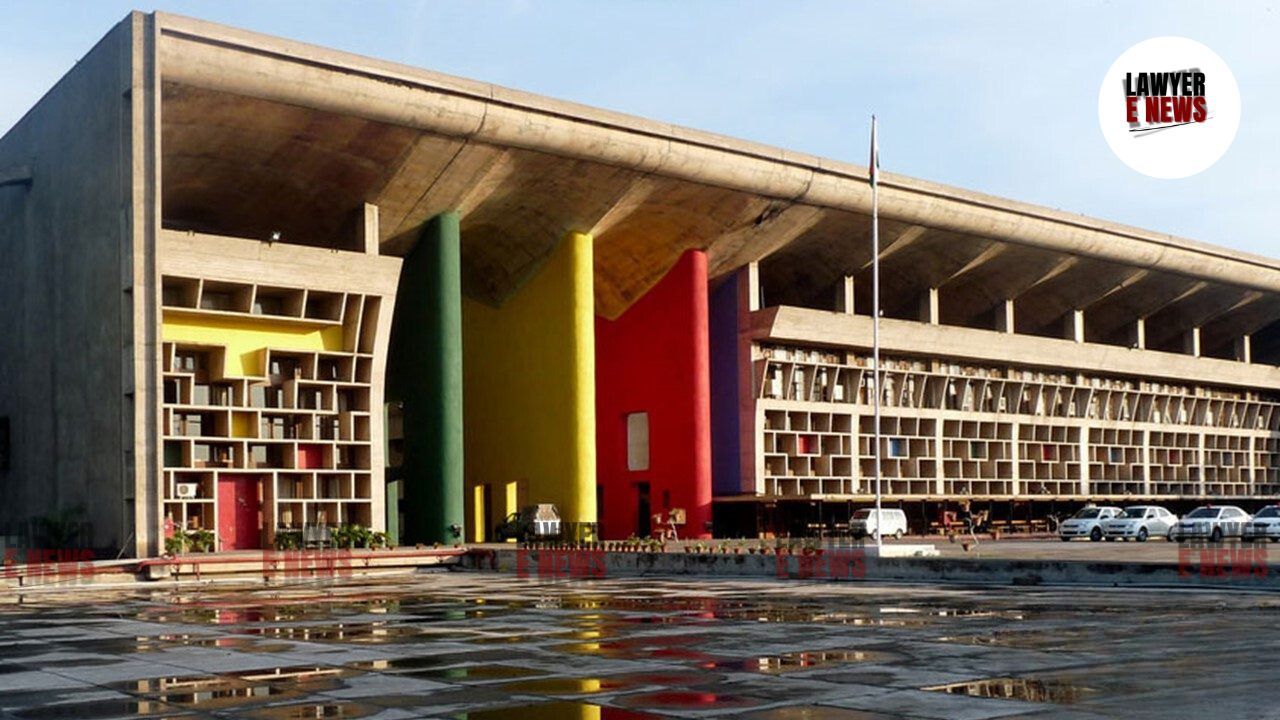
"State is under obligation to look after the most fundamental right given to its citizens namely ‘Right to Life’. It cannot fall back upon subterfuges or take shelter under technicalities to defeat right," Punjab and Haryana High Court, in a significant ruling, held that the right to medical reimbursement is a legitimate entitlement of a government employee rooted in the Right to Life under Article 21 of the Constitution.
Justice Sudeepti Sharma observed that the State cannot rely on technicalities or "wooden attitudes" to deny or delay such claims, especially when treatment is sought in an emergency. The Court emphasized that in life-threatening situations, a patient or their family cannot be expected to hunt for a list of government-approved hospitals before seeking aid.
The case arose from a regular second appeal filed by the State of Haryana against concurrent decrees in favor of Savita Yadav, whose husband, a government employee, sustained a severe head injury in a 2009 motor accident. After being referred from a Government Trauma Center without treatment, he was admitted to private hospitals in Gurugram in an emergency, incurring expenses of approximately Rs. 6 lakhs. The State withheld substantial amounts of the claim on the grounds that the treatment was taken from unapproved hospitals and lacked certain procedural certificates.
The primary question before the court was whether the State could justify the curtailment of medical reimbursement on the ground that treatment was obtained from unapproved private hospitals during an emergency. The court was also called upon to determine if interest could be awarded for delayed payments and whether a mandatory timeline should be established for the disposal of medical reimbursement claims.
Right To Life Under Article 21 Overrides Bureaucratic Technicalities
The Court underscored that the provision of medical treatment or reimbursement is a beneficial act of a welfare State for its employees. It observed that the Right to Life is a fundamental right under Article 21 of the Constitution, which casts a positive obligation on the State. The bench noted that the State "cannot fall back upon subterfuges or take shelter under technicalities to defeat right."
Emergency Situations Preclude Search For Approved Hospitals
Addressing the State's objection regarding unapproved hospitals, the Court held that in an emergency, the priority is to save a human life. The bench remarked that it is "too technical to require such a person to hunt for a list of the approved hospitals and then decide which hospital to go in emergency situation." It further noted that if such regulations are applied strictly, it would result in a "disastrous situation and the patient may die."
"Act committed in an emergency should not be weighed in terms of money, especially when human life is at stake."
State Rebuked For Moving Files Between Offices While Patient Suffers
The Court expressed disappointment over the administrative delays where the respondent's file was moved from one office to another for over a year. The Court observed that the respondent, already facing harassment due to her husband's condition, was further distressed by the State’s "wooden attitude." It held that medical reimbursement "cannot be stated to be alms given to an employee who is otherwise entitled to the same."
Distinction From Supreme Court Precedent On Interest
The State relied on the Supreme Court's ruling in Om Prakash Gargi v. State of Punjab to argue against the grant of interest on delayed reimbursement. However, the High Court distinguished the precedent, noting that in the present case, the claims were duly verified through oral and documentary evidence. The Court held that when an entitlement is not granted within a reasonable period, it must be granted with interest to ensure accountability.
Mandatory Two-Month Deadline For Reimbursement Claims
In a move to protect the larger public interest, the Court fixed a maximum time period for deciding medical reimbursement claims. It directed the States of Punjab and Haryana, the Union Territory of Chandigarh, and their various Corporations and Boards to decide such claims within two months of submission. The bench held that any delay beyond this period would attract an interest of 9% per annum.
"Medical reimbursement is a right of a government employee... The government cannot take its own time period to decide or verify the medical bills."
The High Court dismissed the State's appeal and upheld the concurrent judgments of the lower courts directing full reimbursement with interest. It concluded that the State must act liberally in framing and implementing medical policies, as a person in pain cannot be expected to choose a hospital based on administrative lists. The ruling establishes a strict 60-day window for the processing of medical claims across the region.
Date of Decision: 21 April 2026