-
by sayum
27 August 2026 3:32 PM







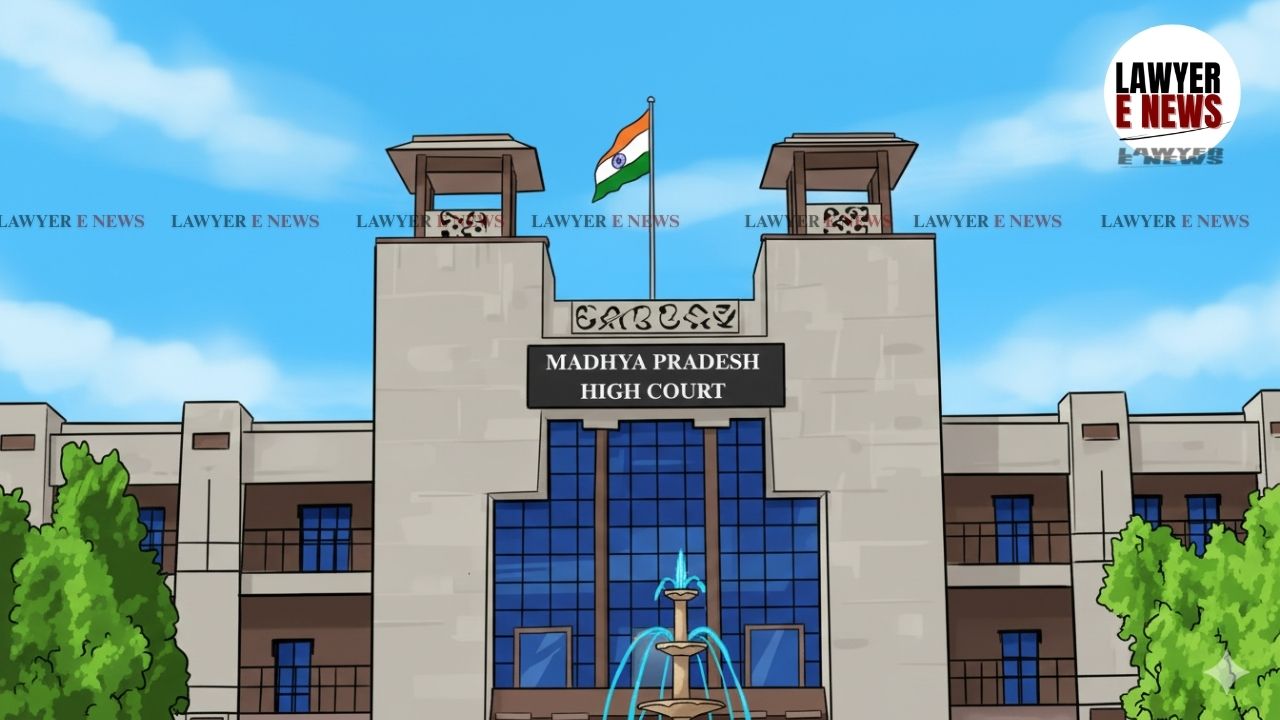
"Freedom to choose the person to be appointed as Principal has always been recognised as a vital facet of the right to administer the educational institution... even if the institution is aided, there can be no interference with the said right," Madhya Pradesh High Court, Gwalior Bench, in a significant judgment, held that minority aided educational institutions possess an absolute right under Article 30(1) of the Constitution of India to appoint a Principal of their choice.
A Division Bench comprising Justice Anand Pathak and Justice Anand Singh Bahrawat observed that State circulars mandating the assignment of "current charge" of the post of Principal only to the senior-most faculty member are unconstitutional to the extent they apply to minority institutions. The Court emphasized that the right to choose the head of an institution is a core component of administrative autonomy that cannot be diluted by seniority-cum-fitness rules.
The dispute arose at S.S.L. Jain P.G. College, Vidisha, a minority aided institution, following the retirement of its In-charge Principal. While the State’s Regional Additional Director directed that the charge be handed over to the senior-most teacher, Dr. Archana Jain, the College’s Governing Body resolved to appoint Dr. S.K. Upadhyay instead. When the senior teacher challenged this before a Single Bench, the Court ordered a reconsideration based on government circulars. The College management subsequently filed a writ appeal, asserting its constitutional right to choose its own administrator.
The primary question before the court was whether the State can impose seniority-based criteria for the appointment of an In-charge Principal in a minority educational institution. The court was also called upon to determine whether circulars dated August 25, 2021, and September 8, 2021, issued by the Higher Education Department, violate the fundamental rights guaranteed under Article 30(1) of the Constitution of India.
Court Explains Absolute Nature of Article 30(1)
The Court began by clarifying that the status of the appellant as a minority institution was undisputed. It noted that the freedom of choice in selecting a Principal is a vital facet of the right to administer such institutions. Referring to the landmark Supreme Court decision in Secy. Malankara Syrian Catholic College v. T. Jose, the Bench reiterated that this right is intended to ensure equality with the majority and allows minorities to appoint teaching staff in whom they have confidence.
Management's Choice Prevails Over Seniority
The Bench observed that the post of Principal is of "pivotal importance" as the head responsible for the tone, temper, and discipline of the institution. The Court held that even if an institution receives State aid, the management is under no obligation to appoint the senior-most qualified member as the Principal. The right to choose a head who aligns with the philosophy and objects of the institution is protected, and any legislative or executive act attempting to "chisel out" this right is void.
"The management's right to choose a qualified person as the Headmaster of the school is well insulated by the protective cover of Article 30(1) of the Constitution and it cannot be chiselled out through any legislative act or executive rule."
State Circulars Declared Unconstitutional for Minorities
The Court specifically scrutinized the executive instructions and circulars dated August 25, 2021, which restricted the choice of minority institutions to the senior-most teacher for in-charge assignments. The Bench declared these circulars unconstitutional to the extent of their application to minority institutions. It ruled that administrative instructions cannot override the constitutional guarantee under Article 30(1), which remains absolute regardless of whether the post is supported by State aid.
Scope of Judicial Review in Management Decisions
Applying the ratio from Manager, Corporate Educational Agency v. James Mathew, the Court held that once a minority management makes a "conscious choice" of a qualified person, the judiciary cannot examine the merits, rationality, or propriety of that choice. The Bench noted that the Single Bench had erred by directing a reconsideration based on seniority, as the management is entitled to appoint the person they believe is most suited to lead the institution.
"Once the management of a minority educational institution makes a conscious choice of a qualified person... the court cannot go into the merits of the choice or the rationality or propriety of the process of choice."
Illegality of Unauthorized Statutory Interference
The Court also addressed the role of the Regional Additional Director, noting that statutory authorities must exercise their discretion independently. Citing Joint Action Committee of Air Line Pilots' Assn. of India v. DG of Civil Aviation, the Bench held that any decision taken at the behest of an authority with no statutory role is patently illegal. The Court found that the initial direction to appoint the senior-most teacher bypassed the Management’s constitutional prerogative.
In its concluding remarks, the Division Bench set aside the Single Bench order dated August 5, 2025. The Court upheld the College management's order dated February 27, 2025, which had assigned the charge of In-charge Principal to Dr. S.K. Upadhyay. The appeals were allowed, reinforcing that the prospects of career advancement for staff must yield to the management’s right to establish and administer educational institutions under Article 30(1).
The Madhya Pradesh High Court has reaffirmed that the right of minority institutions to select their leadership is a fundamental constitutional protection that cannot be curtailed by State-mandated seniority rules. By declaring the contested circulars unconstitutional for minority institutions, the ruling ensures that administrative autonomy remains intact even in aided colleges. This judgment serves as a vital precedent for the protection of minority rights against executive overreach in the educational sector.
Date of Decision: 30 April 2026