Uttering That a Woman Is a Prostitute in Public Can Amount to Abetment of Suicide: Bombay High Court Declines to Quash FIR Under Section 306 IPC
25 December 2025 10:08 AM
By: Admin
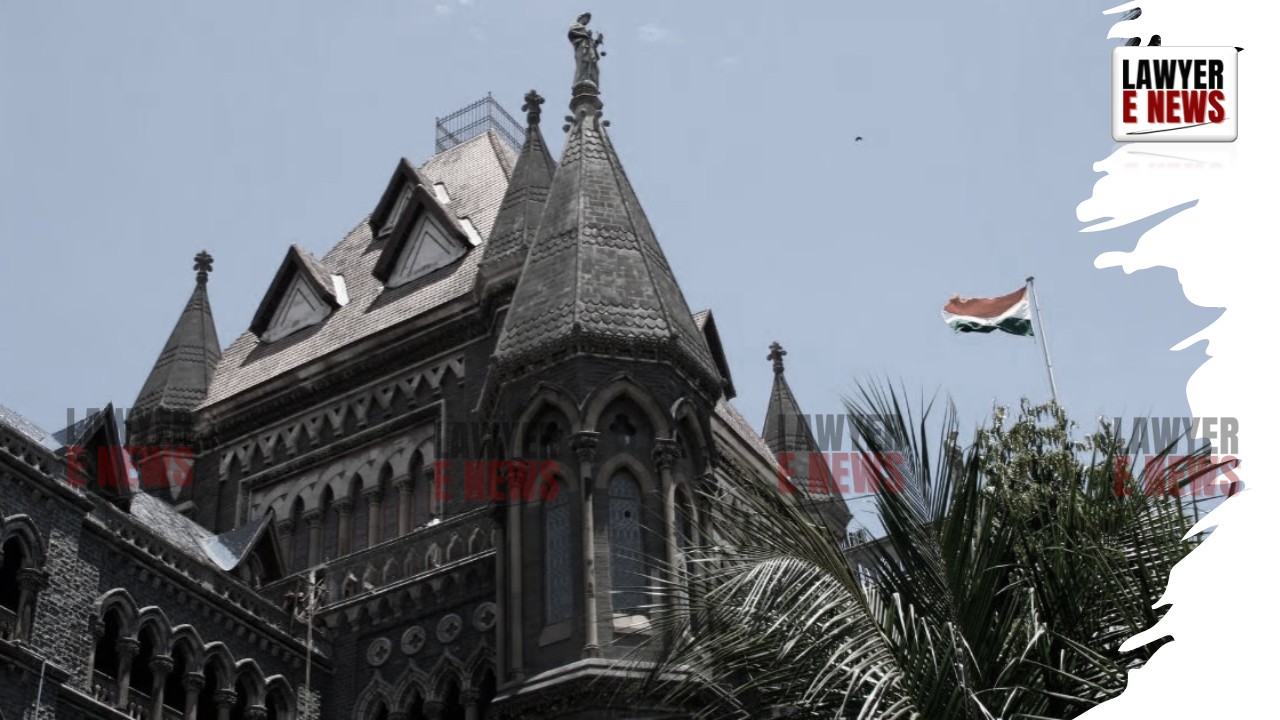
“An indirect influence or oblique impact which the acts or utterances of accused caused or created in the mind of deceased and which drove her to suicide would be sufficient to constitute the offence of abetment of suicide”, Nagpur Bench of the Bombay High Court delivered a significant judgment, rejecting an application under Section 482 of the Criminal Procedure Code that sought quashing of an FIR and charge-sheet under Section 306 read with Section 34 of the Indian Penal Code. The case revolved around the critical question of whether public humiliation—specifically, imputing immoral character to a woman—could amount to abetment of suicide. The Court held that, in the facts of the case, there was sufficient prima facie material to proceed to trial, and declined to exercise its inherent powers to interfere.
“Prima facie material shows proximity between acts of humiliation and the suicide committed immediately thereafter”
The application was filed by two accused, Santosh and another, challenging an FIR registered for abetment of suicide after the informant’s wife died by suicide. The allegation was that the applicants, under the influence of alcohol, had repeatedly insulted the deceased by calling her a “prostitute” in front of villagers and that this public character assassination led her to hang herself. The FIR was followed by a charge-sheet after investigation.
According to the complainant, on the night of March 1, 2023, one of the applicants entered the deceased’s bedroom while the other stood outside and hurled abuses. The next day, the duo returned and repeated the humiliation in the presence of villagers. Distressed and insulted, the woman is said to have locked herself in her bedroom and committed suicide. Witnesses—including the father-in-law and several villagers—confirmed hearing the derogatory remarks and seeing the applicants at the spot.
"Utterances of public humiliation attacking the self-respect and mental equilibrium of the deceased can constitute instigation within the meaning of Section 107 IPC"
The central legal issue before the Court was whether the conduct of the accused, specifically the alleged public shaming and moral vilification, amounted to “abetment” within the meaning of Section 107 IPC and therefore justified invoking Section 306 IPC.
The applicants’ counsel, Senior Advocate A.S. Mardikar, argued that there was no mens rea, no instigation in the legal sense, and that insulting language—while inappropriate—could not be equated with aiding or abetting suicide unless there was direct intent or encouragement. Citing judgments like M. Mohan v. State and Ramesh Kumar v. State of Chhattisgarh, he argued that mere utterance of words without any intent to provoke suicide should not attract penal consequences under Section 306.
On the other hand, the Additional Public Prosecutor contended that the conduct of the applicants showed clear mens rea and a deliberate attack on the dignity of the deceased, and the proximity in time between the public humiliation and her suicide demonstrated prima facie incitement.
“Each person has his own idea of self-esteem and self-respect... It is impossible to lay down a straight-jacket formula” — Court applies Apex Court’s nuanced suicide jurisprudence
Justice Urmila Joshi-Phalke, writing the judgment for the Division Bench, extensively referred to the statutory framework under Sections 306, 107 and 108 IPC, and the corresponding provisions in the Bharatiya Nyaya Sanhita. The Court held that:
“To attract the provision, what is to be seen is that the accused have actually instigated or aided the victim in committing suicide. There must be direct or indirect inducement to the commission of suicide, and the accused must be shown to have played an active role.”
The Court found strong support for this principle in Ramesh Kumar and M. Mohan, reiterating:
“Abetment involves a mental process of instigating a person or intentionally aiding a person in doing of a thing. Without a positive act on the part of the accused to instigate or aid in committing suicide, conviction cannot be sustained.”
However, the Court clarified that while direct instigation is a requirement, it can also be inferred from the conduct and surrounding circumstances, especially where humiliation attacks the mental dignity of a person.
“Words uttered in public, insulting the woman and attacking her character, were sufficient to demoralize and affect her self-respect — a proximate cause for suicide”
Relying on evidence collected during investigation, the Court noted: “From statements of witnesses, requisite intention of applicants and mens rea are revealed. As per the case of the prosecution, the deceased was referred as ‘prostitute’ and it demoralized her as well as affected her self-respect and immediately she has committed suicide by hanging herself.”
The High Court also took guidance from the Supreme Court’s observations in Nipun Aneja v. State of Uttar Pradesh, where the Apex Court emphasized that prima facie satisfaction is sufficient at the stage of Section 482 proceedings:
“The test that the Court should adopt... is to ascertain on the basis of the materials on record whether there is anything to indicate even prima facie that the accused intended the consequences of the act, i.e., suicide.”
The Bench concluded that given the nature of the allegations, consistent witness statements, and the proximity between the acts and the suicide, this was not a case where quashing of FIR was warranted. The issue of whether the utterances legally constitute abetment would be a matter for trial.
“Human mind could be affected and react in myriad ways... There is no specific yardstick to estimate psychological impact of humiliation”— Court relies on Ude Singh and Praveen Pradhan
Noting the unique and individualistic nature of a person’s psychological response to humiliation, the Court highlighted that abetment must often be inferred from context and conduct. Citing Ude Singh v. State of Haryana and Praveen Pradhan v. State of Uttaranchal, the Bench observed:
“Sometimes, there may not be direct evidence in regard to instigation which may have direct nexus to suicide. Therefore, in such a case, an inference has to be drawn from the circumstances...”
Ultimately, the Court held that: “All that applicants did was utter insulting statement to the deceased in public and humiliated and also demoralized her by attacking her character. The words, allegedly uttered by applicants in public and insulting the deceased in public alone, are sufficient, at this stage, to show that the proximate cause for the deceased to commit suicide was utterances of words by applicants.”
Thus, it was not a case fit for intervention under Section 482 CrPC.
The Bombay High Court’s ruling in Santosh & Another v. State of Maharashtra reinforces the view that public character assassination—especially gendered and derogatory attacks—can have a profound psychological impact amounting to abetment of suicide under Section 306 IPC. The Court emphasized that even indirect acts, if they create mental distress sufficient to drive a person to suicide, must face judicial scrutiny in trial, and cannot be brushed aside at the threshold.
Date of Decision: December 19, 2025