-
by sayum
23 August 2026 9:32 AM







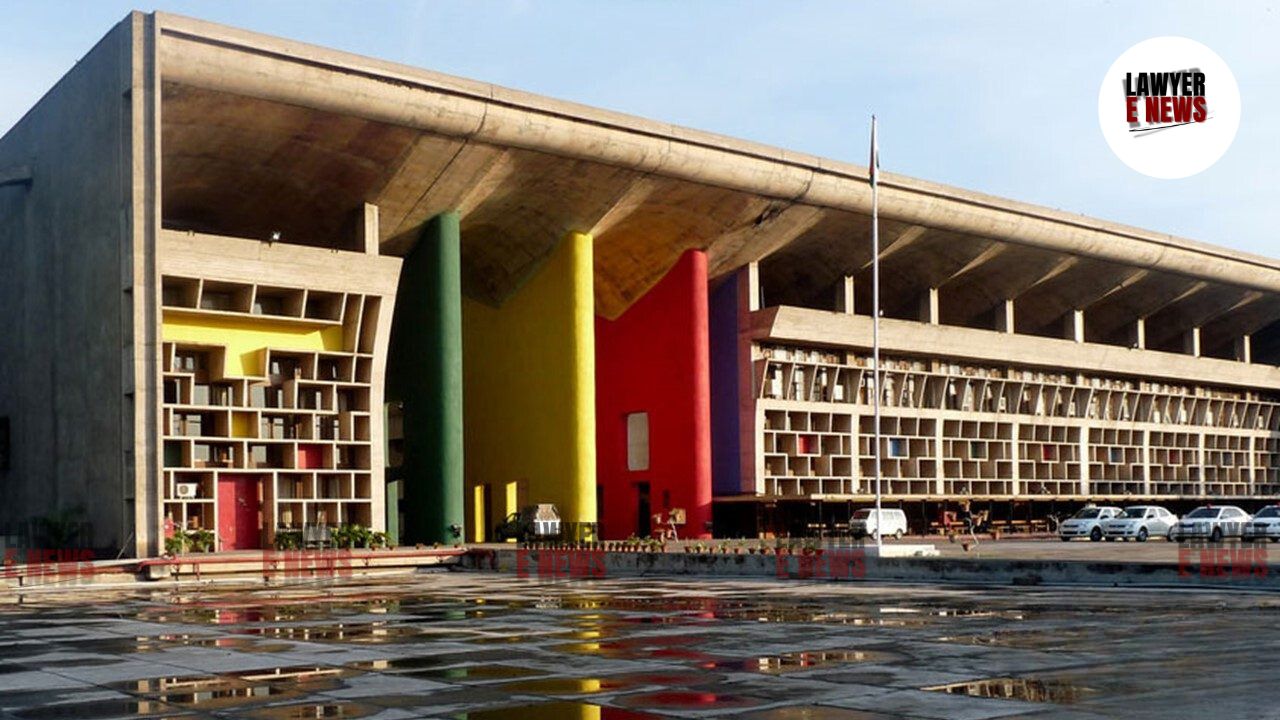
"Shortlisting Based on Higher Experience Does Not Violate Candidate Rights or Alter Statutory Eligibility" – In a significant ruling impacting public recruitment jurisprudence, the Punjab and Haryana High Court dismissed a batch of writ petitions challenging the Union Public Service Commission’s (UPSC) decision to enhance the minimum experience from two to six years at the interview stage for the recruitment to Assistant District Attorney (ADA) posts in the Chandigarh Administration. The Court held that such shortlisting, when rational and transparently grounded in the terms of the advertisement, does not violate Article 14 or any vested right of candidates.
The Division Bench of Justice Namit Kumar and Justice Vikram Aggarwal observed:
"Shortlisting by enhancing the experience criteria to restrict the number of interview candidates is a permissible method of selection and does not amount to altering the essential qualifications for eligibility."
The decision effectively reaffirmed the autonomy of UPSC to adopt rational screening processes when faced with an overwhelming number of applicants.
"Eligibility Is Not the Same as Being Entitled to an Interview" – High Court Clarifies Legal Distinction
The controversy arose after UPSC Advertisement No. 08/2025, dated 28.06.2025, invited applications for 09 ADA vacancies (UR-07, EWS-01, OBC-01). The essential qualification specified two years of legal practice, with an upper age limit of 30 years for general category applicants.
However, when 1699 applications were received for the 9 posts, UPSC invoked Clause 3, Note II of the advertisement—permitting the Commission to adopt shortlisting criteria—and enhanced the required experience for interview to 6 years for UR/OBC and 5 years for EWS candidates.
Petitioners who met the minimum eligibility of two years but were excluded from interviews approached the High Court after the Central Administrative Tribunal (CAT) refused to stay the selection process.
Upholding the CAT’s refusal, the Court reasoned:
“The prescribed essential qualifications are minimum, and mere possession of them does not confer any right to be called for interview. Experience-based shortlisting is not arbitrary when backed by overwhelming response and clear advertisement clauses.”
Supreme Court Precedents Support Experience-Based Shortlisting
The High Court relied on the landmark judgment of the Supreme Court in MPPSC v. Navnit Kumar Potdar, (1995) 1 SCT 50, which upheld a similar enhancement in experience during the interview stage. In that case, the eligibility was five years, but only candidates with 7.5 years' practice were shortlisted due to a large number of applications.
Citing the SC’s observations, the Bench noted:
“This process of shortlisting shall not amount to altering or substituting the eligibility criteria given in statutory rules or the advertisement. It is part of the selection process, especially where the selection is only through interview.”
It was further emphasized that:
“No fault can be found with the Commission if the applicants having completed longer practice are only called for interview, as they are presumed to have better experience.”
The Court also referred to Union of India v. T. Sundararaman, (1997) 4 SCC 664, and a recent 2025 ruling of the Delhi High Court in Pramiti Basu v. Secretary General, Supreme Court of India, 2025 NCDHC 7483, both of which upheld the right of recruiting bodies to apply benchmarks during selection if transparently derived and not arbitrary.
Plea That Higher Experience Is Practically Unachievable Within Age Limit Rejected
One of the main planks of the petitioners’ argument was that enhancing the experience to 6 years was “practically unachievable” within the maximum age limit of 30 years, considering the academic timeline under the +2+3+3 system.
The Court was unpersuaded. It held that:
“Eligibility is not equal to selection. Many candidates might still meet the 6-year threshold within the age limit. The process remains valid so long as it does not exclude all eligible candidates and has a rational basis.”
The Bench observed that 138 applications had made it to the consideration zone, showing that the enhanced criteria were not exclusionary or impossible in practice.
No Prima Facie Case, No Violation of Natural Justice
Dismissing the prayer for interim relief, the Court observed that the petitioners had not made out a prima facie case, nor did the balance of convenience lie in their favour. The interview schedule (29–31 December 2025) was upheld, and no direction was issued to allow provisional participation or keep any post vacant.
The Bench concluded:
“There is nothing illegal or arbitrary in the action of the UPSC in enhancing the shortlisting criteria. No fundamental or statutory right of the petitioners has been violated.”
Petitioners Were Eligible, Not Entitled to Interview – UPSC’s Enhanced Criteria Upheld as Lawful and Justified
The High Court’s judgment reiterates a critical distinction in service law—eligibility to apply does not translate into a right to be called for an interview, especially when the selection process permits shortlisting based on rational and disclosed parameters.
The three writ petitions were dismissed with a categorical endorsement of the UPSC’s discretion to restrict interviews to the most experienced among eligible candidates.
Date of Decision: 29 December 2025