
-
by sayum
29 August 2026 3:15 PM







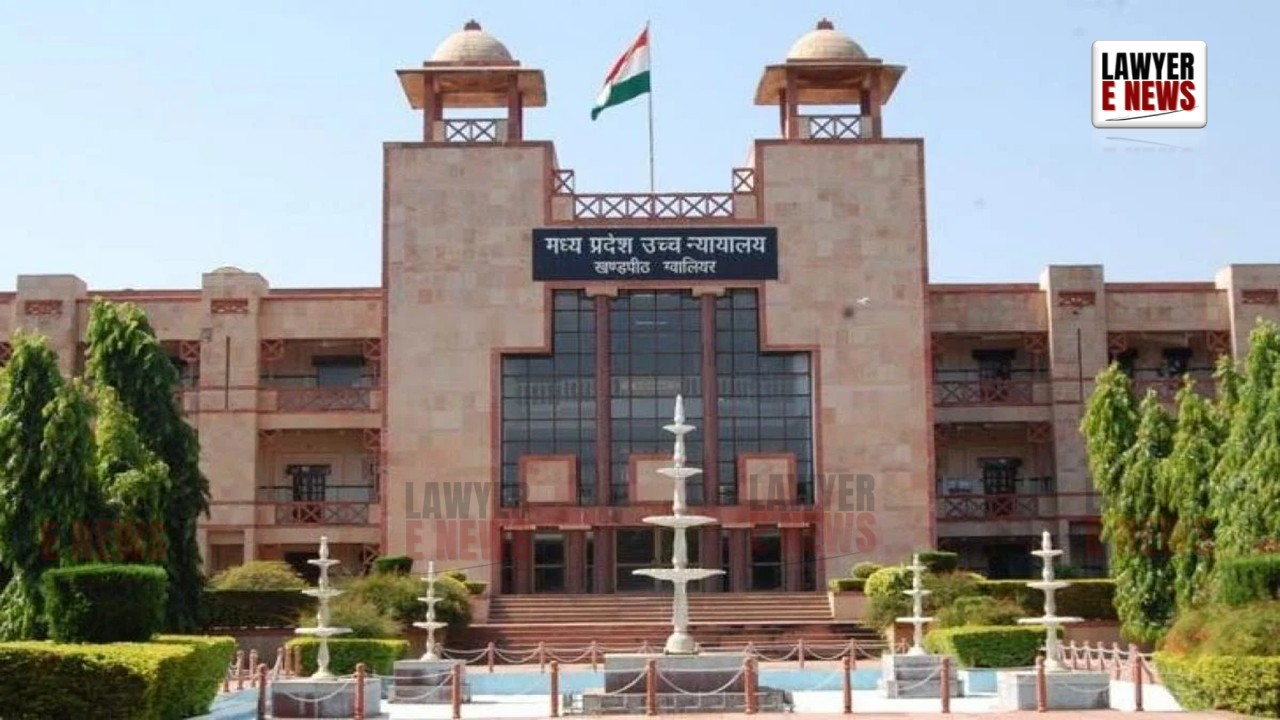
“Adverse Possession Cannot Be Claimed While Simultaneously Denying Title of the True Owner” – In a notable ruling Madhya Pradesh High Court overturned the concurrent findings of two lower courts that had erroneously accepted the defendant’s plea of adverse possession based on an unregistered sale deed dated 15/11/1973.
Justice G.S. Ahluwalia held that “possession based on an unregistered sale deed does not become adverse merely by lapse of time”, and when such possession is derived from the plaintiff himself, it is “permissive and not hostile” in nature. The Court decreed the suit in favour of the plaintiff, granting possession and a permanent injunction against the defendant.
The decision underscores the strict judicial stance that adverse possession cannot be claimed while simultaneously denying the title of the original owner and attempting to derive ownership from them through invalid documentation.
The plaintiff, Puran Singh, had instituted a civil suit seeking possession, permanent injunction, and mesne profits, asserting ownership over a house property located in Madankhedi, District Vidisha. According to him, he had allowed the defendant to temporarily occupy a portion of the property out of goodwill when the latter was in financial distress.
The defendant, Bhav Singh, contested the suit claiming he had purchased the property from the plaintiff by paying Rs.800 through an unregistered sale deed dated 15 November 1973, which he alleged was never registered due to mutual understanding. On this basis, he asserted adverse possession from that date.
Both the Trial Court (03/07/2000) and First Appellate Court (28/11/2001) held in favour of the defendant, declaring that he had perfected his title by adverse possession over several decades.
Aggrieved, the plaintiff approached the High Court in second appeal under Section 100 of the Civil Procedure Code, which was admitted on the question:
“Whether the defendant’s possession based on title through an unregistered sale deed was permissive, and whether the courts below erred in law in treating it as adverse possession?”
Justice Ahluwalia’s observations firmly relied on settled principles laid down by the Supreme Court:
“Since the value of the property was more than Rs.100, the property could not have been sold except by a registered sale deed. Thus, it is clear that no right or title had stood transferred to the defendant by virtue of the unregistered sale deed dated 15/11/1973 (Ex.D-1). At the most, it can be said that defendant was in permissive possession.” [Para 16]
The Court emphasized that adverse possession is a hostile act, and any claim must necessarily demonstrate a clear animus possidendi—that is, a conscious, hostile assertion of ownership to the knowledge of the true owner.
Quoting from the Supreme Court in Karnataka Board of Wakf v. Government of India, the Court reiterated:
“Adverse possession is a hostile possession by clearly asserting hostile title in denial of the title of the true owner. It must be actual, visible, exclusive, hostile and continued over the statutory period.” [Para 20]
In the present case, the defendant’s claim of ownership was rooted in the plaintiff’s own title—through an unregistered and invalid document. Thus, there was no element of hostility to the plaintiff’s title. The Court observed:
“After having set up his defence that he had become owner by virtue of an unregistered sale deed, and having failed to establish the same, defendant cannot claim that he was in open and hostile possession even to the knowledge of plaintiff.” [Para 16]
Rejection of the Claim of Adverse Possession
The High Court ruled that merely staying in possession for long years does not ipso facto convert permissive possession into adverse possession.
Relying on Hemaji Waghaji Jat v. Bhikabhai Khengarbhai Harijan, the Court noted:
“The ordinary classical requirement of adverse possession is that it should be nec vi, nec clam, nec precario—without force, without secrecy, and without permission.”
In contrast, the present case involved a permissive entry based on an unregistered document executed by the plaintiff himself.
Justice Ahluwalia further quoted from S.M. Karim v. Bibi Sakina:
“Long possession is not necessarily adverse possession, and a mere suggestion that there was uninterrupted possession for twelve years is not enough.” [Para 16]
The Court categorically held that the lower courts committed a material illegality in accepting a claim of adverse possession that was neither pleaded with legal sufficiency nor proved by hostile intent.
Suit for Possession Without Declaration of Title: Legally Maintainable
The defendant’s own written statement proved crucial to this aspect. The Court reasoned:
“Since defendant had not disputed the title of the appellant and on the contrary, claimed that he had purchased the property from the appellant himself, even if the plaintiff did not seek a declaration of title, the suit for possession was maintainable.” [Para 18]
Thus, the relief sought was found to be well within the plaintiff’s rights under law.
Setting aside the judgments of the lower courts, Justice Ahluwalia concluded:
“Since possession of defendant had not become adverse to the right and title of plaintiff, therefore, the Court below has committed a material illegality.” [Para 17]
The High Court allowed the appeal, decreed the plaintiff’s suit, and issued the following directions:
“The defendant shall hand over the vacant possession of the disputed property to the plaintiff and is hereby permanently restrained from interfering with the peaceful possession of the plaintiff over the property in dispute.” [Para 21]
This judgment reinforces the principle that adverse possession is not a fallback when a party’s claim under an invalid transaction fails. Where entry is with consent, even informally or under an invalid sale, the nature of possession remains permissive unless clear and hostile acts to the knowledge of the true owner are established.
As Justice Ahluwalia aptly stated, “the possession must be open and hostile enough to be capable of being known by the parties interested in the property”, and that standard was clearly not met.
Date of Decision: 6 August 2025