-
by sayum
23 August 2026 2:56 PM







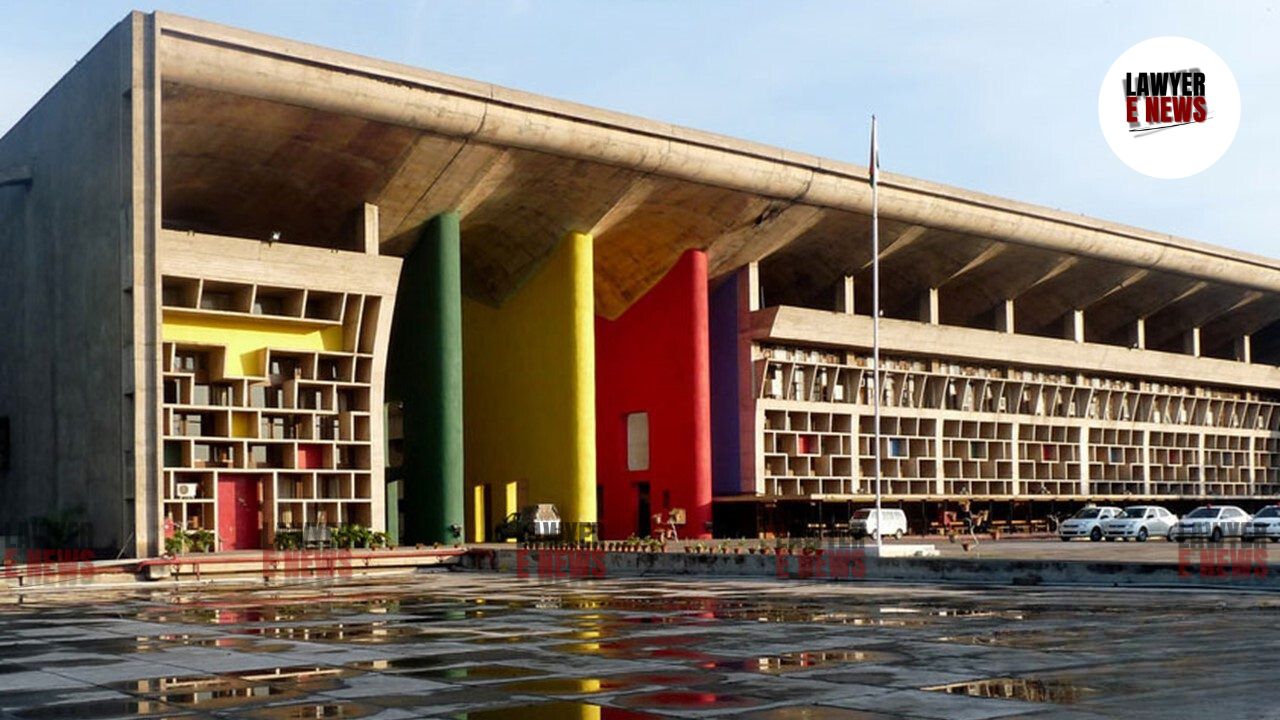
“Election Tribunal Ignored Mandatory Trial Procedure – Framing of Issues Is Not a Ritual, It Is the Foundation of Adjudication,” In a crucial ruling reinforcing the sanctity of procedural fairness in election disputes, the Punjab and Haryana High Court has set aside an Election Tribunal’s order that declared an unelected candidate as the elected Panch, citing both substantive legal errors and gross procedural impropriety.
Justice Pankaj Jain held that the Tribunal not only violated the mandatory procedure prescribed under the Punjab State Election Commission Act, 1994, but also committed a fundamental legal error in declaring the respondent as elected without the statutory satisfaction under Section 90 that the election petitioner would have secured a majority of valid votes but for the corrupt votes polled by the disqualified candidate.
The Court quashed the Tribunal’s order dated 06.03.2025 and remanded the matter for fresh adjudication, directing the Tribunal to frame issues, record evidence, and proceed in strict conformity with law. The Tribunal has been directed to decide the case on or before June 30, 2026.
“Non-Disclosure of Criminal Antecedents May Void Election, But Doesn’t Entitle Election Petitioner to Be Declared Elected Automatically”
The central controversy arose from the Tribunal’s decision to not only void the election of the returned candidate for non-disclosure of criminal cases—a recognized corrupt practice under election law—but also to declare another candidate as duly elected, without any inquiry or evidence to show that he would have received a majority of valid votes in the absence of corrupt practice.
Justice Jain clarified the correct legal position under Sections 89 and 90 of the 1994 Act, stating:
“The Tribunal erred in declaring respondent No.4 as elected candidate without there being any allegation or satisfaction that but for the votes obtained by the returned candidate by corrupt practices, the election petitioner would have obtained majority of valid votes.”
Relying on the Supreme Court's authoritative pronouncements in Prakash Khandre v. Dr. Vijay Kumar Khandre (2002) 5 SCC 568, and Krishnamoorthy v. Sivakumar (2015) 3 SCC 467, the Court reiterated that the votes cast for a disqualified or corrupt candidate cannot simply be ‘thrown away’, and no inference as to alternate voting preference can be drawn in absence of statutory satisfaction.
“Where a disqualified person has been allowed to contest due to the omission of the Election Commission, and there is no allegation that voters were influenced by the corrupt practice, the votes polled by him cannot be excluded from the democratic process,” the Court observed.
“Framing of Issues Is Not a Formality – Tribunal Cannot Devise Its Own Procedure in Election Disputes”
What shocked the Court more than the erroneous declaration was the procedural disregard by the Election Tribunal. No issues were framed, no evidence was recorded, and not even a written response was sought from the opposing party. The High Court came down heavily on this conduct:
“The Tribunal unfortunately devised his own procedure, ignoring the one established by law. Leave aside framing of issues, the Tribunal did not even bother to call for a response from the respondent.”
Citing Makhan Lal Bangal v. Manas Bhunia (2001) 2 SCC 652, the Court stressed that election petitions are akin to civil trials, and compliance with the Code of Civil Procedure (CPC) is not optional but mandated under the statutory scheme.
“An election petition is not a dispute between the petitioner and respondent merely – the fate of the constituency is on trial,” the Court quoted with approval.
The Court also referenced its recent decision in Gagandeep Singh v. SDM-cum-Election Tribunal (FAO No.1809 of 2025) and Sarbjeet Kaur v. Kamaljit Kaur (FAO No.523 of 2025), where it had similarly condemned the failure of Tribunals to follow due process.
Election Tribunal's Conduct Draws Reproach – Matter Flagged to Chief Secretary
The Court’s anguish over the lack of judicial temperament and procedural knowledge among officers presiding over Election Tribunals was unambiguous. It endorsed the concern raised in Sham Lal v. State Election Commission (1997) 1 RCR (Civil) 82) about entrusting non-judicial administrative officers with quasi-judicial adjudication without adequate training or aptitude.
“The Tribunal proceeded as if resolving a trivial dispute, without realizing he was dealing with democratic rights. The order is bereft of application of mind.”
Taking institutional note, the Court directed that a copy of the order be sent to the Chief Secretary, Punjab, with a request to issue proper instructions to all Election Tribunals in the State to strictly follow the procedure laid down in law.
Remand Ordered – Fresh Trial to be Concluded by June 30, 2026
Holding that the Tribunal's actions had vitiated the very foundation of election adjudication, the Court allowed the appeal and ordered:
“The present appeal is allowed. Order dated 06.03.2025 passed by the Election Tribunal, Sri Muktsar Sahib is hereby set aside. Parties are directed to appear before the Tribunal on 27.10.2025. The Tribunal shall decide the election petition afresh after framing issues based on the pleadings, in accordance with law.”
The Court also emphasized expeditious disposal and fixed June 30, 2026 as the outer limit for completing the trial.
Strong Reminder That Rule of Law Applies Equally to Election Tribunals
This ruling serves as a critical precedent on the limits of Tribunal discretion in election matters and the impermissibility of shortcut justice in matters as serious as democratic representation. It reaffirms that procedural safeguards are the essence of fair electoral adjudication, and that no candidate can be declared elected unless the strict statutory conditions under Section 90 are satisfied.
As Justice Jain rightly emphasized:
“Democracy cannot afford to rest on casual adjudication of electoral disputes. Justice must not only be done, but appear to be done, and that begins with compliance to law.”
Date of Decision: December 22, 2025