-
by sayum
28 August 2026 8:44 AM







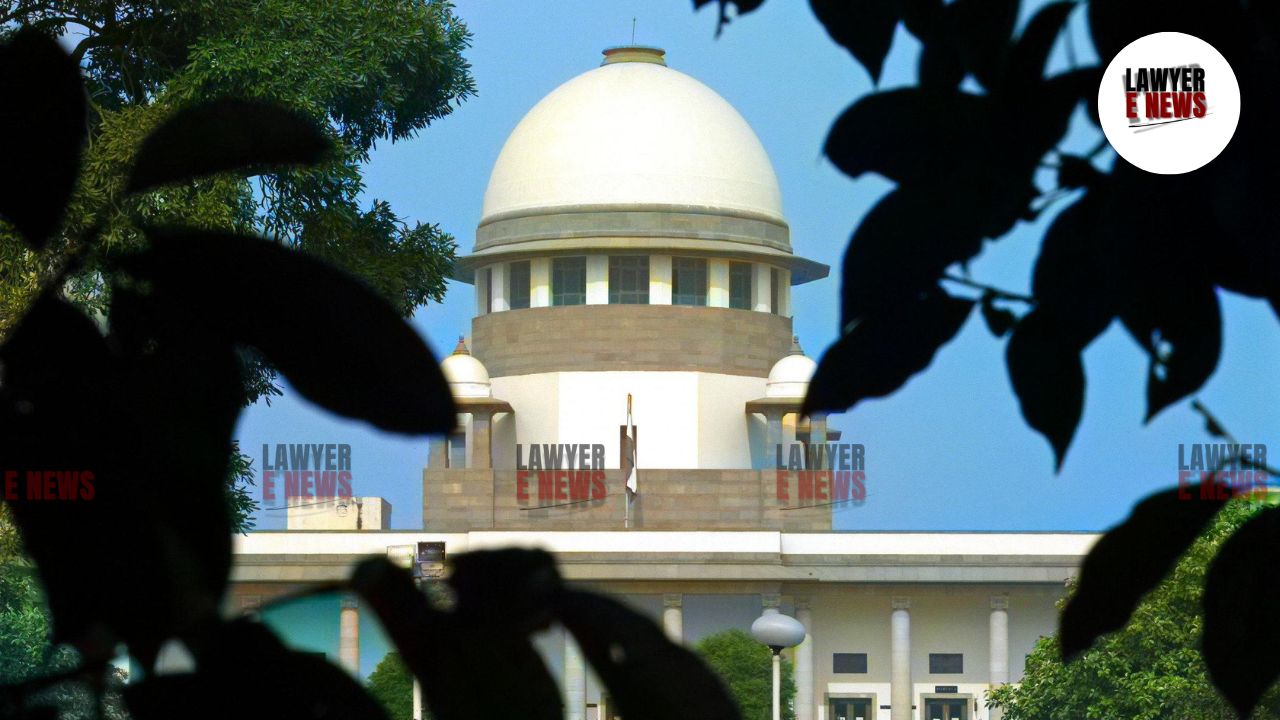
“Litigation Must End Somewhere — Protection Under Rule 102 Is Only Denied When Transferee Derives Title from Judgment-Debtor”, In a landmark judgment Supreme Court of India resolved a complex and long-standing legal conundrum involving Order XXI Rules 97 to 102 of the Code of Civil Procedure (CPC) and the doctrine of lis pendens under Section 52 of the Transfer of Property Act.
The Court, speaking through Justices Vikram Nath and Sandeep Mehta, held that Rule 102 of Order XXI CPC, which bars resistance to execution by transferee pendente lite, applies only when such transferee traces his title from the judgment-debtor. If the transferee derives title independently (i.e., not through the judgment-debtor), he is entitled to resist execution and seek adjudication under Rules 97 to 101.
“The transferee of a judgment-debtor who traces his title to the immovable property, that is the subject matter of a pending suit, is not entitled to seek remedy under Rules 97 to 102 of Order XXI,” the Court said, while clarifying that transferees from third parties unconnected to the original litigation are not barred.
When a Third-Party Purchaser Faces Decree of Ejectment
The case arose from a property dispute in Goa, where the appellant Tahir V. Isani had purchased a commercial property in 2007 from M/s Rizvi Estate and Hotels Pvt. Ltd., who themselves had purchased it in 1988 from the original owner, Mrs. Maria Misquita. Meanwhile, one Madan Waman Chodankar, a tenant in the same premises since 1977, had initiated litigation and obtained a decree in 2008 for eviction of his former business partners (the Maliks) from a portion of the leased property.
Though the appellant was a bona fide purchaser from the registered owner, the decree-holder attempted to execute the 2008 decree and sought possession, which led to the appellant’s resistance under Order XXI Rules 97 and 101 CPC. A decade-long enquiry ensued before the Executing Court.
Later, in 2019, the legal heirs of the decree-holder moved an application invoking Order XXI Rule 102, seeking to bar the appellant’s objections on the ground that he was a transferee pendente lite. The Executing Court rejected the plea, but the Bombay High Court at Goa reversed the decision in 2022, holding that Rule 102 applied. Aggrieved, the appellant approached the Supreme Court.
“Interest Reipublicae Ut Sit Finis Litium” — But Not at the Cost of Natural Justice
While the respondents relied on Order XXI Rule 102, the Supreme Court made it clear that its application is conditional. The Court observed:
“Rule 102 applies only when the transferee derives title from the judgment-debtor and not when the title flows from a third-party source independent of the judgment-debtor.”
Further, citing Usha Sinha v. Dina Ram (2008) 7 SCC 144, the Court reiterated that Rule 102 codifies the doctrine of lis pendens but does not apply blanketly to all post-suit purchasers.
The Court held: “If the person resisting execution has received the property from someone other than the judgment-debtor, he is entitled to invoke Rules 97 to 101, even if the transfer occurred pendente lite.”
“Mala Fide Delay” by Decree-Holder’s Legal Heirs
The Court also condemned the conduct of the decree-holder's legal heirs, who after actively participating in the execution enquiry for nearly ten years, suddenly moved an application in 2019 to stop the process under Rule 102. The Court noted:
“The filing of the application after ten years was belated and mala fide... it ought to have been filed in the very beginning.”
It further observed: “The High Court committed serious error in allowing the writ petition and closing the enquiry, especially when the Executing Court had rightly framed issues and was conducting adjudication.”
No Protection for Collusive or Surreptitious Transfers — But Bona Fide Third-Party Purchasers Can Object
Reinforcing the importance of finality in litigation, the Supreme Court cited the age-old maxim: “Interest reipublicae ut sit finis litium — It is in the interest of the State that there should be an end to litigation.”
Yet, it balanced this principle by noting that if transferees from third parties are excluded without proper adjudication, genuine purchasers would be condemned unheard: “While Rule 102 protects decree-holders against sham transfers by judgment-debtors, it cannot be stretched to block objections by third-party purchasers who did not derive title from judgment-debtors.”
Executing Court Must Adjudicate Objections Under Rules 97-101
The Court allowed the appeal, set aside the High Court’s 2022 order, and directed the Executing Court to continue with the enquiry into the appellant’s objections under Order XXI Rules 97 and 101 without being influenced by any previous observations.
“The Executing Court is directed to proceed with the enquiry, conclude the same and bring it to its logical conclusion in accordance with law,” the Court ordered.
By this ruling, the Supreme Court has significantly clarified the scope and applicability of Rule 102 of Order XXI CPC, protecting the rights of bona fide third-party purchasers, while preventing judgment-debtors from shielding themselves behind collusive or sham transactions.
Date of Decision: 06 May 2025