-
by sayum
10 August 2026 8:42 AM







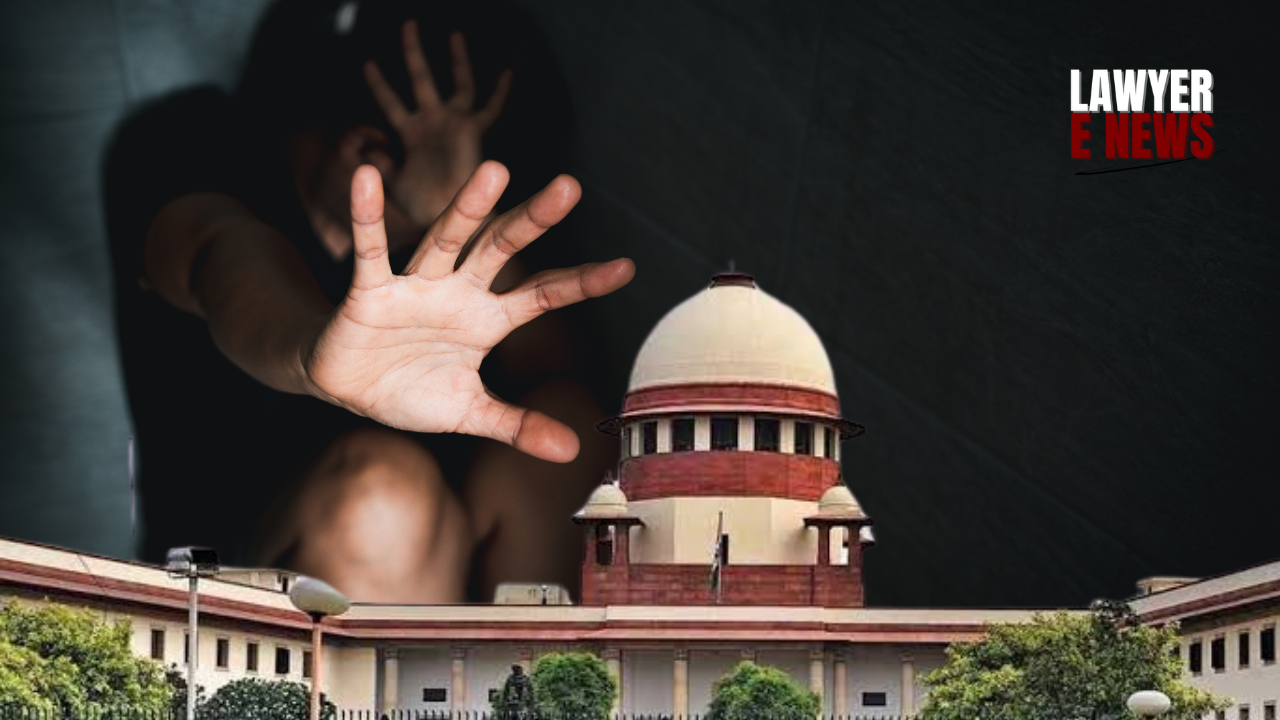
“Jurisdiction flows from the forum, not the form — Reliefs under DV Act may be civil, but are enforced by criminal courts under CrPC”, In a landmark ruling Supreme Court of India clarified the scope of inherent powers of the High Courts under Section 482 of the Code of Criminal Procedure, 1973 to quash proceedings initiated under Section 12 of the Protection of Women from Domestic Violence Act, 2005 (DV Act). Setting aside the judgment of the Madhya Pradesh High Court, the Supreme Court held that:
“Merely because the proceedings under Section 12 of the DV Act are predominantly civil in nature does not oust the jurisdiction of the High Court under Section 482 of the CrPC.”
The Court emphasized that reliefs granted under the DV Act are civil, but the proceedings are governed by the Code of Criminal Procedure and instituted before criminal courts, which brings them within the purview of Section 482 CrPC.
"Domestic Violence Act Is a Welfare Legislation, But Criminal Procedure Still Governs Proceedings"
Rejecting the High Court’s view that Section 482 CrPC could not be invoked due to the civil nature of reliefs under the DV Act, the Supreme Court reasoned:
“The nature of the forum — a Judicial Magistrate acting under the CrPC — brings such proceedings within the jurisdiction of High Courts exercising their inherent powers under Section 482.”
The bench of Justice Abhay S. Oka and Justice Ujjal Bhuyan found that while the DV Act provides civil remedies such as protection orders, residence rights, maintenance, and compensation, these are adjudicated exclusively by Magistrates functioning as criminal courts under the CrPC, thereby preserving the applicability of Section 482.
Wife's Allegations of Domestic Abuse Met with Section 482 Petition for Quashing
The proceedings arose from a domestic violence complaint filed by Vidhi Rawal, who alleged that her husband, in-laws, and brother-in-law subjected her to physical, verbal, and economic abuse — including a demand for ₹20 lakh and a luxury SUV. In addition to an FIR under Sections 498A, 504, 506 IPC, she filed an application under Section 12 of the DV Act, 2005 seeking protection and monetary reliefs.
The appellants approached the High Court under Section 482 CrPC to quash the DV proceedings, but the High Court dismissed their petitions on the sole ground that:
“Since the proceedings under Section 12 of the DV Act are civil in nature, the High Court’s inherent criminal jurisdiction under Section 482 does not apply.”
This finding was challenged before the Supreme Court.
Whether Section 482 CrPC Can Be Invoked to Quash DV Act Proceedings
The central issue before the Supreme Court was whether the High Court has jurisdiction under Section 482 CrPC or Section 528 of the Bharatiya Nagarik Suraksha Sanhita, 2023 (BNSS) to entertain petitions seeking quashing of proceedings under Section 12 of the DV Act.
The Supreme Court held unequivocally: “We hold that High Courts can exercise power under Section 482 of the CrPC (or Section 528 of the BNSS) for quashing the proceedings emanating from the application under Section 12(1) of the DV Act, 2005.”
DV Act Remedies Are Civil, But Jurisdiction Lies with Criminal Courts
The Court clarified that while the reliefs under Sections 18 to 22 of the DV Act are civil in content, the proceedings under Section 12 are instituted before a Magistrate as defined under Section 2(i) of the DV Act, which refers to a Judicial Magistrate of the First Class or a Metropolitan Magistrate exercising jurisdiction under the CrPC.
“The answer to whether Section 482 can be invoked does not lie in the nature of relief, but in the nature of the court and the statute that governs the proceeding.”
Referring to Section 28(1) of the DV Act, the Court noted: “All proceedings under Sections 12, 18 to 23 and offences under Section 31 shall be governed by the CrPC.”
It concluded that the procedural character of DV Act cases is criminal, and therefore High Courts are empowered to intervene under Section 482 CrPC to prevent abuse of process or to secure the ends of justice.
“Proceedings Under Section 12 DV Act Are Not Complaints Under Section 200 CrPC”
The Supreme Court acknowledged that an application under Section 12 is not a ‘complaint’ in the strict sense defined by Section 2(d) of the CrPC, nor does it trigger procedures under Sections 200 to 204. However, it noted that Section 28 of the DV Act incorporates CrPC provisions, making CrPC applicable to DV Act matters procedurally.
“The scheme of Section 12 is completely different from a complaint under Section 200 CrPC — but the proceedings are nonetheless governed by CrPC and fall within the control of the criminal justice system.”
“Abuse of Process” Standard to Be Applied Strictly: Courts Must Be Slow to Interfere
Although it allowed the maintainability of Section 482 petitions in DV Act matters, the Court cautioned that such powers must be exercised with extreme restraint:
“High Courts should be very slow and circumspect. Interference can be made only in cases of gross illegality or gross abuse of the process of law.”
The Court noted that the DV Act is a welfare statute, created specifically to protect women against domestic violence, and warned:
“Unless the High Courts show restraint in the exercise of jurisdiction under Section 482, the very object of enacting the DV Act, 2005 will be defeated.”
“As Judges, We Must Correct Our Errors” – Justice Oka Acknowledges Earlier Contrary View
In a rare moment of judicial candour, Justice Abhay S. Oka acknowledged that he had earlier taken a different view in a 2016 Bombay High Court decision where he held that Section 482 was not available in DV Act matters.
“One of us (Abhay S. Oka, J) had taken a contrary view earlier… That view was later found to be incorrect by a Full Bench. As Judges, we are duty-bound to correct our mistakes. The learning process continues.”
High Court's Order Set Aside, Petitions Restored
The Supreme Court concluded that the High Court’s view was incorrect, and therefore:
“We quash the order dated 9th May, 2024 passed by the High Court of Madhya Pradesh… and restore the petitions to the file of the High Court for fresh consideration in light of this judgment.”
The appeals were accordingly allowed.
Civil Relief, Criminal Procedure — High Courts’ Inherent Powers Intact
This decision by the Supreme Court settles a key legal ambiguity. While DV Act proceedings offer civil remedies, the Court clarified that they are administered through criminal courts, and thus amenable to Section 482 CrPC jurisdiction.
“Proceedings under Section 12 may not involve a criminal trial or punishment — but since they operate under CrPC through criminal courts, the High Court’s power to intervene under Section 482 remains untouched.”
In doing so, the Court has restored not just the petitions in question but the balance between protecting women’s rights and safeguarding procedural fairness.
Date of Decision: May 19, 2025