-
by sayum
11 August 2026 2:00 PM







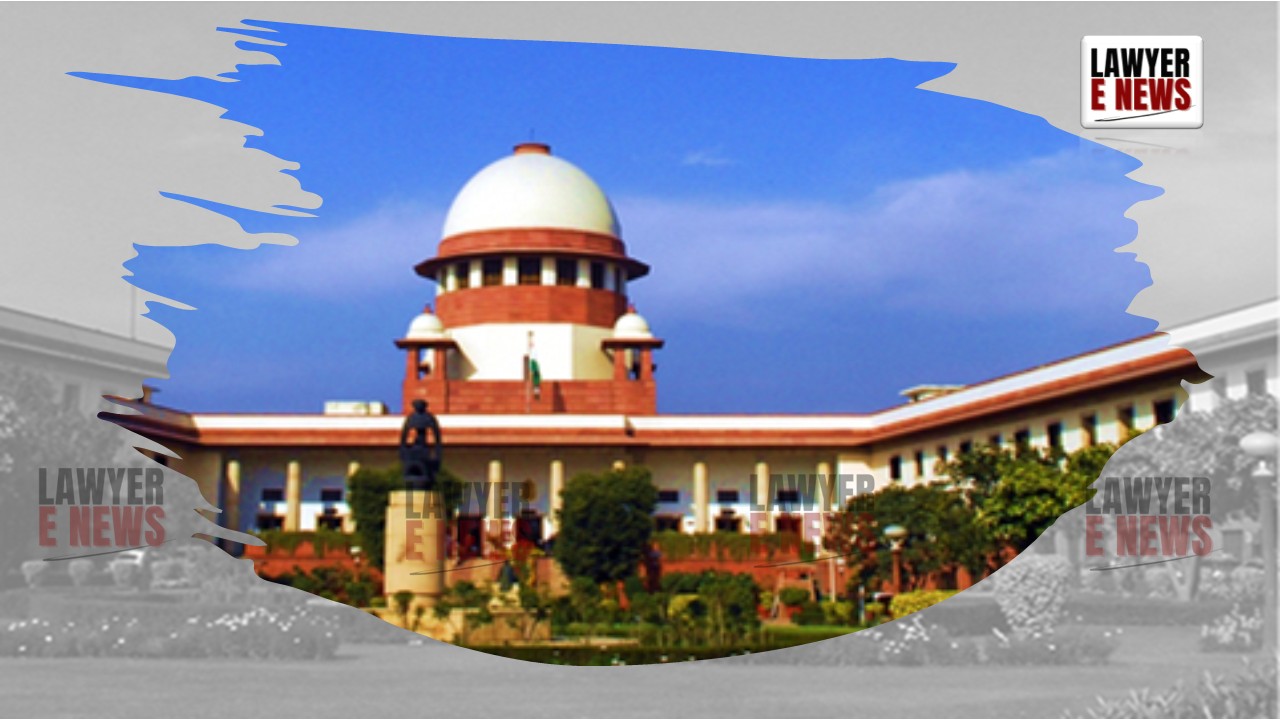
Prima Facie, the High Court's Order Appears to Be Correct in Law": CJI Khanna Backs Inclusion of ASI and Union in Krishna Janmabhoomi Suits. In the high-profile Krishna Janmabhoomi–Shahi Idgah dispute, the Supreme Court on April 3, 2025, heard the plea filed by the Committee of Management, Trust Shahi Masjid Idgah challenging the Allahabad High Court’s March 5 order, which allowed the plaintiffs to implead the Archaeological Survey of India (ASI) and the Union of India in 18 suits filed on behalf of the deity Bhagwan Shri Krishna Virajman and Hindu devotees.
The Allahabad High Court had earlier permitted the amendment of plaints to include ASI and the Centre as parties to the suits, which seek the removal of the Shahi Idgah mosque, alleging it was built at the exact birthplace of Lord Krishna after the demolition of a temple.
Chief Justice of India Sanjiv Khanna, heading the bench along with Justice Sanjay Kumar, remarked that the High Court's order “prima facie appears to be correct” and legally sustainable. The Supreme Court refused to see the amendment as a new or transformative change to the case and indicated that the impleadment of ASI was a natural consequence of the defence raised by the mosque committee itself.
"When You Rely on a Particular Act in Defence, the Plaintiffs Are Entitled to Respond Accordingly": CJI on Legal Justification for ASI's Addition
During the hearing, the CJI explained why the impleadment of ASI and the Union was legally permissible. He said:
“When you take the defence relying upon a particular Act, they are entitled to amend the plaint or even in replication, they take up the plea that this Act will not apply... therefore in that, they didn’t require amendment of the plaint. Even under Order I Rule 10, the court could have impleaded them as parties.”
Rejecting the argument that the amendment created a new case, the Chief Justice clarified:
“No, it is not a new case because the defence taken by you, they are entitled to challenge that... otherwise he can argue, you cannot even raise that defence... the moment you raise your defence, they are entitled to say your defence is wrong.”
Advocate Tasneem Ahmadi, appearing for the mosque committee, contended that the amendment amounted to an entirely new claim. She submitted, “But it is a new case, my lords,” to which CJI Khanna firmly replied that the right to respond flows from the defence itself and does not amount to the introduction of a fresh cause.
“Whether a Mosque Protected by ASI Is Covered by the 1991 Act Is Already Before This Court in Several Cases”: Supreme Court Notes Overlapping Constitutional Issue
Advocate Vishnu Shankar Jain, appearing for the plaintiffs, submitted that the Places of Worship (Special Provisions) Act, 1991 does not apply to monuments under ASI protection. Supporting the relevance of ASI's involvement, he noted that the Shahi Idgah mosque was built on a historically significant site that falls under ASI's purview.
CJI Khanna responded that the issue of whether ASI-protected mosques are covered under the 1991 Act is already pending before the Supreme Court. He observed:
“As far as the question of whether the monuments protected by the ASI but are being used as a mosque will be governed and protected under the Act, is subject matter already before us in a number of cases.”
“Whether This Is an Effective Interim Order Was Never Raised Before the High Court or in This Petition”: SC Rejects Procedural Objection
One of the grounds raised by the mosque committee was that the High Court’s order violated the Supreme Court’s own direction from December 12, 2023, which barred all courts from issuing any “effective” interim or final orders in pending suits related to places of worship.
However, the CJI pointed out that this specific argument had not even been raised in the present petition or before the High Court. He remarked:
“To one extent you may be correct, because we said that there will be no effective interim orders – whether this is an effective interim order or not – you never raised that point before the High Court – not even in this SLP. Where have you raised this?”
Mosque Committee Argues That the Amendment Introduces a New Case and Alters the Suit's Character
The petitioner challenged the High Court order on the grounds that the amendment to the plaint “changes the nature of the suit” and undermines the written statement already filed by the mosque committee. It was contended that:
“The amendment makes out a new case while negating the defence that has already been taken in the written statement.”
It was also argued that no formal application under Order I Rule 10 of the Code of Civil Procedure was filed to justify the impleadment of ASI and the Union, and yet the High Court allowed the amendment. The petitioner claimed that this procedural lapse vitiated the order.
Furthermore, the mosque committee alleged that the High Court denied its plea to defer the application for amendment, in spite of the Supreme Court being already seized of the issue of maintainability in related matters. The maintainability of these 18 suits had earlier been upheld by the Allahabad High Court in its order dated August 1, 2024, which too is under challenge before the top court.
An interim stay has also been sought on the operation of the March 5 order, as well as a stay on the proceedings in the main suits.
Historical Background of the Dispute
The legal battle concerns the 17th-century Shahi Eidgah Mosque in Mathura, said to have been built by Aurangzeb on the site of a razed Krishna temple. In 1968, a compromise agreement was entered into between the Shri Krishna Janmasthan Seva Sansthan and the Trust Shahi Masjid Idgah, allowing both the mosque and temple to coexist.
Recent litigants argue that this agreement was made fraudulently and is void in law. Citing the sanctity of the site as Lord Krishna’s birthplace, they have demanded the removal of the Shahi Idgah mosque and restoration of the original temple structure.
Following these fresh suits, the Allahabad High Court transferred all related cases from the Mathura court to itself in May 2023. In December 2023, the High Court had allowed a plea for a court commissioner to inspect the mosque — a move that was stayed by the Supreme Court in January 2024.
Next Hearing on April 8, 2025
The bench has now tagged the present matter with the larger batch of cases concerning the maintainability of suits in the Krishna Janmabhoomi dispute. The Supreme Court will resume hearing the issue on April 8, 2025.