-
by sayum
28 August 2026 10:07 AM







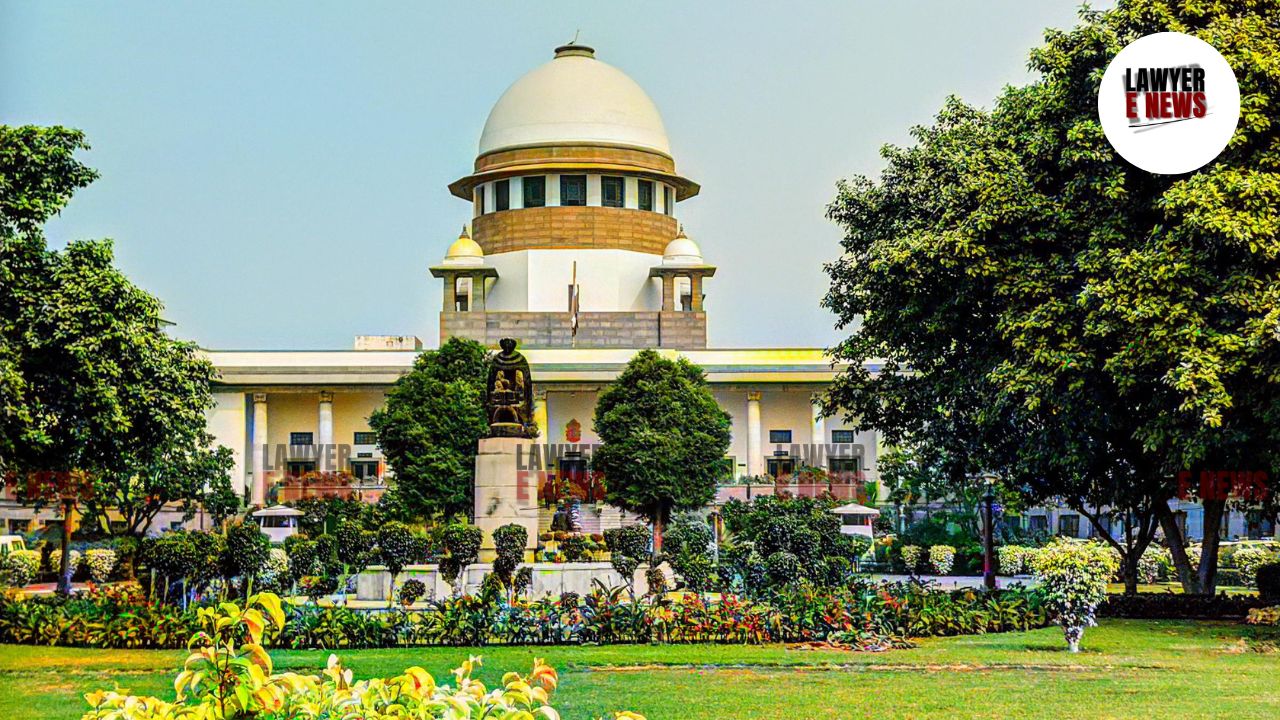
“Work Execution Certificate Stating Proportionate JV Share Is Sufficient — Tender Authority Cannot Demand JV Agreement if Not Explicitly Required”, On 9th September 2025, the Supreme Court of India ruled that a bidder cannot be disqualified for failing to submit a Joint Venture Agreement when the tender terms (Clause 5(D)) did not explicitly require it. The Court found the disqualification unjustified, holding that a valid work execution certificate indicating the bidder’s JV share met the NIT requirements.
The bench comprising Justice Surya Kant and Justice Joymalya Bagchi set aside the Madhya Pradesh High Court’s judgment, stating: “Conditions in a NIT must be clear and unambiguous. If submission of a JV agreement alone was mandatory, it should have been expressly spelt out.”
“Clause 5(D) Permits Use of Past Consortium Experience — Work Certificate with Share Allocation Satisfies Tender Criteria”
The dispute stemmed from a Notice Inviting Tender (NIT) issued by MPPGCL on 17.05.2024 for ROM coal beneficiation and logistics from Western Coalfields Ltd. for its thermal power project at Khandwa. The appellant, along with two other bidders, submitted bids. One was rejected for lack of EMD, and only Maha Mineral Mining & Benefication Pvt. Ltd. and Rukhmai Infrastructure Pvt. Ltd. remained.
The Tender Evaluation Committee rejected the appellant’s bid, citing non-submission of the JV agreement, despite the bidder producing a work execution certificate showing 45% JV participation.
The appellant had relied on prior work undertaken by a consortium named Hind Maha Mineral LLP, in which it held 45% share, as certified by the Maharashtra State Mining Corporation (MSMC).
The work execution certificate, annexed with the bid, stated:
“M/s Maha Mineral Mining & Benefication Pvt. Ltd. being the 45% JV partner of M/s Hind Maha Mineral LLP vide JV agreement dated 02.12.2019 has executed the work in WCL command for the period 05.03.2021 to 05.03.2024... with an approximate value of ₹465 crores.”
Despite this, the Committee rejected the bid solely because the JV agreement itself was not attached, claiming Clause 5(D) implicitly required it.
The appellant challenged this in Writ Petition No. 18286/2024, which was dismissed by the Madhya Pradesh High Court, accepting the Committee’s interpretation.
Supreme Court's Analysis — Clause 5(D) Does Not Mandate Submission of JV Agreement
The Court minutely examined Clause 5(D), which stated that bidders could rely on past experience of a previous consortium/JV proportionate to their share “if defined in the Consortium Agreement”.
The Court held: “Clause 5(D) does not mandate submission of the JV agreement itself. The work execution certificate explicitly stated the 45% share and the JV agreement had been submitted to MSMC.”
The bench found that the tendering authority misread the clause, stating: “Having not clearly required submission of the JV agreement in the NIT, the respondent cannot penalize the bidder for not furnishing it.”
It further held that the authenticity of the certificate was never doubted, and there was no bar in verifying the same or seeking clarification as allowed under Clause 8.8, which empowers the authority to call for additional documents to assess eligibility.
The judgment pointedly states: “Nothing prevented the 1st respondent from fortifying itself by seeking the JV agreement. Once produced, it clearly confirmed the contents of the work certificate.”
“Tendering Authority Must Not Use Ambiguity to Disqualify — Bid Rejection Must Be Fair and Reasonable”
Addressing the argument that Clause 8.1 barred post-bid document submissions, the Court observed:
“Clause 8.1 does not override the broader principle of fairness, especially where Clause 8.8 gives discretion to seek clarifications. The disqualification was rigid, unnecessary, and contrary to the letter and spirit of the NIT.”
The Court rejected allegations of suppression or mala fide, noting that the work certificate, tendered during bid submission, consistently stated the JV share as 45% — a fact never in dispute across any version of the agreement produced later.
High Court’s Overreach on Clause 5(B): “Washeries Exclusively Committed to MSMC” Issue Was Raised Too Late
The Supreme Court also addressed an alternative disqualification ground invoked suo motu by the High Court under Clause 5(B) — alleging the appellant had committed its washeries exclusively to MSMC and hence lacked spare capacity.
The Court noted: “This ground was never taken by the Committee and was raised only in written submissions by the second respondent. The High Court erred in deciding a contested issue without giving appellant opportunity to respond.”
The bench remanded the matter to the High Court for fresh determination of the Clause 5(B) issue regarding spare washery capacity.
Supreme Court Sets Aside Disqualification, Restores Fairness in Public Tendering
Upholding transparency and fairness in public procurement, the Supreme Court held that non-submission of a document not expressly mandated in the NIT cannot be a valid ground for bid rejection, especially when other credible documents fulfill the purpose.
The Court concluded: “The decision of the Tender Evaluation Committee, upheld by the High Court under Clause 5(D), is unsustainable. The matter is remanded to consider the Clause 5(B) issue afresh.”
Date of Decision: 09th September 2025