-
by sayum
29 August 2026 3:15 PM







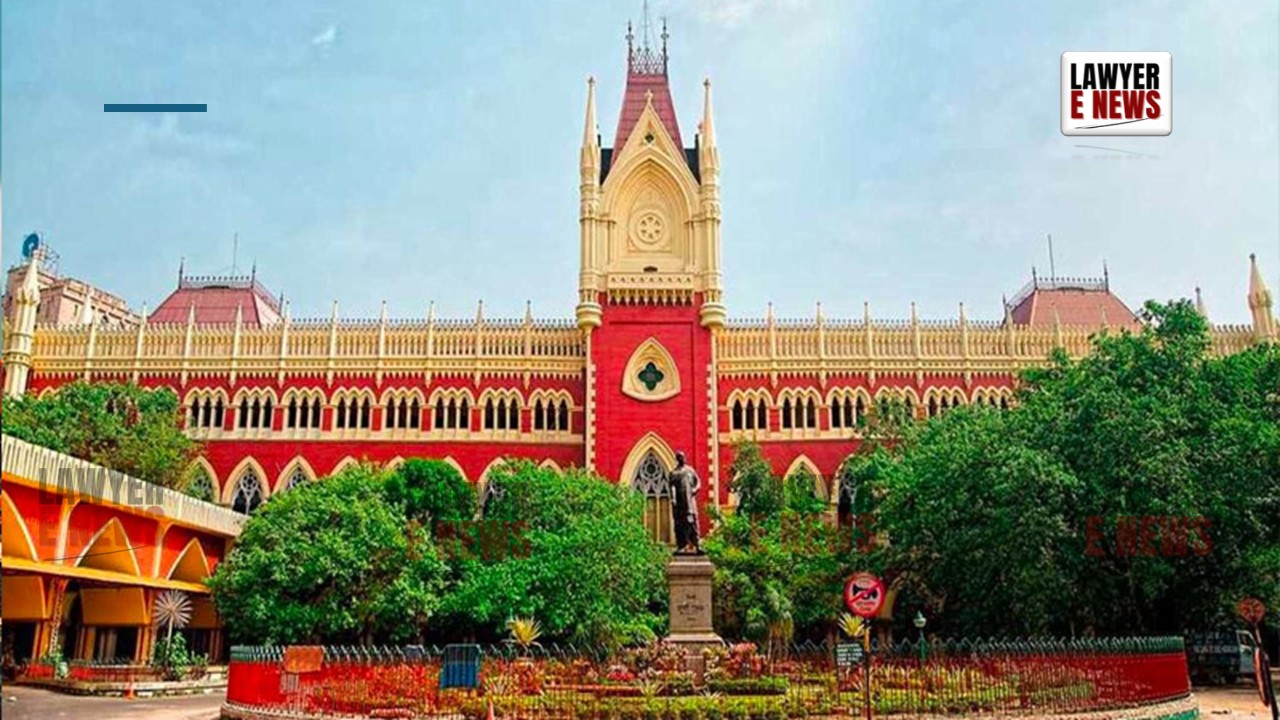
Calcutta High Court, through Hon’ble Justice Chaitali Chatterjee Das dismissed a revisional application challenging the trial court’s permission to amend a plaint to include a challenge to a 1997 registered sale deed. The Court reiterated that technical objections such as limitation should not obstruct amendments necessary for resolving the real dispute, and held that such objections can be examined during trial.
“Court Cannot Presume Prior Knowledge of a Document Without Evidence”
The dispute arose from Title Suit No. 1415 of 2018, where the plaintiffs sought a declaration of their right, title, and possession over the “A” schedule property, along with a permanent injunction. An interim injunction was granted in November 2018. When Defendant No. 1 filed a written statement in September 2023, he claimed absolute ownership under a registered deed dated 17 June 1997, supported by municipal mutation records.
Relying on this written statement, the plaintiffs moved to amend their plaint under Order VI Rule 17 read with Section 151 CPC, seeking to declare the 1997 deed void and not binding. The trial court allowed the amendment, finding it necessary for deciding the real controversy.
Before the High Court, the petitioner contended that the amendment was a device to delay proceedings, introduced a time-barred claim under Article 58 of the Limitation Act, and attempted to create a new cause of action. It was argued that the plaintiffs had earlier knowledge of the deed, as reflected in an application under Order XXXIX Rules 1 & 2 CPC, but failed to challenge it at the time.
Justice Das, however, observed: “Unless evidence is adduced, the court cannot presume that the plaintiffs had the prior knowledge of the same… it would not be proper to enter into the merit of the case in order to assess as to whether the plaintiff has said correct statement about their knowledge of the alleged deed or not.”
“Liberal Approach Is the Mandate”
Referring to Revajeetu Builders & Developers v. Narayanaswamy & Sons and LIC of India v. Sanjeev Builders Pvt. Ltd., the Court reiterated that the guiding test is whether the amendment is necessary for determining the real question in controversy. If so, it must be allowed unless it causes irreparable prejudice, withdraws an admission conferring rights on the other side, or introduces a claim that is ex facie barred.
Justice Das emphasised the mandatory nature of the provision: “All the amendments are to be allowed which are necessary for determining the real question in controversy provided it does not cause injustice or prejudice to the other side… This is mandatory, as is apparent from the use of the word ‘shall’ in the latter part of Order VI Rule 17 CPC.”
The Court rejected the contention that the amendment altered the fundamental nature of the suit, noting that the plaintiffs continued to seek declarations of title over the same properties, now with an added challenge to the 1997 deed.
Finding “no reason to interfere” with the trial court’s discretion, the High Court dismissed the revisional application, leaving limitation and other objections to be decided in trial. While observing that the plaintiffs should ideally have been clearer about the timing of their knowledge, Justice Das held that such “laches… should not be the ground to refuse the prayer for an amendment, which is otherwise necessary for the proper adjudication of the real dispute in question.”
Date of Decision: 24 July 2025