-
by sayum
30 August 2026 7:03 AM







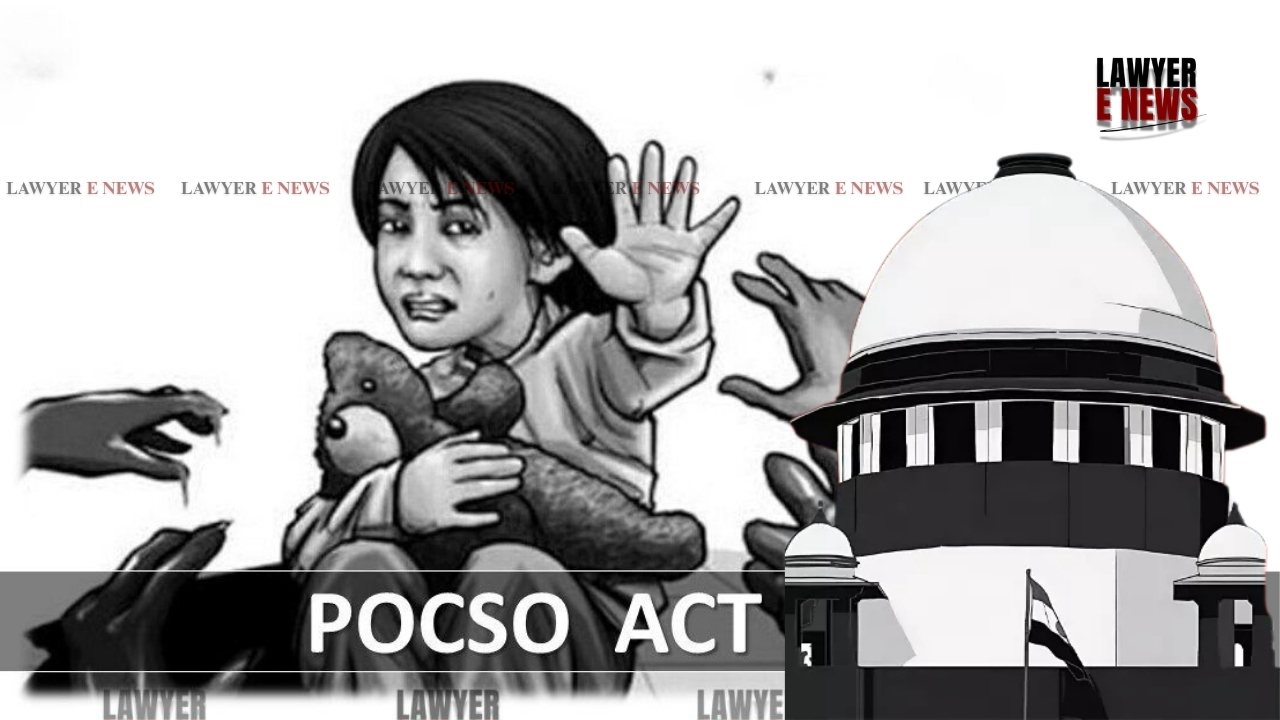
“High Courts Cannot Substitute Judicial Reasoning With Conjectures……The reasoning of the High Court falls far short of the parameters required under Section 389 CrPC for enlargement of a convict punished for heinous offence.” — Supreme Court of India
Supreme Court of India delivered a stern rebuke to the Rajasthan High Court for granting bail to a rape convict without due consideration of legal standards under Section 389 of the Code of Criminal Procedure. The accused, convicted under Section 3/4(2) of the POCSO Act and Section 376(3) IPC, was sentenced to 20 years of rigorous imprisonment, but was released on bail by the High Court pending appeal.
Allowing the appeal filed by the father of the victim, the Supreme Court set aside the bail order, holding that the High Court had committed a grave error by granting suspension of sentence based on conjecture and without applying the settled legal principles.
“One would have expected the High Court... to examine whether prima facie there was anything palpable on the record to indicate if the accused had a fair chance of overturning the conviction.” [Para 10]
“The presumption of innocence is erased after conviction—bail post-conviction must meet a far stricter threshold.”
The Court reminded that once a person is convicted, the presumption of innocence ceases to operate, and bail pending appeal under Section 389 CrPC is not to be treated on par with pre-trial bail:
“Once the accused is held guilty, the presumption of innocence gets erased… The court must examine whether the convict stands a fair chance of acquittal based on something ‘palpable’ on the record.” — Omprakash Sahni v. Jai Shankar Chaudhary, (2023) 6 SCC 123
The High Court, however, had granted bail on the basis of incomplete forensic evidence, absence of visible injuries, and the speculative observation that the prosecutrix had washrooms at home and therefore wouldn’t have gone outside to defecate.
The Supreme Court termed such reasoning as entirely untenable: “The finding that no sexual assault was found, without considering the overall nature of the evidence of the case, is completely untenable.” [Para 16]
“The reasoning that despite the availability of washrooms... it was difficult to believe that the prosecutrix could go out for the toilet, is conjectural in nature.” [Para 16]
“Ocular Testimony of Victim Cannot Be Dismissed Merely Because FSL Report Was Awaited”
The Court noted that the victim (aged 14 years and 3 months) had given a clear, consistent, and credible testimony, supported by her Section 164 CrPC statement and witnesses including her parents.
“According to the evidence of the prosecutrix, Respondent No.2, at gunpoint, closed her mouth and forcibly took her to the house of Amro and committed rape on her.” [Para 16]
Even though the FSL and DNA reports were not submitted during the trial, the Trial Court rightly treated them as corroborative, and not essential to conviction.
Moreover, the State later filed an affidavit before the Supreme Court revealing that male DNA/semen of the accused was found on the victim’s undergarments and private parts. Though the Supreme Court refrained from relying on this belatedly received FSL report, it observed:
“That does not mean the ocular evidence could be ignored.” [Para 16]
“Criminal Antecedents Cannot Be Overlooked When Considering Bail in Sexual Offences”
Respondent No.2 had a history of 11 FIRs between 2010 and 2021, of which six were still pending. These included offences under the Arms Act, IPC Sections 394, 457, 323, 379, 411, and more.
Despite these antecedents, the High Court granted suspension of sentence without even referencing them.
The Supreme Court held: “Taking into account that the High Court has not adverted to any of the relevant factors for considering the case for suspension... the High Court was not justified in suspending the sentence.” [Para 12]
It also rejected the argument that bail should stand unless the accused misbehaved after release:
“There is a clear distinction in law between setting aside of bail and cancellation of bail… The former concerns the justifiability and soundness of the order granting bail.” [Para 13]
“Omission to Give Reasons in Bail Orders Defeats the Purpose of Judicial Discretion”
Citing Vijay Kumar v. Narendra, (2002) 9 SCC 364, the Court emphasized that grant of bail in heinous offences like rape must be reasoned and should consider the gravity of the offence, manner of commission, and nature of evidence:
“The High Court has neither given any reason nor has indicated any exceptional circumstance for granting bail to the respondents.” — Vijay Kumar v. Narendra
The Court stressed that bail in POCSO cases demands the same high threshold as other grave crimes:
“Though said in the context of Section 302 IPC, it applies with equal force to a case of the present nature under the POCSO Act, also.” [Para 17]
Reinstating the rigour required under Section 389 CrPC, the Supreme Court’s judgment ensures that convicted offenders in heinous sexual offences are not released on the basis of loose, speculative or incomplete reasoning. It cautions that trial court findings supported by credible testimony must not be lightly undermined at the appellate stage.
“We feel that the High Court was not justified in suspending the sentence.” [Para 15]
“The appeal is allowed. Respondent No.2 is directed to surrender... on or before 30th August 2025.” [Para 19]
The verdict strengthens the standards for post-conviction bail in child sexual assault cases, reaffirming that liberty of a convict cannot override justice to the victim and the gravity of the offence.
Date of Decision: August 6, 2025