-
by sayum
29 August 2026 3:15 PM







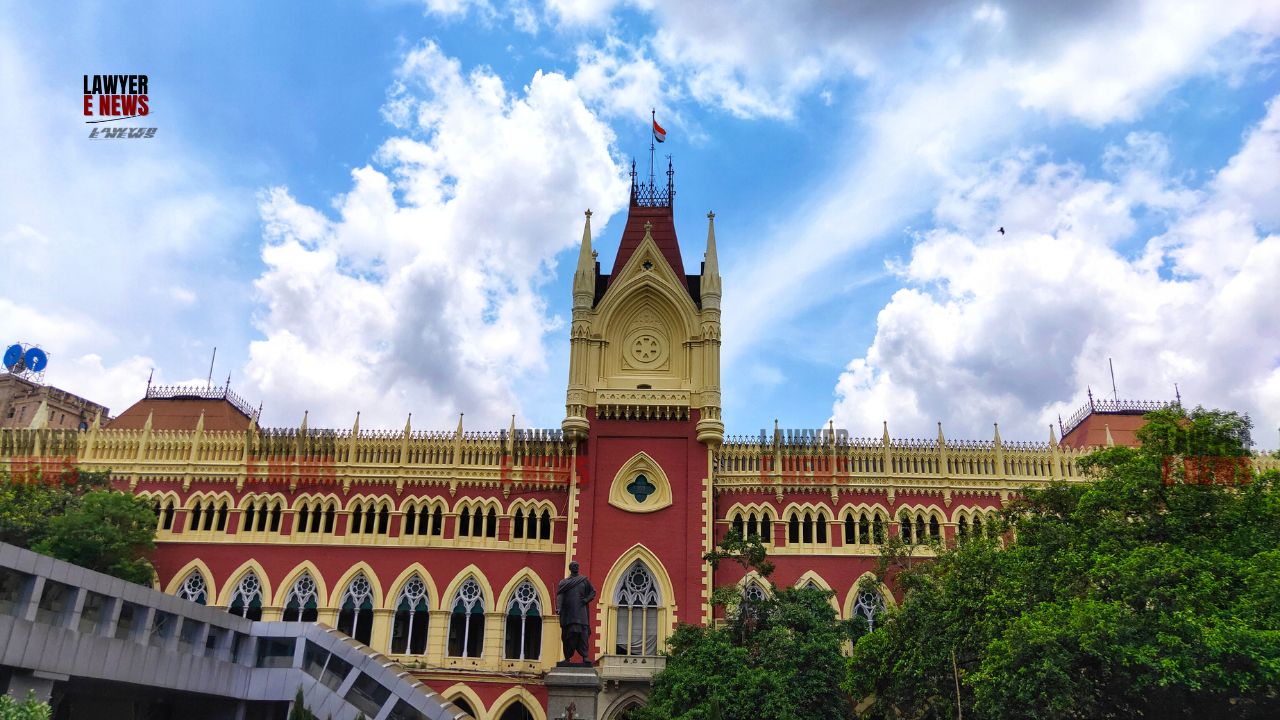
“Even Delay Tactics Cannot Override Procedural Fairness—Trial Court Must Record Appearance and Fix Written Statement Timeline Under Order 5 Rule 1 CPC” - In a notable judgment enforcing the procedural sanctity of civil trials, the Calcutta High Court allowed a revisional application filed by Kawaljit Singh Johar, setting aside an ex-parte order passed by the 11th Bench of the City Civil Court at Calcutta. The Trial Court had erroneously proceeded ex-parte against the defendant without recording his appearance or fixing a date for filing the written statement as mandated by Order 5 Rule 1 of the Code of Civil Procedure, 1908.
Justice Chaitali Chatterjee Das ruled that service of summons is a mandatory requirement unless explicitly waived or if the defendant admits the plaintiff’s claim upon appearance, which was not the case here. The Court strongly criticised both the negligence of the plaintiff in effecting proper service and the trial court’s failure to fix a timeline for defence filing, despite being aware of the defendant’s presence in the proceedings.
“Ex-Parte Cannot Be the Default—Appearance Must Be Recorded and Time Must Be Given to Defend”
The plaintiff had filed a declaratory suit (T.S. No. 455/2018) seeking rights over a commercial space—Shop Room No. 9 at 2A, Ganesh Chandra Avenue, Kolkata—along with a prayer for permanent injunction restraining the defendant from alienating the property. During pendency, the plaintiff moved an application under Order 39 Rule 1 and 2 CPC for interim relief.
The defendant, having filed a caveat under Section 148A CPC, appeared in the matter and submitted written objection against the injunction application. However, despite this, the trial court passed an order on 3 October 2023, stating the suit would proceed ex-parte against the defendants for failing to file their written statements.
This was followed by an application to recall the ex-parte order, which too was dismissed by the trial court on 10 May 2024, citing that publication of summons in the newspaper Aajkal had occurred and that the defendants had already entered appearance.
The High Court, however, rejected this reasoning, holding: “Service of summons on the defendant is a mandatory requirement… unless the defendant appears at the presentation of the plaint and admits the plaintiff’s claim.”
“Appearance Alone Does Not Trigger Limitation—Court Must Fix Date for Filing Written Statement”
Justice Das pointed out that although the petitioner had filed a caveat and appeared for the injunction application, at no point was a specific date fixed by the court to file a written statement. The judgment clarified:
“It is not enough that the defendant appears… unless the court records such appearance and fixes the date for filing of written statement, limitation for the same does not commence.”
Quoting from the coordinate bench ruling in Chittanku Ranjan Das v. Swati Das & Ors., the Court reiterated:
“There may be a situation where the defendant appeared at the interlocutory stage say when a caveat is lodged… In such event, it shall not amount to waiving the service of summons unless the court records the appearance of the defendant and passes the order.”
The court found that the trial court never issued formal summons to the defendant under Order 5 Rule 1, nor did it specify a date for defence pleadings. Therefore, ex-parte proceedings were procedurally unjustified.
“Delays Cannot Justify Denial of Right to Defence—But Procedural Compliance Is Still Mandatory”
While the High Court acknowledged that the defendant’s conduct displayed a degree of delay and silence, especially in not proactively filing the written statement, it refused to treat this as a ground for procedural shortcut by the trial court.
Justice Das was clear in stating: “Even if negligence on the part of the petitioner is established, the mandatory provision being violated, the role played by the Court also cannot be appreciated.”
“It is expected that in most cases the defendants in a suit will try to adopt all the tools to prolong the litigation… but it is the duty of the court to ensure procedural fairness.”
Referring to Salem Advocate Bar Association v. Union of India (2005) 6 SCC 344, the Court affirmed that Order 8 Rule 1 CPC is mandatory, and timelines must be strictly enforced once service is complete and appearance is recorded.
“Paper Publication Cannot Cure Procedural Gaps for All Defendants—Waiver Must Be Express, Not Inferred”
The Court found that while paper publication was indeed effected for some defendants (notably Nos. 3, 4, and 5), the petitioner (defendant no. 2) never received summons, nor was any step taken to fix a specific date for him to file his defence.
Justice Das held: “No direction was given to serve summon on him… Therefore utter negligence on the part of the petitioner to delay the proceeding is well established, but that alone does not authorise the court to presume waiver or proceed ex-parte without compliance.”
She added that: “If the defendant appears before the court after registration of the suit and is informed about the nature of the claim and the date fixed for reply, it must be deemed that the defendant has waived the issuance of summons—but only if the court records this appearance and fixes such date.”
Allowing the revision petition, the High Court set aside the October 2023 ex-parte order, observing that:
“Unless the court records the appearance and fixes the date to file written statement, the stipulated period to file the written statement cannot be calculated.”
The Court permitted the petitioner to file his written statement within 15 days, subject to payment of ₹25,000 as cost to the plaintiff. The learned trial court has been directed to accept the written statement if the cost is paid within the stipulated time, failing which it may proceed ex-parte again.
This judgment underscores a critical procedural safeguard: the courts must scrupulously follow CPC mandates in matters of service and appearance, lest they compromise a party’s right to defend themselves.
Date of Decision: 29 August 2025