-
by sayum
24 August 2026 6:22 AM







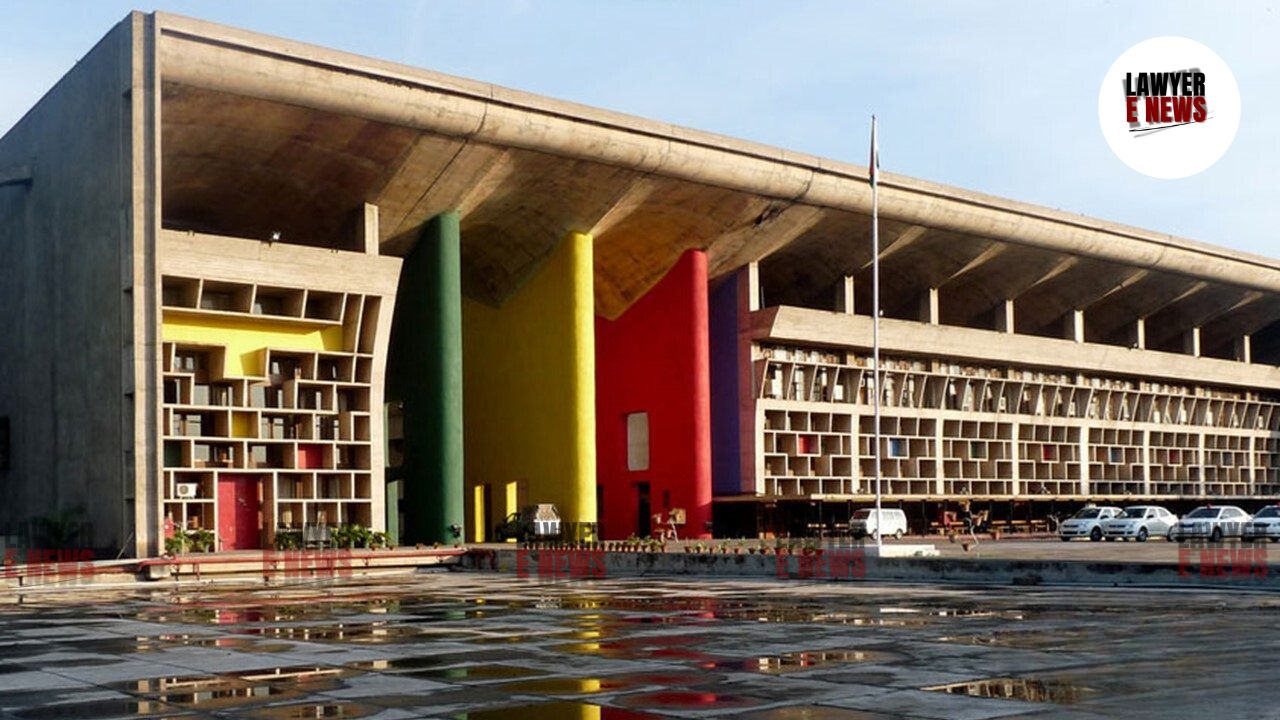
The Punjab and Haryana High Court, in a significant ruling, has reinstated Puneet Duggal, an employee of Marriott Hotels India Pvt. Ltd., overturning the Single Judge’s decision that had replaced his reinstatement with compensation. The division bench held that Duggal's termination was stigmatic and warranted a proper departmental inquiry, which the employer had failed to conduct.
Puneet Duggal was employed as a Global Reservations & Customer Care Sales Agent with Marriott Hotels India Pvt. Ltd. since March 2011, earning a monthly salary of ₹20,951. On April 14, 2015, his services were terminated on the grounds of failing to meet performance standards, with the employer stating a loss of confidence in his abilities. The Industrial Tribunal-cum-Labour Court initially ordered his reinstatement with 40% back wages, but this decision was set aside by a Single Judge of the High Court, who instead awarded Duggal compensation equivalent to three years’ salary.
The division bench, comprising Chief Justice Sheel Nagu and Justice Anil Kshetarpal, observed that Duggal’s termination was not a simple case of poor performance but a stigmatic dismissal. The termination order explicitly mentioned a loss of confidence in Duggal’s abilities due to his alleged failure to meet minimum performance standards. The court ruled that such a termination cannot be considered mere retrenchment under the Industrial Disputes Act, 1947, but rather a dismissal requiring due process, including a departmental inquiry.
The court emphasized that when an employee is terminated on grounds that impugn their competence or character, a departmental inquiry must be conducted to allow the employee to contest the allegations. The court noted that Duggal was awarded 26 certificates of excellence, including one as recent as January 2015, which contradicted the sudden performance-related warnings issued just before his termination in April 2015. The absence of an inquiry deprived Duggal of an opportunity to defend himself, rendering the termination procedurally unfair.
The court relied on precedents set by the Supreme Court, distinguishing between termination for poor performance and stigmatic dismissal. It held that the latter requires proof through a fair and transparent process, which was absent in Duggal’s case. The bench also criticized the reliance on Local Standard Operating Procedures (LSOP) unilaterally imposed by the employer, which, the court noted, cannot override statutory protections afforded to employees.
The bench noted, "The order dismissing the appellant from service casts aspersions on his competence to perform. In other words, the appellant has been characterized as an incompetent employee... The appellant was required to be given an opportunity to prove that the allegations made against him by the employer were false."
The High Court’s ruling underscores the importance of adhering to procedural fairness in cases of stigmatic dismissal, reaffirming the rights of employees to a fair hearing. The judgment reinstates Duggal with the original terms ordered by the Labour Court, sending a strong message to employers about the legal obligations in cases involving allegations of incompetence or misconduct. The decision is expected to have a significant impact on future employment disputes, particularly those involving performance-related terminations.
Date of Decision: August 28, 2024