-
by sayum
13 August 2026 1:48 PM








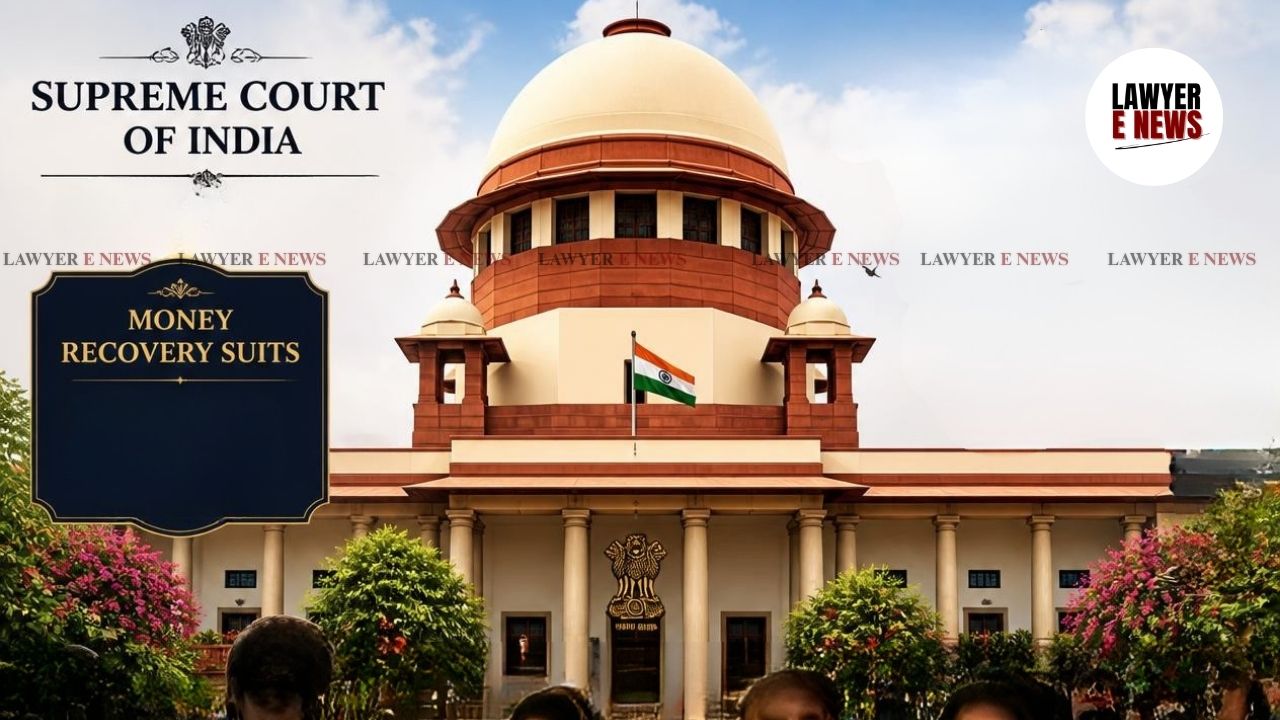
In a latest judgment delivered on January 29, 2025, the Supreme Court of India has firmly set aside a drastic reduction in motor accident compensation ordered by the Madras High Court, restoring the original compensation awarded by the Motor Accidents Claims Tribunal (Tribunal).
The Bench comprising Justice Sudhanshu Dhulia and Justice Ahsanuddin Amanullah ruled that compensation under the Motor Vehicles Act, 1988, must be fair, reasonable, and forward-looking, emphasizing that appellate courts should not interfere unless the compensation is 'exorbitant' or 'arbitrary.'
"Compensation is meant to provide financial stability to the victims and their dependents. It cannot be reduced arbitrarily without proper legal reasoning. The High Court’s reduction was legally unsound and against settled principles of law," the Court observed.
The ruling came in the case of S. Vishnu Ganga & Ors. v. M/s Oriental Insurance Co. Ltd. & Ors., where the High Court had significantly slashed the compensation awarded to the appellants for the death of their parents in a motor accident.
The Tribunal had initially awarded ₹58.24 lakh for the father and ₹93.61 lakh for the mother, but the High Court drastically reduced these amounts to ₹26.68 lakh and ₹19.22 lakh respectively, leading to the present appeal before the Supreme Court.
"The High Court’s approach disregarded well-established principles in compensation assessment. It wrongly assumed that just because the appellants inherited their parents’ business, they did not suffer any financial loss," the Bench stated, restoring the Tribunal’s original award in full.
"Merely Inheriting a Business Does Not Nullify the Financial Loss of the Deceased’s Expertise"
One of the key legal issues in the case was whether the financial loss suffered by the claimants should be reduced simply because they inherited the business previously run by the deceased parents.
Rejecting this flawed reasoning, the Supreme Court reaffirmed that merely stepping into the business does not mean that the deceased’s contributions were irrelevant or that their loss was not suffered by the family.
"The expertise, experience, and management skills of the deceased cannot be mechanically substituted by their heirs. The loss of a business leader cannot be quantified merely by inheritance of assets," the Court ruled.
The Bench referred to K. Ramya v. National Insurance Co. Ltd., 2022 SCC OnLine SC 1338, where the Court had earlier held:
"The mere fact that the deceased’s share of ownership in the business was transferred to the dependents does not justify concluding that the benefits continue to accrue to them in the same manner. The active role and expertise of the deceased in managing the business must be considered in determining compensation."
The Court also cited Sushma H.R. v. Deepak Kumar Jha, 2022 SCC OnLine SC 2166, which had held that young and inexperienced legal heirs cannot be expected to run a business with the same level of efficiency as the deceased.
"The High Court's assumption that the children could run the business in the same way as their deceased parents is factually and legally incorrect," the Supreme Court observed.
"Income Tax Returns Are a Valid Basis for Assessing Loss of Income"
A critical point in the judgment was the Supreme Court’s reliance on Income Tax Returns (ITRs) as a valid and objective measure of the deceased’s income for compensation calculation.
The High Court had arbitrarily disregarded the ITRs submitted by the appellants, leading to a gross underestimation of the deceased parents’ earnings.
Rejecting this flawed approach, the Supreme Court held: "It is now a settled legal principle that Income Tax Returns provide a reasonable basis for assessing the income of the deceased. The Tribunal correctly relied on them to arrive at a fair compensation amount."
The Bench cited Amrit Bhanu Shali v. National Insurance Co. Ltd., (2012) 11 SCC 738 and Kalpanaraj v. Tamil Nadu State Transport Corporation, (2015) 2 SCC 764, which established that ITRs are reliable evidence for determining a deceased’s income.
"The High Court erred in ignoring well-documented earnings of the deceased, which were supported by official financial records. Compensation cannot be reduced on speculative grounds," the Court ruled.
"High Court’s Use of Incorrect Multipliers Violated Settled Law"
The Supreme Court also found that the High Court incorrectly applied multipliers while calculating loss of dependency, which led to an unjustified reduction in compensation.
The Tribunal had correctly applied a multiplier of 9 for the deceased father and 13 for the deceased mother based on their respective ages, in line with the principles established in Sarla Verma v. DTC, (2009) 6 SCC 121.
However, the High Court wrongly applied multipliers of 8 and 12, further reducing the compensation amounts.
"The High Court’s application of multipliers was incorrect and contrary to settled legal principles. The Tribunal had correctly followed judicial precedents, and its assessment should not have been disturbed," the Supreme Court ruled.
The Court reinstated the correct multipliers and restored the original compensation awarded by the Tribunal.
"Compensation Under the Motor Vehicles Act Must Be Just, Equitable, and Forward-Looking"
The Supreme Court emphasized that compensation under the Motor Vehicles Act is not a mere damage award—it is meant to secure the financial stability of the dependents.
"The Motor Vehicles Act is a welfare legislation designed to provide adequate compensation to victims and their families. Compensation must be assessed in a forward-looking manner, ensuring financial continuity for the dependents," the Court observed.
Referring to K. Ramya (2022), the Bench reiterated that appellate courts should not interfere with compensation amounts unless they are grossly excessive or arbitrary.
"Tribunals have been granted reasonable flexibility in determining 'just compensation.' Appellate courts must exercise restraint and interfere only in exceptional cases where the award is exorbitant," the judgment stated.
The Bench strongly disapproved of the High Court’s unwarranted interference, declaring that:
"The High Court’s reduction of compensation defies settled legal principles and violates the fundamental objective of the Motor Vehicles Act. The compensation awarded by the Tribunal was reasonable, well-founded, and supported by evidence."
"Supreme Court Directs Full Compensation to Be Paid Within Six Weeks"
Restoring the Tribunal’s award in full, the Supreme Court set aside the High Court’s order and directed that the compensation be paid within six weeks.
"The respondent insurance company is directed to pay the compensation as per the Tribunal’s award, after deducting any amounts already paid, within a period of six weeks," the Court ordered.
The ruling serves as a strong message against arbitrary reductions in accident compensation claims, ensuring that victims’ families receive fair and just compensation in accordance with the law.
This judgment reaffirms the Supreme Court’s commitment to upholding the rights of accident victims and ensuring that compensation awards are not diluted by flawed judicial reasoning.
Date of Decision: 29/01/2025