-
by sayum
24 August 2026 6:22 AM







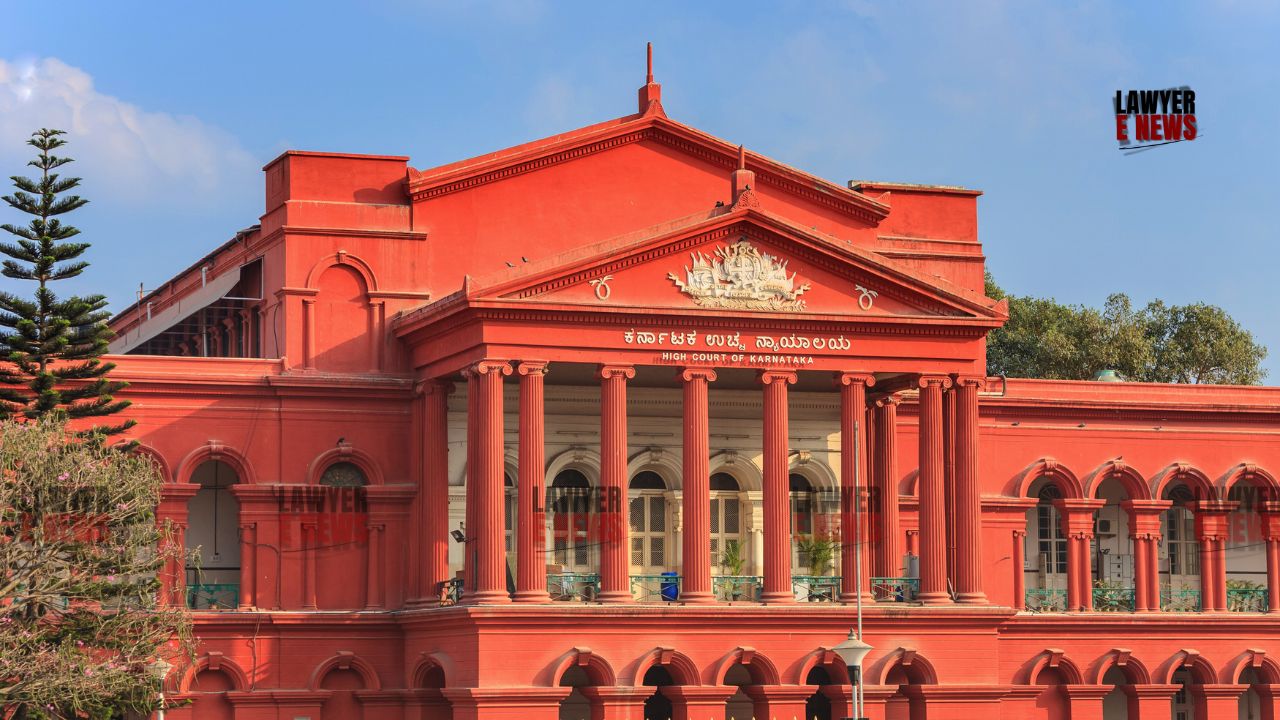
Karnataka High Court dismissed appeals challenging the trial court's rejection of temporary injunction applications filed under Order 39 Rules 1 and 2 of the Code of Civil Procedure, 1908 (CPC). The appeals, filed in Smt. Vijaya Ramu and Sri M. Ramu v. Sri Purushotham Reddy and Others (MFA Nos. 6095, 6055, and 6200 of 2024), arose from a dispute over the performance of agreements executed under a Joint Development Agreement (JDA) for the construction of flats on a shared property.
The court affirmed that the appellants (plaintiffs) failed to demonstrate a prima facie case for the injunction. Justice K. Natarajan observed, “The plaintiffs’ failure to provide clear identification of the disputed flats and inconsistencies in the property descriptions negates any claim for interim relief.”
Civil Law – Specific Performance – Prima Facie Case – Insufficient Evidence – Temporary Injunction Denied
The plaintiffs sought specific performance of sale agreements for flats allotted under the JDA executed with the defendants. They claimed to have paid substantial amounts in advance under three sale agreements dated 9 October 2013 and 24 February 2014, and sought an injunction restraining the defendants from alienating the flats pending adjudication of the suits.
However, the court found significant discrepancies in the plaintiffs’ case. Justice Natarajan noted, “The agreements of sale and the schedules of property in the plaint do not align. There is no clarity regarding the identification of flats or their measurements.”
Citing the trial court’s findings, the High Court observed that the plaintiffs had failed to prove the payment of consideration and the completion of the defendants’ share of construction under the JDA. The plaintiffs also failed to establish that the agreements were genuine and enforceable.
The court concluded, “The plaintiffs have not demonstrated a prima facie case or established that they would suffer irreparable harm in the absence of an injunction.”
Temporary Injunction – Identification of Suit Property – Essential for Relief – Lack of Clarity
The High Court emphasized that clear identification of the disputed property is a prerequisite for granting a temporary injunction. In this case, the court found discrepancies between the property descriptions in the sale agreements and the plaint schedules.
Justice Natarajan stated, “The schedules in the interlocutory application and the agreements of sale do not correspond. Without a clear identification of the flats in dispute, the claim for an injunction is untenable.”
The court highlighted that the agreements merely mentioned measurements of 2088 sq. ft. and 2866 sq. ft., without identifying specific flat numbers. This lack of clarity further weakened the plaintiffs’ case.
Admissibility of Documents – Insufficient Stamp Duty
Another critical factor was the admissibility of the sale agreements under Section 34 of the Karnataka Stamp Act, 1957. The agreements were executed on Rs. 500 stamp paper, which was deemed insufficient. Justice Natarajan held, “Documents executed on insufficiently stamped paper are inadmissible in evidence unless the requisite stamp duty and penalty are paid. The plaintiffs have not complied with this requirement, rendering the agreements inadmissible.”
The court concluded that the inadmissibility of the agreements undermined the plaintiffs’ claims of entitlement to the flats.
Balance of Convenience – Favors Defendants – Pending Arbitration
The court also considered the balance of convenience and irreparable harm. Justice Natarajan noted, “The plaintiffs are partners in the developer firm, R.R. Enterprises, which has failed to complete the owners’ share of construction under the JDA. The disputes between the parties have already been referred to arbitration, where they can seek appropriate remedies.”
The court found that the balance of convenience favored the defendants, as the plaintiffs had not demonstrated that they would suffer irreparable harm in the absence of an injunction.
The High Court dismissed all three appeals, affirming the trial court’s decision to deny temporary injunctions. Justice Natarajan ruled:
"The plaintiffs have failed to establish a prima facie case, irreparable harm, or balance of convenience in their favor. Without clear identification of the disputed property and admissible evidence, no injunction can be granted."
The court emphasized that the plaintiffs’ disputes with the defendants should be resolved through the pending arbitration proceedings as per the JDA’s arbitration clause.
This judgment highlights the critical importance of presenting clear and admissible evidence when seeking interim relief in property disputes. The Karnataka High Court’s decision underscores that injunctions cannot be granted without a prima facie case, identifiable property, and compliance with procedural requirements such as adequate stamp duty.
Justice Natarajan’s ruling reaffirms the principle that courts must carefully evaluate the balance of convenience and the availability of alternative remedies, particularly in cases where arbitration is pending.
Date of Decision: 16 January 2025