-
by sayum
13 August 2026 1:48 PM







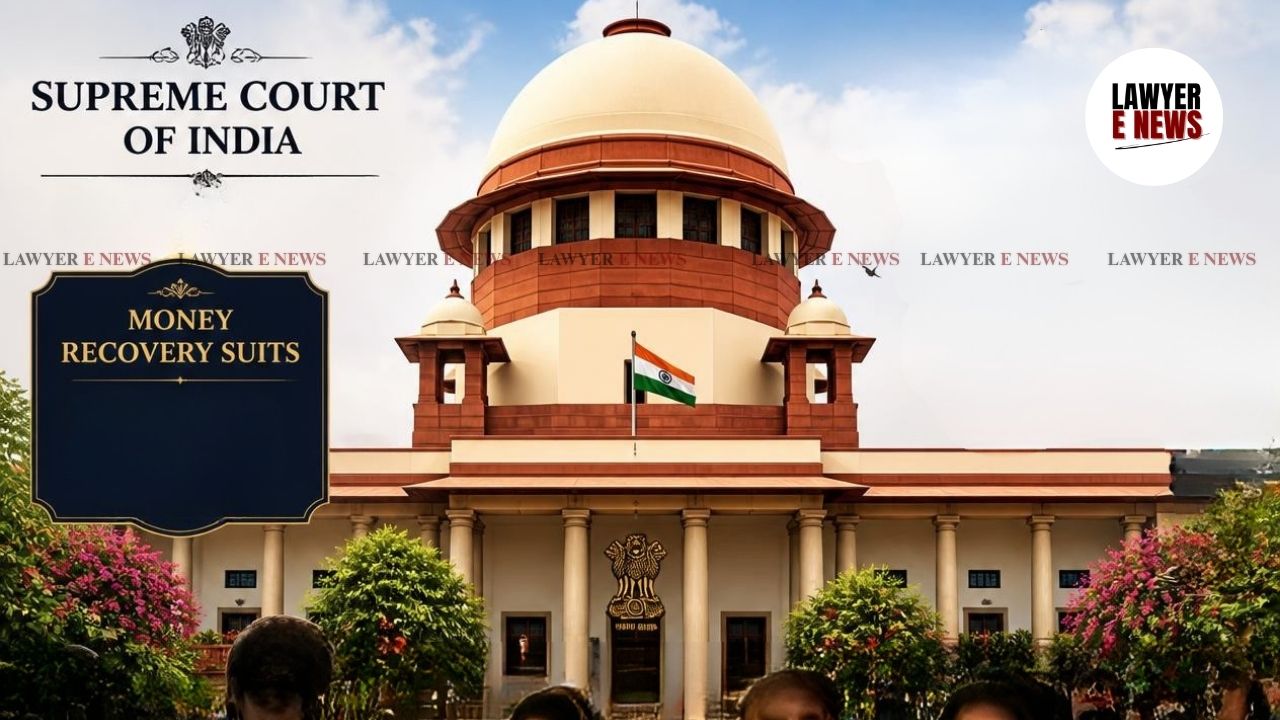
Summoning an Accused is a Serious Matter—Mechanical Orders Cannot Sustain in Law- Supreme Court in a significant ruling quashed the criminal proceedings initiated against INOX Air Products Limited and its Managing Director under the Drugs and Cosmetics Act, 1940. The Court held that the sale of Nitrous Oxide I.P. by a licensed manufacturer to another licensed entity engaged in repackaging and distribution did not constitute an offense. It further criticized the mechanical manner in which the Trial Court had issued summons, declaring that "summoning an accused in a criminal case is a serious matter and requires due application of mind."
The bench of Justice B.R. Gavai and Justice Augustine George Masih overturned the Andhra Pradesh High Court’s refusal to quash the proceedings, concluding that both the seller and buyer possessed valid Form 25 manufacturing licenses, and that the prosecution failed to establish any violation of law. "The term ‘manufacture’ includes altering, breaking up, packing, and relabeling a drug with a view to sale or distribution. The contention that a Form 25 license is subject to a Form 20B wholesale license is legally untenable," the Court observed.
The case arose from a complaint filed by the Drugs Inspector, Kadapa, alleging that INOX Air Products Limited (Accused No. 5) had sold Nitrous Oxide I.P. to an unlicensed firm, M/s. R.S. Gas Products (Accused No. 3). The complaint contended that this transaction was in contravention of Section 18(a)(vi) of the Drugs and Cosmetics Act, 1940, and punishable under Section 27(d).
According to the prosecution, RIMS General Hospital, Kadapa, had procured Nitrous Oxide I.P. from Accused No. 1, which lacked the necessary license. The Drug Inspector traced the supply chain to INOX Air Products and concluded that INOX had violated Rule 65(5)(1)(b) of the Drugs and Cosmetics Rules, 1945, which mandates that wholesale sales must be made only to licensed entities.
Based on this complaint, the Trial Court took cognizance on January 20, 2018, and issued summons to the appellants. Seeking relief, the appellants moved the Andhra Pradesh High Court under Section 482 CrPC, arguing that they were engaged in a legally permissible transaction. The High Court, however, dismissed the petition on January 12, 2024, leading to the present appeal before the Supreme Court.
The Supreme Court framed two key issues in this case. First, whether a sale of Nitrous Oxide I.P. between two licensed manufacturers required a Form 20B wholesale license. Second, whether the summoning order, issued without any reasoning, was legally sustainable.
On the first issue, the Court held that the prosecution had fundamentally misunderstood the legal framework governing pharmaceutical manufacturing and sale. "Manufacturing includes any process of making, altering, breaking, packing, or relabeling with a view to sale or distribution. Since the buyer in this case was engaged in breaking down and repackaging the drug, it was engaged in a legitimate manufacturing process," the Court observed. The mere fact that Accused No. 3 did not hold a Form 20B wholesale license did not make the transaction unlawful, since both parties were licensed under Form 25, which authorized repackaging and further sale.
The Court emphatically rejected the High Court’s interpretation that a Form 25 license was "subject to" a Form 20B license. "The High Court has completely misdirected itself. It has not demonstrated how the Form 25 license violates the conditions of Form 20B. The entire prosecution rests on an incorrect reading of the law," the judgment stated.
On the second issue, the Court was unequivocal in its criticism of the Trial Court’s summoning order. "The order does not reflect any application of mind. It merely reproduces the allegations in the complaint and directs summons to be issued. Such a mechanical approach cannot be sustained in law," the Court remarked. Citing Pepsi Foods Ltd. v. Special Judicial Magistrate, the Court reiterated that "summoning an accused in a criminal case is a serious matter. Criminal law cannot be set into motion as a matter of course." The Magistrate, it held, was required to examine the nature of allegations, scrutinize the evidence, and record reasons to justify the issuance of process. The failure to do so rendered the order legally unsound.
The Supreme Court allowed the appeal, set aside the Andhra Pradesh High Court’s judgment, and quashed the criminal proceedings initiated against the appellants. "Even if the allegations in the complaint are taken at face value, no offense is made out. The prosecution has failed to demonstrate any violation of law. The summoning order, being mechanical and non-speaking, is also liable to be set aside," the Court ruled.
It concluded with three key directions:
"The criminal proceedings in C.C. No. 71 of 2018 before the First Additional Judicial Magistrate, Kadapa, are quashed."
"The High Court’s judgment dated January 12, 2024, dismissing the quashing petition, is set aside."
"The summoning order dated January 20, 2018, is declared unsustainable in law."
This ruling reinforces the principle that a mere procedural oversight, such as the absence of a wholesale license, does not automatically criminalize a transaction if both parties are otherwise lawfully licensed. It also serves as a reminder that courts must exercise due diligence before summoning an accused, ensuring that orders are reasoned and not issued as a matter of routine.
Date of Decision: January 30, 2025