-
by sayum
26 October 2026 4:04 PM







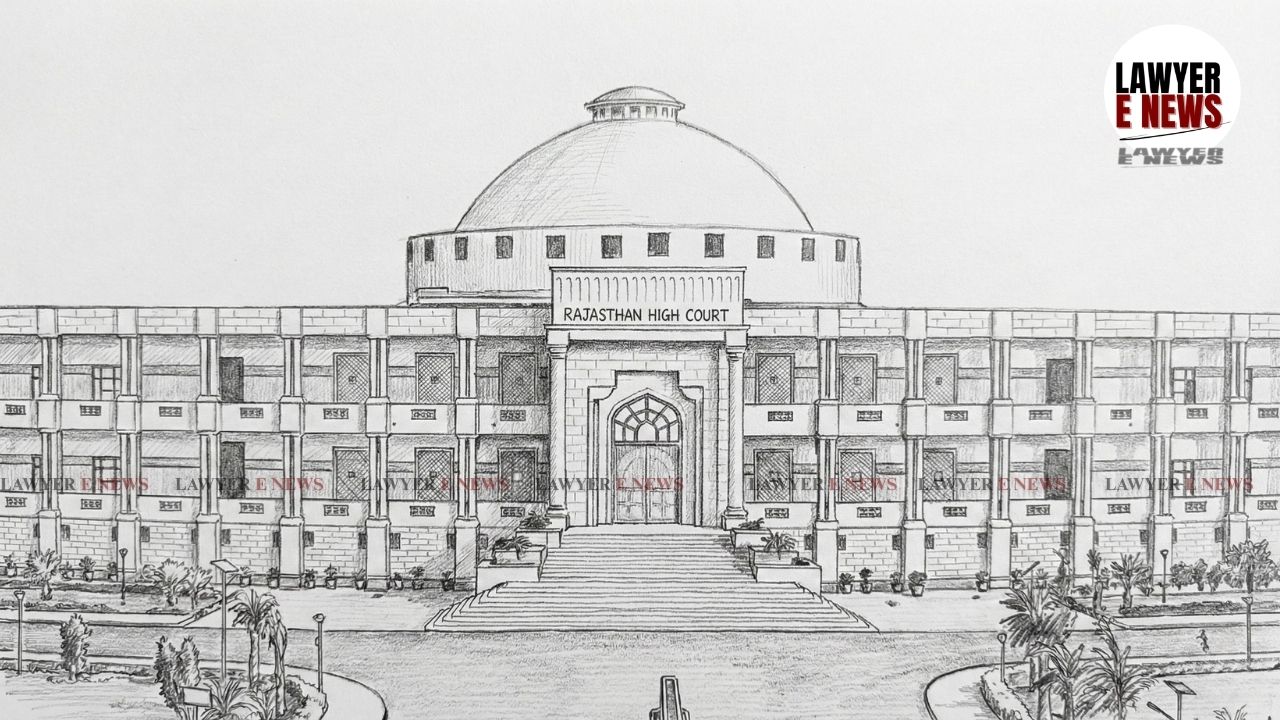
"Proceedings in the suit are directed towards final adjudication of the rights and liabilities of the parties... Proceedings under Order XXXIX Rules 1 and 2 CPC, on the other hand, are interlocutory in nature and are intended to preserve the subject matter of the litigation and protect the rights of the parties pending such final adjudication." Rajasthan High Court, in a significant ruling, held that an order staying "further proceedings" in a Civil Original Suit does not, by itself, denude the trial court of its jurisdiction to decide a pending application for temporary injunction filed under Order XXXIX Rules 1 and 2 CPC.
A bench presided by Justice Sanjeet Purohit observed that interlocutory applications intended to preserve the lis and protect the subject matter of the suit remain maintainable despite a stay on the main trial.
The petitioner instituted a suit for partition and mandatory injunction, along with a temporary injunction application. While the suit was pending, a coordinate bench of the High Court, in a separate writ petition, stayed the proceedings of the main suit. The petitioner subsequently moved the trial court under Section 151 CPC, seeking a stay on the injunction application as well, arguing it was part of the main suit. The trial court rejected this application, citing a previous direction to decide the injunction plea within 30 days.
The primary question before the court was whether a general stay on "further proceedings" in a civil suit automatically bars the trial court from entertaining or deciding a pending application for temporary injunction. The court also addressed whether the pendency of a stay order in the main suit renders the trial court functus officio regarding interlocutory matters that are collateral or protective in nature.
Distinction Between Suit And Interlocutory Proceedings
The Court noted that while the suit and the injunction application are interrelated, they maintain distinct identities in terms of their nature and purpose. The findings recorded in an interlocutory injunction application are provisional and do not bind the final outcome of the suit. Therefore, the proceedings are interconnected but not interdependent, as they are registered separately and serve different procedural functions.
No Automatic Stay Of Interlocutory Matters
The Court emphasized that an order staying "further proceedings" must be interpreted contextually. It clarified that proceedings which are collateral, incidental, or protective—such as applications for injunctions, receiver appointments, or attachments—do not constitute a "step in the trial" of the suit on merits. As such, these proceedings can continue to ensure the lis is kept alive and the subject matter is preserved during the subsistence of the stay order.
"The proposition that an application for temporary injunction forms part and parcel of the suit cannot be expanded into the broader proposition that an order staying further proceedings in the suit must, by necessary implication or mechanical application, result in a stay of proceedings upon the application for temporary injunction as well."
Relevant Precedential Guidance
Referring to decisions from the High Courts of Madhya Pradesh, Bombay, and Orissa, the Court reiterated that trial courts retain jurisdiction to pass orders meant to protect the interest of parties during the pendency of a stay. The Court noted that forcing parties to approach the superior court for every collateral matter would result in procedural injustice and unnecessary delays.
"The principle that emerges from a cumulative consideration of the authorities discussed hereinabove is that an order staying further proceedings in an original suit does not, by itself, operate as an absolute bar upon the jurisdiction of learned Trial Court to entertain and decide an interlocutory application arising in the suit."
The High Court concluded that since the order staying the suit did not contain an express direction to stay the injunction application, the trial court was correct in proceeding with its disposal. The Court maintained that its supervisory jurisdiction under Articles 226 and 227 is limited and warrants interference only in cases of patent illegality or manifest error, neither of which existed in the trial court's order. Consequently, the writ petition was dismissed.
Date of Decision: 29 September 2026