-
by sayum
26 October 2026 4:04 PM







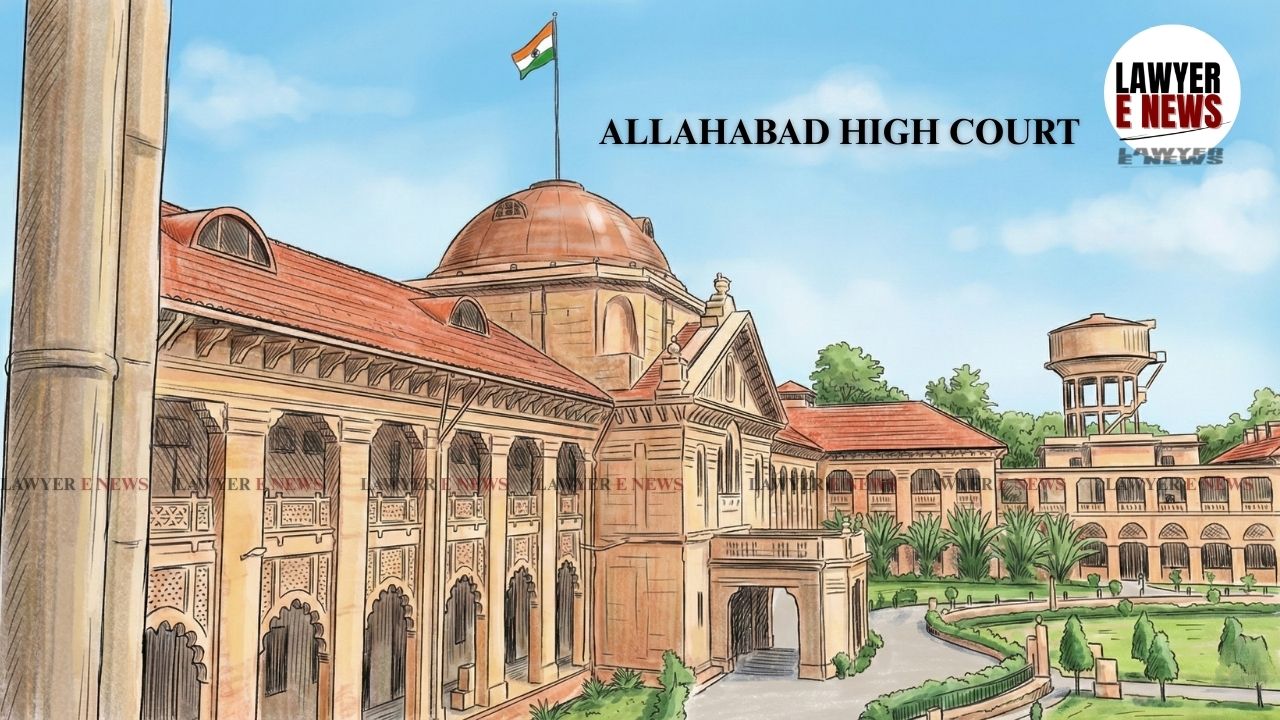
"The order of suspension as mentioned in Section 35(3)(c) of the Advocates Act, 1961 is a final order and could not be passed at an interim stage by the Bar Council of Uttar Pradesh." Allahabad High Court, in a significant ruling dated 01 October 2026, held that a State Bar Council lacks the statutory authority to impose interim suspension on an advocate pending the completion of disciplinary proceedings.
A division bench comprising Justice Shekhar B. Saraf and Justice Abdhesh Kumar Chaudhary observed that the power to suspend under Section 35(3)(c) of the Advocates Act, 1961, is limited to a final order passed after a due process of hearing and inquiry.
The writ petitioners, who serve as office bearers of the Central Bar Association, Lucknow, challenged an order dated 26 September 2026 passed by the Chairman of the Disciplinary Committee of the Bar Council of Uttar Pradesh. The impugned order had suspended the petitioners' enrollment till further orders due to allegations concerning the rejection of a Bar Council resolution. The petitioners contended that the suspension was passed without adherence to natural justice and exceeded the council's jurisdictional limits.
The court was primarily tasked with determining whether the Bar Council possesses inherent or statutory power to place an advocate under interim suspension pending disciplinary inquiry. Furthermore, the court examined whether an order of suspension under Section 35(3)(c) can be issued at an interlocutory stage without a final adjudication of the charges leveled against the legal practitioner.
Bar Council Lacks Interim Power
The High Court underscored that Section 35 of the Advocates Act, 1961, prescribes a specific procedure for disciplinary action, including the issuance of notice, framing of charges, and a trial-like hearing. The court reasoned that since the statute explicitly outlines the nature of orders that can be passed—namely reprimand, suspension for a specified period, or removal from the rolls—it does not contemplate the power to suspend an advocate as an interim measure pending inquiry.
No Power To Expand Statutory Authority
The bench relied upon the ratio in R. Jim v. Secretary, Bar Council of Tamil Nadu and Puducherry, reinforcing that courts cannot expand the powers of a statutory body through interpretation where the legislature has not expressly conferred such authority. The court noted that treating the "functions" of the Bar Council under Section 6 as "powers" would be legally unsustainable, especially when such powers infringe upon an advocate's right to practice.
"The Advocates Act has not conferred the power on the Bar Council to place an Advocate under suspension pending disciplinary enquiry."
Procedural Fairness Mandated
The court further observed that the impugned order suffered from fatal infirmities, as it was passed without ensuring the petitioners had access to the underlying complaint. By suspending the petitioners' licenses while simultaneously adjourning the hearing to a future date, the Disciplinary Committee acted in a manner inconsistent with the principles of natural justice. The bench emphasized that any adverse action must be preceded by a fair opportunity for the practitioner to defend themselves against the allegations.
Consequently, the High Court quashed the order of suspension and directed the petitioners to appear before the Disciplinary Committee on the previously scheduled date of 11 October 2026. The Bar Council was directed to furnish all necessary documents to the petitioners to facilitate their defense. The bench clarified that the petitioners should not seek unnecessary adjournments, thereby balancing the need for procedural speed with the requirement of legal due process.
Date of Decision: 01 October 2026