-
by sayum
26 October 2026 4:04 PM







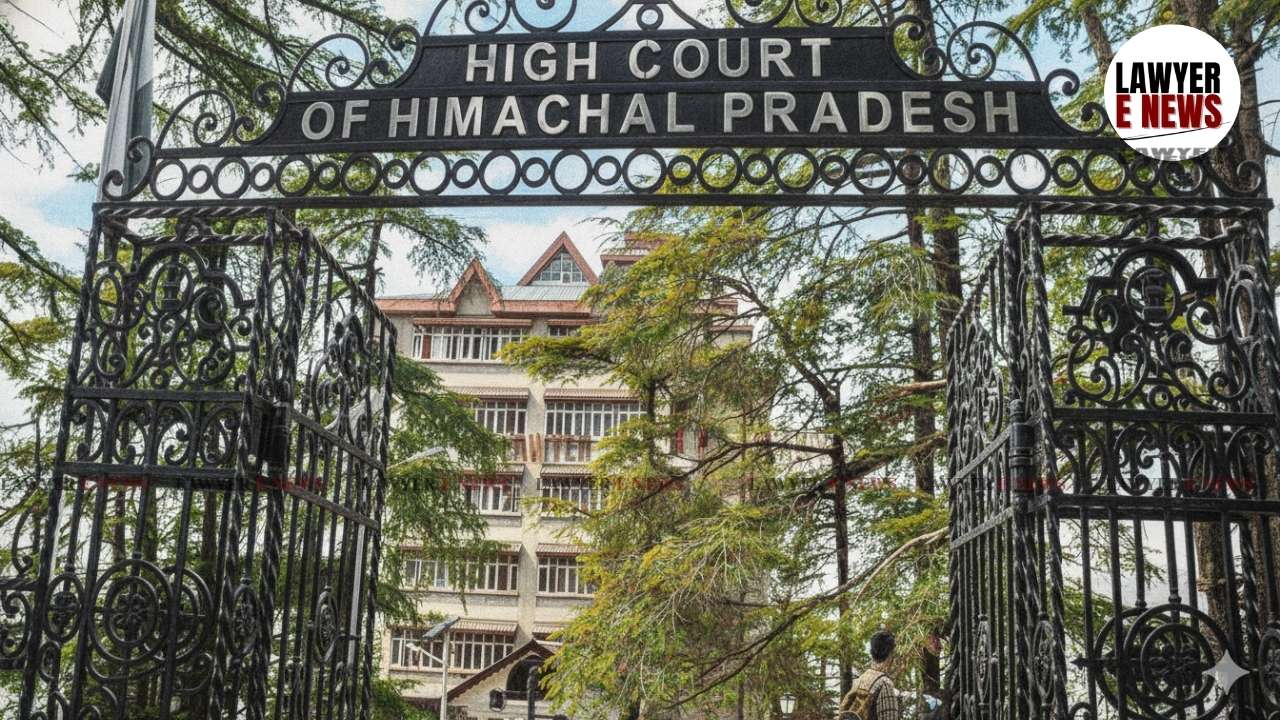
"It is beyond imagination that in the moonlight these witnesses identified Naresh Kumar despite that they were not knowing him previously, and it is their own statement that they noticed shadow of two persons, one of them fled away, but despite that, in the Court they identified Naresh Kumar as a person who fled from the spot." High Court of Himachal Pradesh, in a judgment dated 01 October 2026, upheld the acquittal of an accused charged under the NDPS Act, categorically holding that police identification of an unknown person in conditions of darkness, where the witness admits to seeing only a "shadow," is legally insufficient to sustain a conviction.
A bench of Justice Vivek Singh Thakur and Justice Ranjan Sharma observed that the prosecution’s reliance on such dubious identification, coupled with major inconsistencies in investigation procedures, failed to meet the threshold of proving guilt beyond reasonable doubt.
The State of Himachal Pradesh had appealed the acquittal of the respondent, Naresh Kumar, who was allegedly found in possession of 95 kilograms of poppy straw alongside a co-accused, Ashwani Kumar, in September 2011. While the co-accused was apprehended at the spot, the respondent allegedly fled into the bushes at night. The prosecution’s case against the respondent relied heavily on subsequent identification by police personnel who claimed to have seen him fleeting during the midnight raid.
The primary legal questions before the court were whether an identification made for the first time in court by police witnesses, who did not know the accused previously, could be considered reliable when made in the dark, and whether the procedural lapses in the investigation and the filing of multiple challans for a single FIR invalidated the prosecution's case.
Court’s Observations on Identification
The court expressed deep skepticism regarding the identification process. The police witnesses claimed to have identified the respondent in the dark, yet simultaneously admitted that they were not acquainted with him prior to the incident. The court noted that if the witnesses only saw a "shadow," the claim of identification was inherently improbable.
Identification In Pitch Darkness Lacks Credibility
The court remarked that the prosecution’s case suffered from significant internal contradictions. While the police claimed the area was dark and that they chased a "shadow," they simultaneously asserted that they were able to positively identify the respondent. The court held that such testimony is "beyond imagination" and cannot be treated as cogent evidence, especially when the identification occurred for the first time in court long after the incident.
Procedural Lapses In NDPS Act Compliance
The court further observed that the investigation was conducted in a "reverse order" contrary to the statutory requirements of the NDPS Act. The officers failed to record grounds of belief under Section 42 of the Act before initiating the raid, opting instead to register an FIR based on mere suspicion. This procedural chaos, including the filing of separate challans for the same incident and the failure to place the fate of the co-accused on record, signaled a "mess" created by the investigating agency.
Co-accused Disclosure Is Not Substantive Evidence
The bench reiterated the settled legal position that an accused cannot be convicted solely on the basis of a disclosure statement made by a co-accused. Citing the Supreme Court’s mandate in Toofan Singh v. State of Tamil Nadu, the court held that the prosecution failed to provide any independent corroborative evidence to link the respondent to the contraband, rendering the disclosure statement legally impotent.
Concluding that the prosecution failed to present reliable and convincing evidence to overcome the presumption of innocence, the court dismissed the State’s appeal. It affirmed the trial court’s judgment of acquittal, emphasizing that the lack of credible identification and the failure to prove link evidence made a conviction impossible. The court further directed the respondent to furnish bail bonds under Section 481 of the Bharatiya Nagarik Suraksha Sanhita (BNSS), 2023, to ensure his presence if the matter is taken to the Supreme Court.
Date of Decision: 01 October 2026