-
by sayum
23 August 2026 2:56 PM







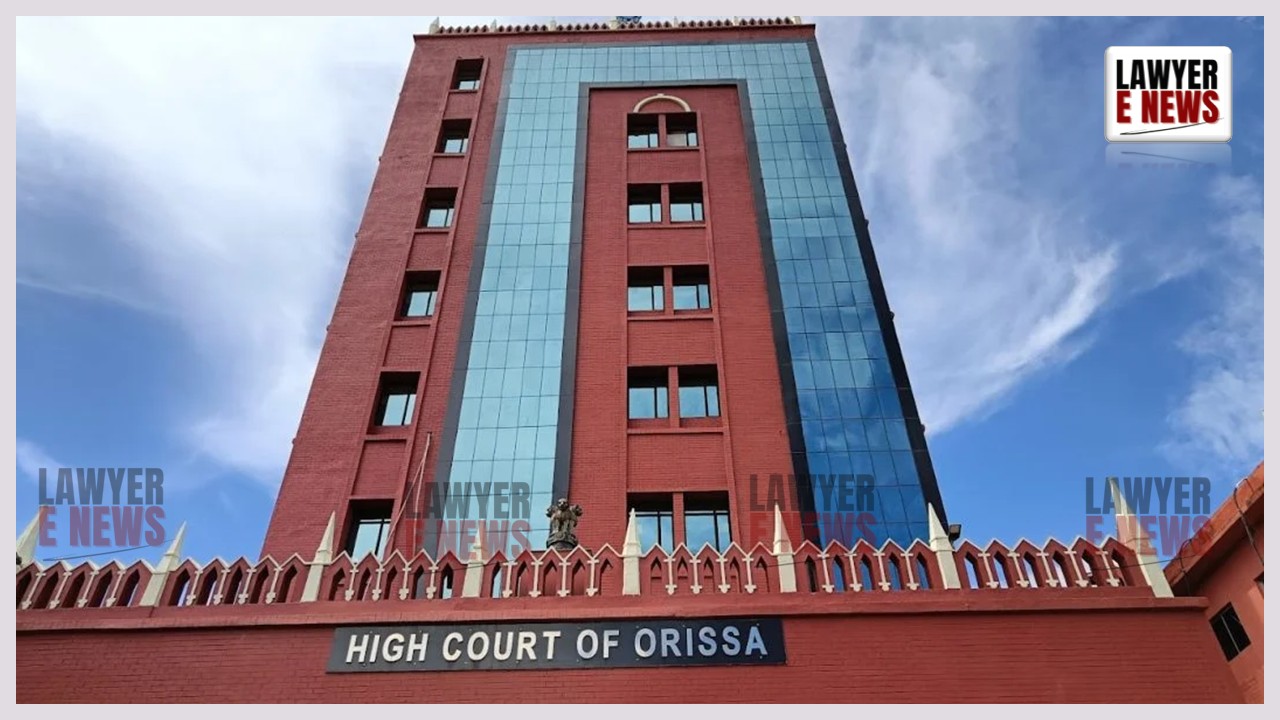
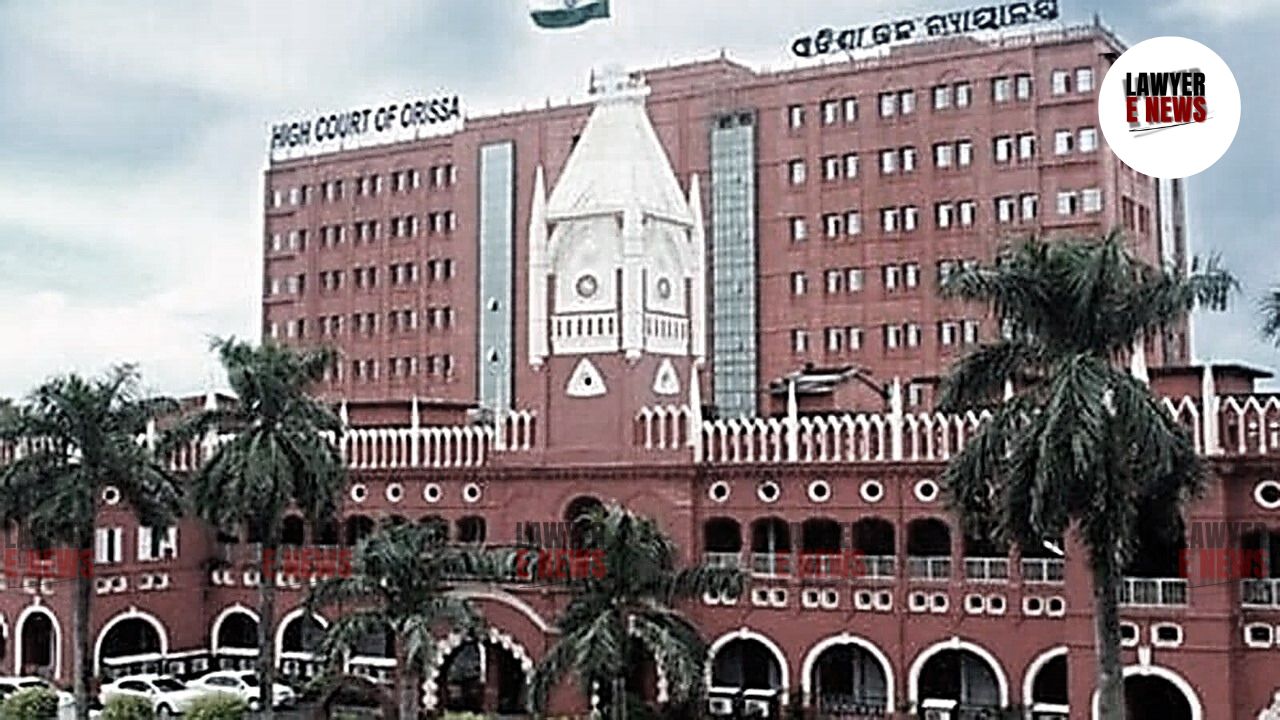
“No intelligible differentia exists between DNB and Sponsored DNB candidates under the same service rules – State’s refusal of NOC is violative of Article 14”, In a precedent-setting decision Orissa High Court struck down a discriminatory clause in the Odisha government’s 2022 policy that barred in-service medical officers from obtaining a No Objection Certificate (NOC) for admission to Sponsored DNB (Post MBBS) courses. The Bench of Justice Manash Ranjan Pathak and Justice Mruganka Sekhar Sahoo, allowing the writ petition filed by Dr. Subrat Jamadar, held that the refusal of NOC based solely on the nature of admission (sponsored vs. non-sponsored) was arbitrary, unconstitutional, and violative of Article 14.
“We are not persuaded to accept the contentions of the State, being guided by Article 14 of the Constitution of India and the principles of law enunciated by the Apex Court.”
A Challenge to Arbitrary Classification in Medical Education Access
The petitioner, Dr. Subrat Jamadar, an in-service medical officer of the Odisha Medical and Health Services (OMHS) cadre, was denied NOC by the State Health Department for participation in NBEMS Centralized Counselling 2025 for admission to Sponsored DNB (Post MBBS) courses. The refusal was made under Clause 5 of a departmental policy dated 02.09.2022, which categorically stated:
“NOC will not be issued to the Medical Officers of OMHS cadre for the sponsored DNB course.”
This exclusion, the Court held, had no basis in statutory service rules, nor did it find support in any intelligible classification – a clear violation of Article 14, which guarantees equality before the law.
An Eligible Doctor Denied NOC for Arbitrary Reasons
Dr. Jamadar had qualified NEET-PG 2024 with an All India Rank of 87,721 and had applied for participation in NBEMS counselling for Sponsored DNB seats. The NBEMS eligibility criteria, as per notification dated 10.12.2025, specifically allowed government doctors in regular service to apply for sponsored seats.
Though eligible, Dr. Jamadar was denied NOC by the State government through letter dated 20.01.2025, solely on the ground that its policy prohibits granting NOC for Sponsored DNB programs.
The petitioner contended that other similarly situated OMHS officers were granted NOC for Non-Sponsored DNB and MD/MS courses, thereby rendering this classification irrational and unconstitutional.
Sponsored vs Non-Sponsored DNB – An Artificial Distinction
Refusing to accept the State’s justification, the High Court held that no rational basis exists for treating Sponsored DNB and Non-Sponsored DNB admissions differently. The Court noted:
“No sufficient grounds have been stated, reasons disclosed in the counter to indicate that there is any intelligible differentia… The disclosures made in the four affidavits miserably fail to justify the discrimination.” [Para 22–23]
The Court also emphasized that neither the National Board of Examinations in Medical Sciences (NBEMS) nor the National Medical Commission (NMC) make any such distinction between DNB and Sponsored DNB in terms of educational merit or professional qualification.
“The State cannot differentiate between its employees who wish to take PG study by distinguishing PG study in medical science prosecuted in premier hospitals in private sector and those in government hospitals. No such distinction can be made.” [Para 21]
Rule 179 of Odisha Service Code: Binding on State, Allows Study Leave for Medical PG
A key facet of the ruling was the interpretation of Rule 179 of the Odisha Service Code, which provides for special study leave to government employees, including medical officers, for pursuing technical or professional education such as post-graduation in medicine.
The Court declared: “Rule 179 is a statutory rule framed under Article 309 and is binding on the State... There is no distinction between study of post-graduation in medicine/surgery for DNB (Post MBBS) as sponsored or non-sponsored category.” [Paras 9–10]
Administrative Reasons Cannot Supersede Constitutional Mandates
The State argued that granting NOCs for sponsored DNBs could increase stress on peripheral healthcare due to vacancies and administrative difficulties in paying salaries. The Court rejected these grounds, calling them speculative and unsupported by evidence.
“Mere apprehensions about administrative strain cannot override constitutional protections under Article 14… The decision must stand on its own reasons – those cannot be supplemented later through affidavits.” [Paras 36–38]
Citing the classic rulings in Gordhandas Bhanji and Mohinder Singh Gill, the Court reiterated:
“The decision of the authority must disclose the reasons itself at the first instance… Courts are not to look into reasons subsequently supplied through affidavits.” [Para 37]
Discrimination Between Doctors Based on Admission Route is Constitutionally Impermissible
Relying heavily on Dr. Tanvi Behl v. Shrey Goel, (2025 INSC 125) and earlier landmark decisions in Jagadish Saran (1980) and Pradeep Jain (1984), the Court emphasized that Article 14 prohibits differential treatment of similarly situated individuals, especially in the domain of higher education and public employment.
“To devalue merit at the summit is to temporise with the country’s development in the vital areas of professional expertise… such classification, unless backed by rational justification, cannot be sustained.” [Para 30 quoting Jagadish Saran]
The Court dismissed the State’s reliance on P.U. Joshi v. Accountant General, Ahmedabad, clarifying that policy discretion must conform to constitutional mandates and cannot justify manifest arbitrariness.
State Ordered to Grant NOC Before 2 January 2026
Terming the refusal of NOC a clear constitutional infraction, the Court allowed the writ petition with the following operative direction: “Authorities are directed to grant ‘No Objection Certificate’ to the petitioner to participate in the Centralized Merit Based Counseling for admission to Sponsored DNB (Post MBBS and Post Diploma) seats – 2025 admission session by 02.01.2026.” [Para 40]
The decision ensures that Dr. Jamadar will be eligible to participate in counselling before the NBEMS deadline of 8 January 2026.
A Landmark Victory for Equality in Medical Career Advancement
This judgment sets a powerful precedent against arbitrary classification in public service and higher medical education. The Orissa High Court has reasserted that state policy cannot defy statutory service rules or constitutional equality.
“State cannot create artificial classifications where none exist – to do so is to violate the spirit of Article 14.”
By directing compliance with Rule 179 and dismantling the State’s unjust policy on Sponsored DNB NOCs, the Court has safeguarded the rights of thousands of government doctors seeking to upskill without facing bureaucratic discrimination.
Date of Decision: 24 December 2025