A Will That Silences Legal Heirs Without Cause Cannot Speak the Truth of the Testator’s Intent: Orissa High Court Rejects Solemnity of Registered Will Conviction Can Be Set Aside Even in Non-Compoundable Offences If Parties Settle: Punjab & Haryana High Court Affirms Inherent Power under Section 482 CrPC Mere Absence of Ticket or Station Report Not Fatal to Claim: Bombay High Court Says Railway Claims Can Be Proved by Circumstantial Evidence Judgment of Acquittal Cannot Be Reversed Merely Because A Different View Is Possible, Unless It’s Perverse Or Ignores Material Evidence: Himachal High Court Courts Cannot Reopen Admissions Once Deadline Expires: Orissa High Court Rejects SEBC Nursing Aspirants' Plea Filed Post Cut-Off A Sketchy Allegation of Corrupt Practice Can’t Be Cured Later Through Amendment: Bombay High Court Rejects Election Petition Against Shiv Sena MLA Delay in FIR, If Plausibly Explained, Cannot Vitiate Claim: Madras High Court Enhances Compensation to ₹3.26 Crores for Fatal Accident Involving Pillion Rider Income Tax | One-Size-Fits-All Approach Ill-Fits Tax Limitation Cases Involving Non-Residents: Bombay High Court Strikes Down Delayed Orders Under Section 201 Award That Shocks the Conscience Must Fall: Delhi High Court Sets Aside Arbitral Award for Denying Opportunity to Prove Counter-Claim Defendants Filed Fabricated Documents to Claim Prior Use of ‘HTA’ – Delhi High Court Slams Trademark Infringement Tactics, Grants Injunction Failure to Videograph Search Violates BNSS: Allahabad High Court Grants Bail, Slams Police for Ignoring Procedural Mandates No Customs Duty Without Clear Authority Of Law: Supreme Court Quashes Levy On SEZ Electricity Supplied To Domestic Tariff Area Owner's Admission Cannot Be Brushed Aside to Deny Compensation: Supreme Court Reinstates ₹3.7 Lakh Award to Family of Deceased Driver Benefit Of Doubt Must Prevail Where Eyewitness Testimony Is Infirm And Contradict Medical Evidence: Supreme Court Acquits Double-Murder Convict A Mere Error in Bail Orders Cannot Tarnish a Judge’s Career: Supreme Court Quashes Dismissal of Judicial Officer for Granting Bail under Excise Act Order 1 Rule 10 CPC | A Necessary Party is One Without Whom No Order Can Be Made Effectively: Supreme Court Readiness and Willingness Must Be Proven—Mere Pleading Is Not Enough For Specific Performance: Supreme Court Returning Expired Stamp Papers Is No Refund in Law: Supreme Court Directs State to Pay ₹3.99 Lakhs Despite Limitation under UP Stamp Rules Supreme Court Distinguishes ‘Masterminds’ from ‘Facilitators’: Bail Denied to Umar Khalid & Sharjeel Imam, Granted to Gulfisha Fatima & Others: Supreme Court Jurisdiction of Small Causes Court Under Section 41 Does Not Extinguish Arbitration Clause in Leave and License Agreements: Supreme Court Arbitration Act | Unilateral Appointment Void Ab Initio; Participation in Proceedings Does Not Constitute Waiver: Supreme Court Section 21 Arbitration Act Is Not a Gatekeeper of Jurisdiction: Supreme Court Restores ₹2 Crore Arbitral Award Against Kerala Government Cognizance Before Condoning Delay Not Permissible Under NI Act: Supreme Court Quashes 138 Complaint Filed Late By Two Days Vague Statement First Time In Court, Absent From Section 161 Crpc Statements, Cannot Be Sole Basis For Conviction: Supreme Court NDPS | Mentioning FIR Number On Memos Before Registration Makes the Entire Recovery Suspect: Himachal Pradesh High Court MACT | Once Deceased Is Proven To Be Skilled Worker, Deputy Commissioner's Wage Notification Is Applicable: P&H HC Bank’s Technical Excuses Can’t Override Employee’s Right to Ex Gratia Under Old Circulars: Bombay High Court Slams Canara Bank’s Rejection of Claim Once Worker Files Affidavit of Unemployment, Burden Shifts to Employer to Prove Gainful Employment: Delhi High Court Grants 17B Relief Despite 12-Year Delay Gratuity Is a Property Right, Not a Charity: MP High Court Upholds Gratuity Claims of Long-Term Contract Workers Seized Vehicles Must Not Be Left to Rot in Open Yards: Madras High Court Invokes Article 21, Orders Release of Vehicle Seized in Illegal Quarrying Case Even After Talaq And A Settlement, A Divorced Muslim Woman Can Claim Maintenance Under Section 125 CRPC: Kerala High Court Bail Cannot Be Withheld as Punishment: Himachal Pradesh High Court Grants Bail to Govt Official in ₹200 Cr. Scholarship Scam Citing Delay and Article 21 Violation Custodial Interrogation Necessary in Serious Economic Offences: Delhi High Court Denies Anticipatory Bail in ₹1.91 Cr Housing Scam Custodial Interrogation Necessary in Serious Economic Offences: Delhi High Court Denies Anticipatory Bail in ₹1.91 Cr Housing Scam Custodial Interrogation Necessary in Serious Economic Offences: Delhi High Court Denies Anticipatory Bail in ₹1.91 Cr Housing Scam Custodial Interrogation Necessary in Serious Economic Offences: Delhi High Court Denies Anticipatory Bail in ₹1.91 Cr Housing Scam Custodial Interrogation Necessary in Serious Economic Offences: Delhi High Court Denies Anticipatory Bail in ₹1.91 Cr Housing Scam Custodial Interrogation Necessary in Serious Economic Offences: Delhi High Court Denies Anticipatory Bail in ₹1.91 Cr Housing Scam

State Cannot Fix Higher Disability Threshold (50%) for Allowances When Central Act Prescribes 40%: Punjab & Haryana High Court

06 January 2026 3:48 PM

By: Admin


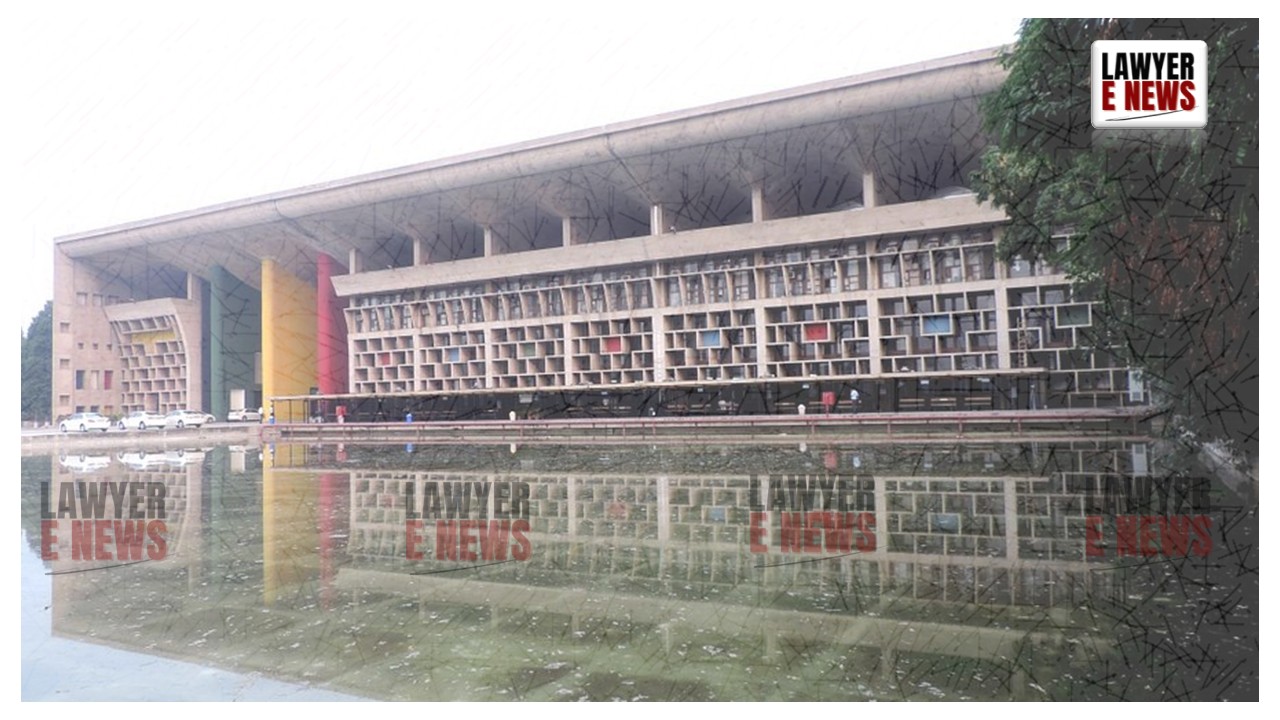
“The persons with disability of 40% or above, constitute a class in themselves and further creation of a class in such homogenous group, would be arbitrary unless the classification is based on any intelligible differentia.”— In a seminal ruling the Punjab and Haryana High Court, comprising Justice Ashwani Kumar Mishra and Justice Rohit Kapoor, has read down Clause (iii) of Rule 22(1) of the Haryana Civil Services (Allowances to Government Employees) Rules, 2016, declaring the requirement of 50% disability for conveyance allowance as unconstitutional and violative of the Central Disabilities Act.

The Court was adjudicating a writ petition filed by Nakul, a Work Supervisor in the P.W.D. (B. & R.) Department. The petitioner, suffering from 40% permanent locomotor disability (affecting both upper and lower limbs), was denied conveyance allowance. The State relied on Rule 22(1)(iii) of the 2016 Rules, which mandated a minimum of 50% disability for orthopaedically handicapped persons with impairment of both limbs to be eligible for the allowance.

The petitioner contended that this threshold was arbitrary and inconsistent with the Rights of Persons with Disabilities Act, 2016 (RPWD Act) and the 1995 Act, both of which define a "person with benchmark disability" as someone with not less than 40% of a specified disability.

“No provision in the Act of 2016 exists permitting creation of any separate class of differently abled persons with higher degree of disability of 50% or above in the matter of grant of particular benefit in employment.”

The Doctrine of Homogeneous Class

The Division Bench rejected the State's argument that it had the prerogative under Article 309 to regulate service conditions and identify specific categories for benefits. The Court held that once a person is certified with a benchmark disability (40%), they enter a homogeneous class protected by the Central legislation.

The Bench observed that the State failed to provide any intelligible differentia or rational nexus for fixing a 50% threshold for one category of disability while accepting 40% for others (such as those with disability in "either" limb under Clause (ii)). The Court termed this "selective affirmative action" as hostile discrimination violative of Article 14 of the Constitution.

“Comparison of disabilities among ‘persons of disabilities’, without any rational basis, is clearly violative of Article 14 of the Constitution of India.”

Drawing reliance from the Supreme Court’s decision in Deaf Employees Welfare Association v. Union of India (2014), the High Court reiterated that benefits extended to one category of disabled employees cannot be denied to others without a valid basis. The Court emphasized that the 2016 Rules must align with the benevolent objective of the RPWD Act, 2016.

Consequently, the Court read down the impugned Rule. It held that all disabled employees of the State of Haryana with a valid certificate of 40% or more disability are entitled to conveyance allowance, rendering the 50% requirement ineffective.

“In order to save clause (iii) of Sub rule 1 of Rule 22 from the vice of hostile discrimination, we read down the said clause.”

The Court quashed the rejection memo dated 30.04.2024, noting that the medical authority had refused the recommendation solely based on the invalid statutory rule. The Respondents were directed to release the conveyance allowance along with interest @ 8% per annum. However, the arrears were restricted to 38 months prior to the filing of the writ petition.

Date of Decision: 24/12/2025

 

Latest Legal News