-
by sayum
05 August 2026 9:31 AM







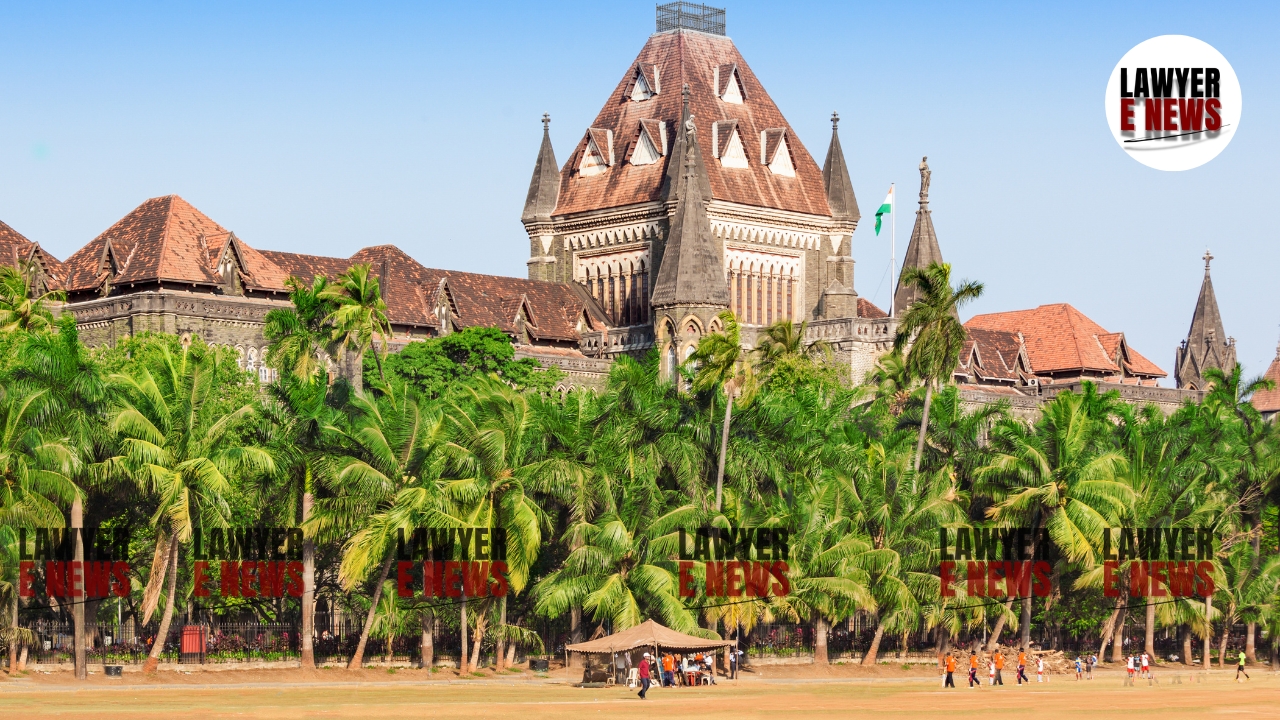
“Prohibition on Charging Convenience Fees Without Law Is an Unconstitutional Attack on Business Freedom”, Bombay High Court delivered a landmark ruling in PVR Limited & Others v. State of Maharashtra & Others, declaring unconstitutional the Maharashtra government’s prohibition on charging convenience fees for online cinema ticket bookings. The Division Bench of Justice M.S. Sonak and Justice Jitendra Jain categorically held that the State cannot “control commercial terms agreed between private parties” without any statutory backing, striking down the impugned government orders for violating the fundamental right to trade under Article 19(1)(g) of the Constitution.
The Court began its verdict by crystallizing the central flaw in the State’s actions: “The impugned orders attempt to prohibit a legitimate business practice without any legislative authority — this is impermissible under our constitutional framework.”
This case arose from a legal challenge by multiplex operators PVR Limited, the Multiplex Association of India, and online booking platform BookMyShow, contesting two specific government orders dated 4 April 2013 and 18 March 2014. These orders had banned the recovery of convenience fees or service charges for online booking of cinema tickets in Maharashtra, even while allowing physical bookings to continue freely.
The Bombay High Court carefully traced the background leading to the litigation, noting that multiplex operators and cinema owners had introduced online booking platforms for customer convenience, charging a nominal service fee to maintain the technology and services involved. The State’s orders abruptly prohibited this practice, without citing any statutory power under the Maharashtra Entertainment Duty Act, 1923 (ED Act).
The crux of the petitioners’ argument was that their right to operate a legitimate business was being curtailed without any legislative basis. They argued that the ED Act merely regulated entertainment tax but did not empower the State to fix or prohibit service charges between private parties. The Court agreed unequivocally, remarking, “Nowhere in the ED Act is there a provision that allows the State to interfere in commercial pricing arrangements of private enterprises.”
The Court dissected the key statutory provisions — Sections 2(b), 3, 4, 7 and 10 of the ED Act — and came to the unambiguous conclusion that none of them authorized the government to prohibit the collection of convenience fees. Emphasising the limits of state power, the Court observed: “The State’s power is confined to securing payment of entertainment duty and cannot extend to controlling the business decisions of private operators, absent clear legislative mandate.”
The State had invoked Article 162 of the Constitution to defend its action, claiming general executive power permitted it to issue such directives. The Court forcefully rejected this justification, stating, “Article 162 does not give a blank cheque to the executive to infringe fundamental rights or regulate private contracts without an enabling statute.”
Drawing strength from celebrated Supreme Court precedents, particularly Indian School Jodhpur v. State of Rajasthan (2021) and Rai Sahib Ram Jawaya Kapur v. State of Punjab (1955), the High Court reiterated that price control or regulation of private contractual terms could only be achieved through express legislation. The ruling stated in no uncertain terms, “Executive power cannot override commercial freedoms secured under Article 19(1)(g); any restriction must flow from valid legislation and withstand the test of reasonableness under Article 19(6).”
The Court clarified that the issue was not about whether entertainment duty could be charged on convenience fees, but whether the State could prohibit the very collection of such fees. The judges distinguished between taxability and prohibition, ruling, “The government’s power to tax is distinct from its non-existent power to prohibit convenience fees altogether.”
The judgment also decisively interpreted Section 3(3)(e) of the ED Act, which the State relied upon, explaining that this provision merely dealt with how duty should be calculated, not with banning convenience fees. The Court explained, “Convenience fee might be included in the calculation of duty, but that is a fiscal issue — it cannot become a tool for banning its collection by private parties.”
Importantly, the High Court found the prohibition violative of the core commercial freedoms protected by the Constitution. The judges firmly held, “By banning convenience fees without any law, the State effectively destroys the petitioner’s right to recover costs for services rendered — this is an unreasonable and unconstitutional interference with the right to conduct business.”
Turning to the broader implications of State interference, the Court warned against the perils of administrative overreach: “If convenience fees can be prohibited by an executive order today, tomorrow the State could regulate any component of pricing in any private transaction, making the market system unworkable. This is precisely why such powers must only flow from legislation.”
The judgment also pointed to the hypocrisy in the State’s approach, noting that after the court’s interim orders, the government amended Section 2(b) of the ED Act in December 2014 to formally bring convenience fees within the scope of taxation. The Court noted, “This legislative amendment confirms our view — prior to this, the State had no authority to interfere with collection of convenience fees.”
In conclusion, the High Court struck down Clause 3(d) of the Government Order dated 4 April 2013 and Clause (a) of the Government Order dated 18 March 2014, describing them as unconstitutional, ultra vires the ED Act, and violative of Article 19(1)(g). The interim stay on the prohibition was made permanent, allowing cinema operators and online platforms to continue collecting convenience fees subject to applicable taxes.
The final paragraph of the judgment sums up the court’s approach succinctly: “State interference in the absence of law is not governance; it is overreach. The State must legislate if it seeks to regulate business terms, and must respect constitutional freedoms while doing so.”
This judgment reaffirms a critical constitutional principle: that the executive cannot unilaterally intrude into private commercial agreements, and that any restriction on the right to trade must be backed by valid law and pass the constitutional test of reasonableness.
Date of Decision: 10th July 2025