-
by sayum
29 August 2026 3:15 PM







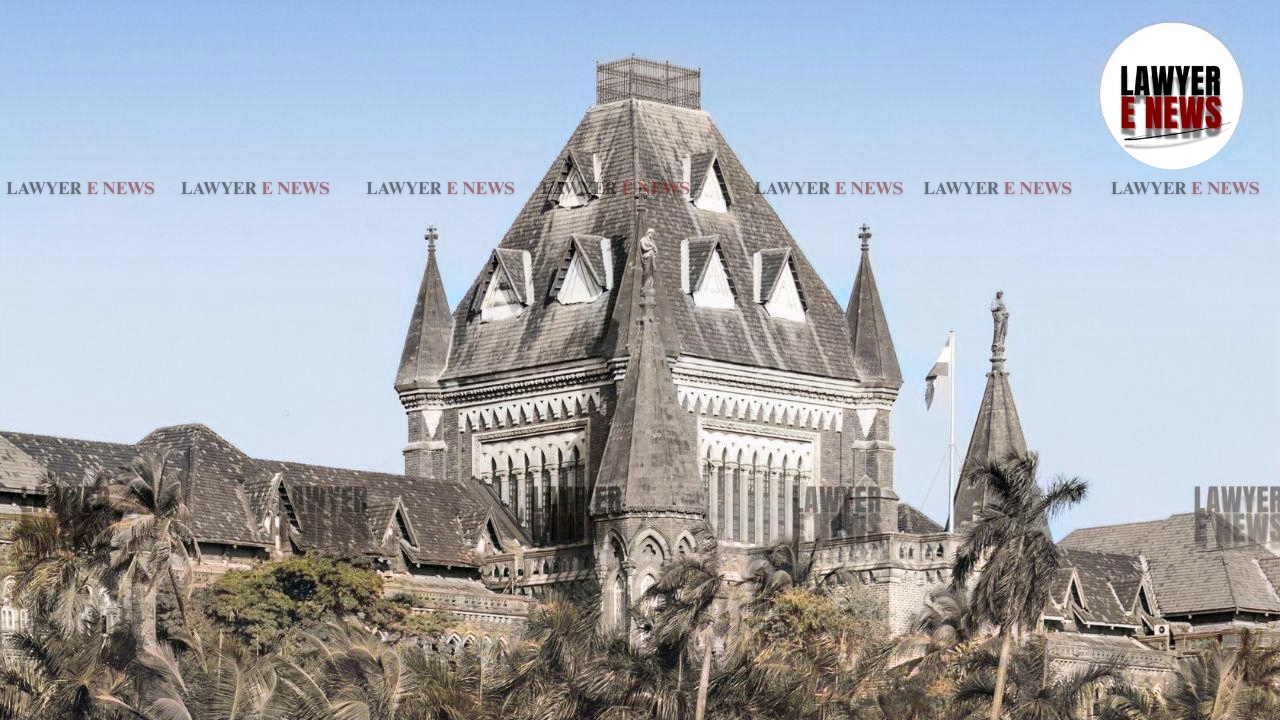
“Insertion of ‘owners’ in Section 3B and 13 entrenches, rather than dilutes, landowners’ rights” – Supreme Court of India delivered a landmark judgment under the Maharashtra Slum Areas (Improvement, Clearance and Redevelopment) Act, 1971. A Bench of Justice Surya Kant and Justice Ujjal Bhuyan upheld the Bombay High Court’s order quashing the acquisition of land belonging to the Basilica of Our Lady of the Mount (Church Trust) at Bandra.
The Court held that the preferential right of a landowner to redevelop a Slum Rehabilitation Area remains untouched even after the 2018 Amendment, castigating the Slum Rehabilitation Authority (SRA) and private developer Saldanha Real Estate for attempting to dispossess the Church Trust through what it called a “colourable exercise of power.”
The dispute centred on CTS No. B-960 at Bandra, part of a large parcel owned by the Church Trust. Since the 1930s, hutments had existed on a portion of this land, declared a slum area in 1978, later extended in 2002. The hutment dwellers formed the Shri Kadeshwari Cooperative Housing Society (Proposed), with 35 eligible members.
For years, redevelopment discussions between the Society and the Trust remained inconclusive. In 2017, the Society appointed Saldanha Real Estate Pvt. Ltd. as developer. Saldanha then tried to purchase the land outright from the Church Trust, offering first ₹2.5 crores and then ₹3 crores. When negotiations failed, the Society and developer sought to push through redevelopment by approaching the SRA.
Despite the Trust’s efforts to initiate a composite redevelopment project of its larger property, including the subject slum, the SRA processed only Saldanha’s proposal and, in 2021–22, moved to acquire the Church Trust’s land under Section 14 of the Slums Act. The Bombay High Court quashed the acquisition, calling it an abuse of power.
The appellants argued that the writ petition was premature, since no final acquisition had occurred. Rejecting this, the Court held:
“Mere absence of any direct impact on the entitlement of the Church Trust does not take away from the jurisdiction of the High Court under Article 226. The writ court can intervene even at a preliminary stage to prevent abuse of statutory powers.”
The Court emphasised that waiting for final acquisition would have created third-party rights and irreversible consequences.
2018 Amendment Strengthened, Not Weakened, Owners’ Rights
The appellants contended that the 2018 Amendment shifted the burden onto the landowner to act within 120 days of the Section 3C(1) Declaration, eliminating the need for a separate Section 13 notice.
The Supreme Court rejected this reading, declaring:
“Insertion of the word ‘owners’ in Section 3B(5) and Section 13 entrenches, rather than dilutes, the preferential right of the landowner. The 120-day period commences only after a specific notice-cum-invitation under Section 13. A Section 3C declaration cannot be its substitute.”
In clear terms, the Court reaffirmed its earlier ruling in Tarabai Nagar Co-op. Hsg. Society v. State of Maharashtra (2025), holding that the preferential right of landowners survives post-amendment.
Preferential Right Ignored – Acquisition Illegal
On the central issue, the Court found that the SRA had never issued a Section 13 notice inviting the Church Trust to submit its redevelopment scheme.
“In the absence of a valid notice or opportunity, there existed no legal basis to extinguish the Church Trust’s preferential right. The acquisition proceedings were ex facie illegal.”
The Court further held that the Trust’s consistent efforts to redevelop the land negated any claim of waiver:
“If there is no clear and overt communication by the owner that it does not wish to exercise its preferential right, there cannot be an automatic waiver.”
Mala Fides and Collusion – “A Land Grab”
The judgment came down strongly on the conduct of both the developer and the SRA.
On Saldanha Real Estate, the Court noted its earlier letter warning the Trust that slum dwellers could “claim adverse possession” if the land was not sold, calling it a veiled threat.
“Saldanha initiated a driven attempt to usurp the Subject Land through the machinery of the SRA. Acting through Kadeshwari Society as its proxy, it sought to effectuate what can only be described as a land grab.”
On the SRA’s role, the Court observed:
“The SRA abandoned its public duty to uphold the Rule of Law and protect the rights of the landowner. Instead, it exhibited a prejudiced attempt to undermine legislative and judicial safeguards and hand over the Subject Land to a private developer.”
The Court expressed deep concern that such manipulation occurred during the COVID-19 pandemic, when state machinery was already strained.
Dismissing the appeals, the Court upheld the Bombay High Court’s judgment. It directed:
The Church Trust may submit a redevelopment scheme within 120 days, in line with prevailing laws.
The Trust is bound by the benefits it has already promised to the slum dwellers.
The SRA must assist the Trust with surveys and processing, and decide its scheme within 60 days of submission.
The Court concluded: “The facts of this case compel us to protect the statutory rights of the Church Trust and prevent the appellants from illegally grabbing the land under the guise of slum rehabilitation.”
Date of decision: 22/08/2025