-
by sayum
29 August 2026 3:15 PM







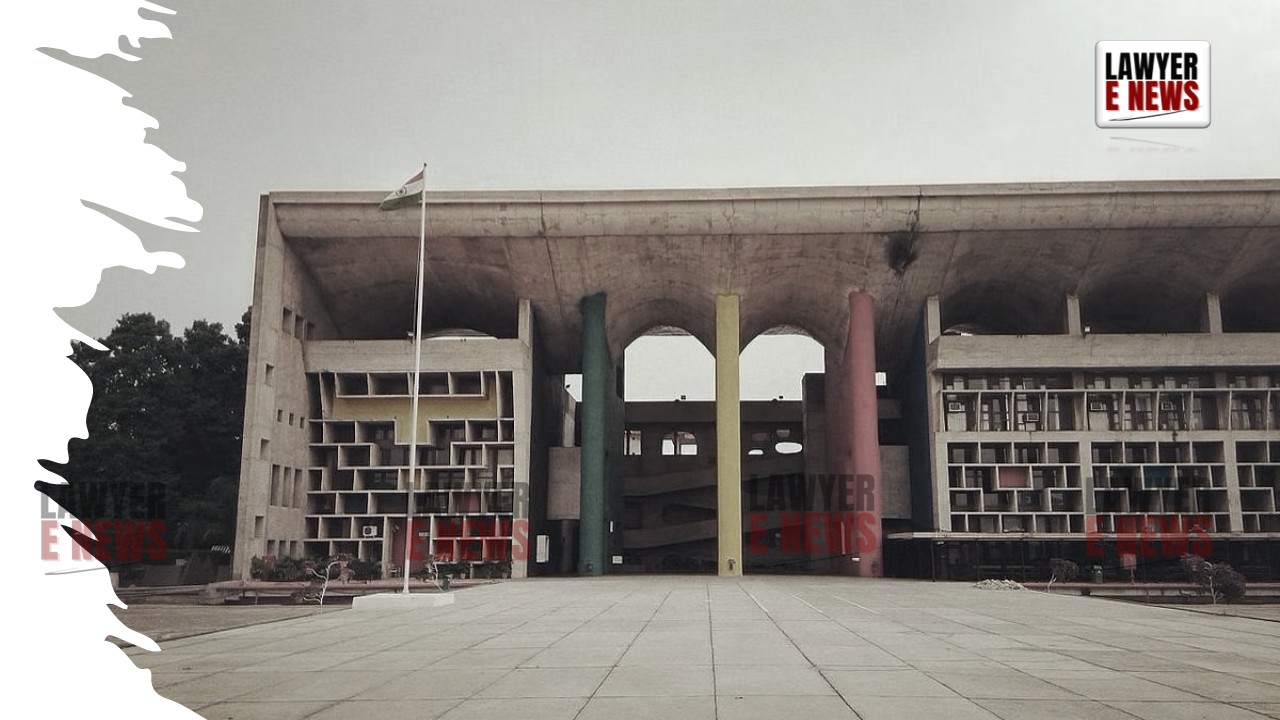
Punjab and Haryana High Court, in Col. Sukhwinder Singh Dhillon case , issued a stern reminder that the right to a speedy trial under Article 21 is not an abstract ideal but a binding constitutional command. Justice N.S. Shekhawat ordered the trial in a cyber fraud case—where a 76-year-old retired Army officer was allegedly cheated of ₹58.68 lakhs—to be completed within eight months, castigating the trial court for its “unreasonably lenient” approach towards the accused.
“It is Never Expected that Leniency Should be Shown to the Accused in Such Serious Crimes”
The case began with the registration of FIR No. 19 on 31 March 2021 at Police Station Cyber Crime, Phase IV, S.A.S. Nagar. The complainant, Col. Sukhwinder Singh Dhillon, alleged that he was duped by a group posing as insurance intermediaries, who used sophisticated cyber methods to extract nearly sixty lakh rupees. The investigation concluded swiftly, with the challan filed on 30 September 2021.
Yet, over the next four years, the pace of justice stalled alarmingly. Out of roughly sixty-one listed hearing dates, only two prosecution witnesses were examined. The accused frequently avoided proceedings—Khurshid Ahmed obtained exemptions from personal appearance on thirty occasions, while Surajit Gayen did so on ten. Two others, Sudipa and Hidayet Ullah, were absent on multiple dates, but the trial court issued only bailable warrants.
The petitioner, himself a senior citizen, travelled from Amritsar to Mohali repeatedly, sometimes only to see the matter adjourned on grounds wrongly attributed to him. The High Court noted that the trial court was “unreasonably lenient with the jail authorities” who failed to produce the accused for nearly ten consecutive dates, and described the manner of proceedings as “very casual.”
“No Procedure Which Does Not Ensure a Reasonably Quick Trial Can Be Regarded as ‘Reasonable, Fair or Just’”
Relying on Kartar Singh v. State of Punjab, Hussainara Khatoon, and Abdul Rehman Antulay v. R.S. Nayak, Justice Shekhawat traced the constitutional lineage of the right to speedy trial from the Magna Carta to modern Indian jurisprudence. The court recalled the Supreme Court’s words in Hussainara Khatoon:
“Speedy trial, and by speedy trial we mean reasonably expeditious trial, is an integral and essential part of the fundamental right to life and liberty enshrined in Article 21.”
Quoting Abdul Rehman Antulay, the court reiterated that while delay can sometimes be systemic, “delay is a known defence tactic” and must be checked to prevent the prosecution from degenerating into a “persecution.”
“Senior Citizens’ Cases Must Be Decided on Priority”
Observing that “the Presiding Officers of the Court must adopt a humane and balanced approach in dealing with the litigants,” the High Court directed that the trial be concluded within eight months from receipt of its order.
The District & Sessions Judge, S.A.S. Nagar, was tasked with convening a meeting of all judicial officers within one week to stress that personal appearance exemptions should be granted “only when reasonable grounds exist.” Copies of the order are to be sent to all presiding officers who handled the matter since 30 September 2021, along with an advisory to be more vigilant in future.
In a further administrative move, the order is to be placed before the Hon’ble Administrative Judge for the district.
Date of Decision: 22 July 2025