-
by sayum
05 August 2026 9:31 AM







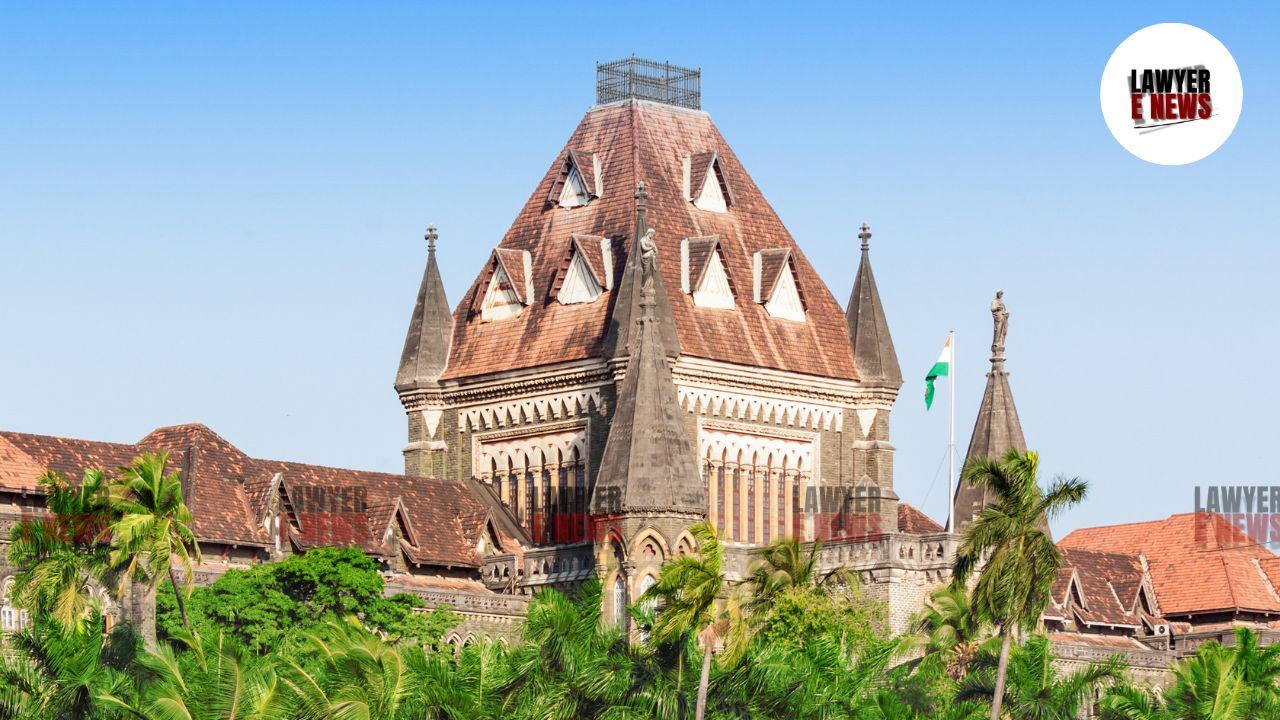
“Courts Cannot Substitute Executive’s Judgment In Policy Matters Unless Fundamental Rights Are Violated” – Division Bench of Chief Justice Alok Aradhe and Justice Sandeep V. Marne of the Bombay High Court dismissed multiple Public Interest Litigations (PILs) challenging the allocation of the Mayor’s Bungalow at Shivaji Park, Mumbai, for the construction of the Balasaheb Thackeray Rashtriya Smarak (Memorial). The Court upheld the decisions relating to change of land use, amendment to the Mumbai Municipal Corporation Act permitting lease at a nominal rent, and the formation of the Trust managing the Memorial.
Bombay High Court held that “setting up of a memorial to honour a public figure constitutes a public purpose and falls entirely within the realm of government policy”, concluding that the courts would not interfere unless such policy violates constitutional rights or statutory norms.
“Selection Of Mayor’s Bungalow For The Memorial Is A Well-Considered Policy Decision” — Court Declines To Interfere
The petitioners admitted they were “not opposed to the idea of a memorial to commemorate late Balasaheb Thackeray”, but challenged the selection of the Mayor’s Bungalow site, alleging procedural violations and arbitrariness.
Rejecting this, the Court made it clear:
“The choice of the site is a matter of executive policy... Courts will not and should not substitute their own judgment for that of the executive in such matters, unless it infringes a fundamental right.”
Quoting the Supreme Court’s ruling in State of Orissa vs. Gopinath Dash, the Bench emphasized:
“It is well settled that matters of policy must be left to the Governments.”
Referring to Kanaiyalal Maneklal Chinai vs. State of Gujarat, the Court underscored:
“Setting up of a memorial for a revered person constitutes a public purpose… Such a decision cannot be labelled as arbitrary merely because the site chosen is valuable.”
“Lease Of Public Land At ₹1 Per Year For Memorial Does Not Violate Constitutional Norms” — Amendment To MMC Act Upheld
The petitioners assailed the amendment to Section 92 (dd-1) of the Mumbai Municipal Corporation Act, 1888, which authorizes the Municipal Commissioner to lease the land for the memorial at a nominal rent of ₹1 per annum for 30 years.
The Court firmly observed:
“There is no challenge to the legislative competence of the State Legislature... The only permissible ground is manifest arbitrariness, which is wholly absent in the present case.”
Citing the Supreme Court’s landmark in Shayara Bano vs. Union of India, the Bench reiterated: “A statute can only be struck down on the ground of manifest arbitrariness if it is capricious, irrational, or without adequate determining principle. Petitioners have failed to establish any such infirmity in the amended Section 92 (dd-1).”
The judgment further notes:
“Any piece of land in Mumbai will inevitably have high value. That, by itself, cannot invalidate a policy decision to allot it for a memorial honoring a leader of significant public standing.”
“Change From Green Zone To Residential Followed Due Process – No Procedural Illegality” — Court On Land Use Modification
One of the major grounds raised was the change of land use from Green Zone to Residential for the purpose of the memorial and the Mayor’s relocated residence.
The Court categorically stated:
“Preparation or modification of the Development Plan is a legislative function... Courts cannot sit in appeal over planning decisions unless there is gross violation of planning norms or procedural impropriety.”
Referring to Pune Municipal Corporation vs. Promoters & Builders Association, the judgment clarified:
“Judicial review in such matters is limited to examining whether prescribed procedures were followed.”
Rejecting claims of irregularity, the Court recorded:
“The procedure under the MRTP Act has been followed to the hilt… Objections were invited and considered... What has been effected is merely a change in label from ‘Mayor’s Bungalow’ to ‘Balasaheb Thackeray Rashtriya Smarak’ and a justified zoning shift from Green to Residential.”
“Inclusion Of Thackeray Family Members And Shiv Sena Representatives In The Trust Is Neither Arbitrary Nor Illegal” — Court On Trust Composition
Challenging the composition of the Memorial Trust, the petitioners argued that it disproportionately included members of Balasaheb Thackeray’s family and Shiv Sena party, making it a private affair.
The Court dismissed this contention, stating:
“Given that the Memorial is to honour late Balasaheb Thackeray, inclusion of his family members and members of the party he founded cannot be faulted… Four ex-officio government officers are also part of the Trust ensuring public accountability.”
The judgment further notes:
“If any grievance arises about the management or functioning of the Trust, remedies lie under the Maharashtra Public Trusts Act. There is no constitutional infirmity in the Trust’s composition.”
“Environmental Clearance Under CRZ Norms Fully Complied” — No Violation Found
Answering concerns regarding environmental compliance, the Court recorded:
“The Maharashtra Coastal Zone Management Authority (MCZMA) has cleared the project… The land falls under CRZ-II, and development complies with CRZ Notification 2011.”
“Memorial Is Virtually Complete – Further Interference Is Neither Justified Nor Pragmatic” — Bombay High Court Declines Relief
The Court took judicial notice of the fact that the Memorial is almost complete. Reviewing photographic evidence, the Bench noted:
“The grandiose structure of the Mayor’s Bungalow has not only been retained but also restored… Its heritage character is undisturbed.”
In conclusion, the Court declared:
“We do not find any valid ground of challenge… The decision of the State Government and the Municipal Corporation in establishing the Memorial withstands scrutiny… The petitions stand dismissed without any order as to costs.”
This judgment reinforces the judicial restraint courts exercise in reviewing executive policy decisions, particularly in matters involving land allocation for public purposes like memorials. The Bombay High Court firmly upheld that “allocation of public land for a memorial to a revered public figure like Balasaheb Thackeray constitutes a legitimate public purpose”, dismissing all challenges regarding site selection, zoning modification, legislative amendment, lease terms, and trust composition.
Date of Decision: 1st July 2025