-
by sayum
08 October 2026 12:03 AM







Petitioners' claim of absorption into Irrigation Department rejected; distinction between government and contractor employees upheld.
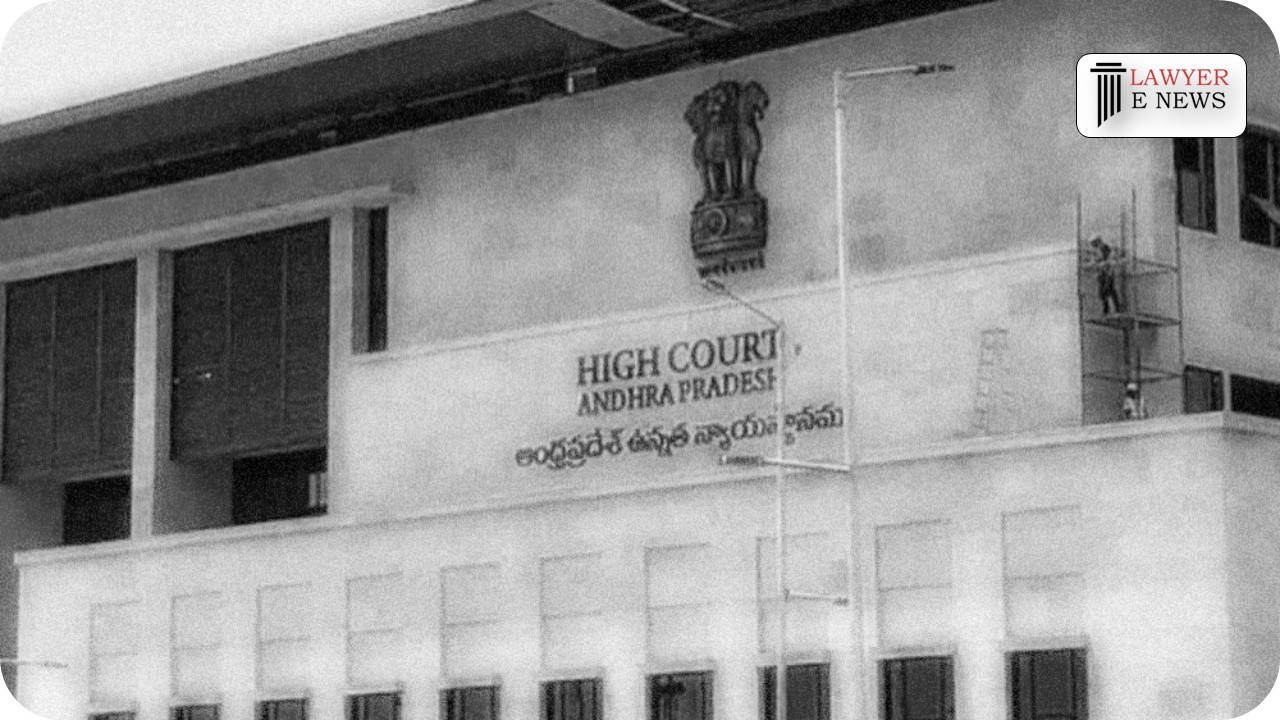
The High Court of Andhra Pradesh, in a significant judgment on June 20, 2024, dismissed the writ petition filed by T. Madhava and others seeking regularization as employees of the Irrigation Department. The court, led by Justice Dr. V.R.K. Krupa Sagar, emphasized that the petitioners, who were initially employed by a private contractor, do not qualify for absorption into government service based on existing legal precedents and constitutional provisions.
The petitioners were hired by M/s. Gammon India Limited in 1977 to work on the Srisailam Project, a major infrastructure project undertaken by the State. Due to wage disparities with government employees, the petitioners resorted to a strike in 1982, threatening valuable equipment at the project site. In response, the Chief Engineer temporarily added the petitioners to the departmental payroll to ensure the project's continuation and safeguard the equipment. The petitioners later claimed that this temporary inclusion amounted to their absorption into the Irrigation Department, a claim strongly contested by the respondents.
Regularization of Contractor Employees:
The petitioners were employed by M/s. Gammon India Limited for the Srisailam Project, a critical state infrastructure endeavor. Following a strike and subsequent departmental intervention to safeguard valuable equipment, the petitioners claimed absorption into the Irrigation Department in 1982. However, the court underscored that this temporary measure, aimed at mitigating an immediate threat, did not constitute regularization.
Justice Dr. V.R.K. Krupa Sagar extensively reviewed relevant legal precedents, including State of Karnataka v. Umadevi and State of Rajasthan v. Daya Lal, which clarify that regularization and absorption into government service require formal recruitment processes and sanctioned posts. The court noted, "The equality clause contained in Articles 14 and 16 should be scrupulously followed, and courts should not issue a direction for regularization of services of an employee which would be violative of constitutional scheme."
Distinction Between Government and Contractor Employees:
The court highlighted the fundamental difference between employees hired by private contractors and those directly employed by the state or public sector undertakings. The petitioners, despite temporarily being on departmental rolls for wage disbursement during the strike, were not officially absorbed as government employees. This critical distinction was upheld by the court, emphasizing that mere temporary inclusion on departmental payrolls does not equate to regularization.
Justice Dr. V.R.K. Krupa Sagar remarked, "The entry into the departmental rolls, though for a short period, was limited for payment of money alone. It was not out of any scheme. It was not under any contract."
The High Court's dismissal of the writ petition underscores the judiciary's commitment to upholding the constitutional framework governing employment and regularization. By affirming the distinction between government and contractor employees, the judgment reaffirms the legal principles surrounding regularization and ensures adherence to the rule of law. This decision will likely impact future cases involving similar claims, reinforcing the necessity of formal recruitment processes for regularization in government service.
Date of Decision: June 20, 2024
Madhava and Others vs. The State of Andhra Pradesh and Others