-
by sayum
05 August 2026 9:31 AM







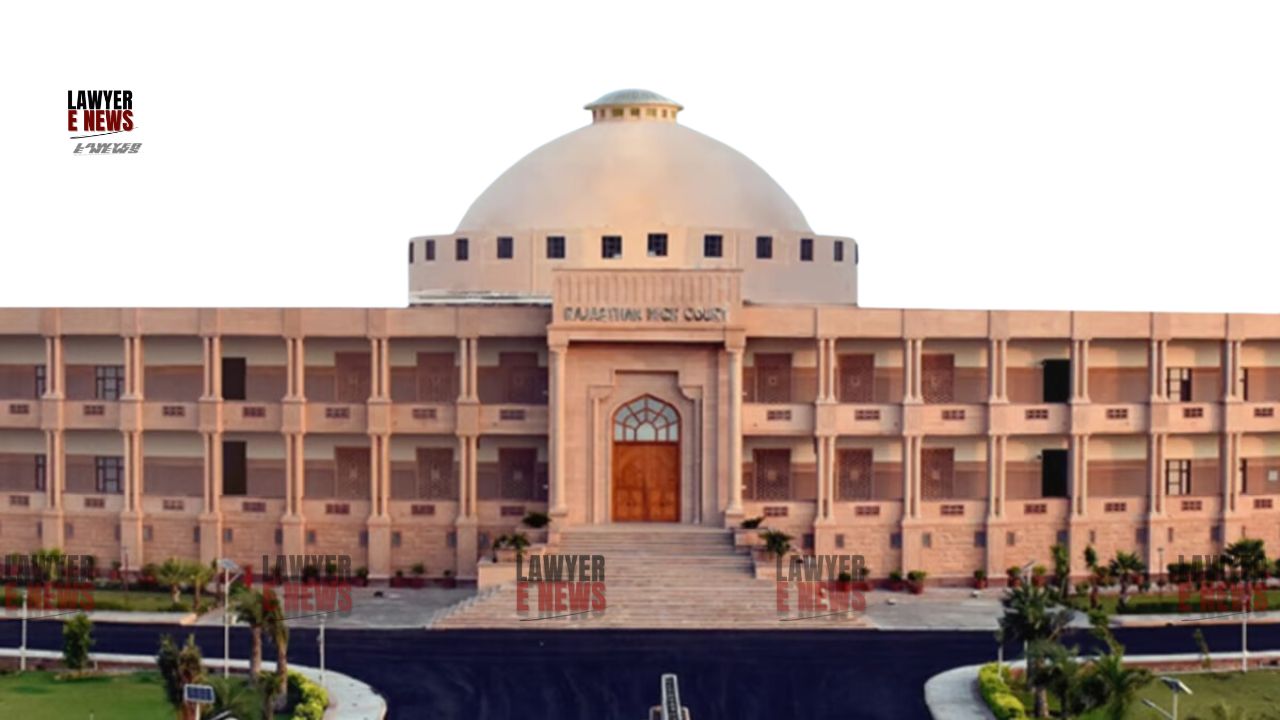
“In Cases of Elected Representatives, Suspension Is Not Punishment but an Interim Measure to Safeguard Public Trust”, High Court of Judicature for Rajasthan, Jaipur Bench, through Justice Anoop Kumar Dhand, delivered a detailed and significant judgment in Munesh Gurjar vs. State of Rajasthan and Others (S.B. Civil Writ Petition No. 932 of 2025), upholding the suspension of Munesh Gurjar, the elected Mayor of Jaipur Municipal Corporation (Heritage), on grounds of serious corruption charges and pending judicial inquiry under Section 39 of the Rajasthan Municipalities Act, 2009.
The Court categorically ruled, “This Court would not interfere in suspension orders lightly since suspension is only a deprivation of one’s status and that too temporarily, it does not amount to penalty and it is normally ordered when the allegations of misconduct or corruption are under scrutiny.”
Suspension of Elected Mayor Valid Amidst Serious Corruption Allegations
Dismissing the writ petition, the Court affirmed that suspension is not a punitive action but a necessary interim safeguard to ensure the integrity of the inquiry and protect public interest. The suspension was challenged primarily on procedural grounds, alleging lack of digital signatures, non-supply of appointment order of the Enquiry Officer, and violation of natural justice. However, the Court found no merit in these technical objections given the existence of serious bribery charges and a pending judicial inquiry against the petitioner under the Prevention of Corruption Act, 2018.
The petitioner, Munesh Gurjar, an elected Mayor of Jaipur Municipal Corporation (Heritage), was placed under suspension by order dated 23.09.2024. The petitioner faced criminal prosecution under Section 7A of the Prevention of Corruption (Amended) Act, 2018 and Section 120-B IPC after a raid by the Anti-Corruption Bureau (ACB) revealed her involvement in demanding bribes for issuance of pattas (land allotment letters).
Earlier, her suspension orders dated 05.08.2023 and 22.09.2023 were set aside by the High Court on procedural grounds. Subsequently, following the appointment of a fresh Enquiry Officer and submission of a detailed enquiry report, she was again placed under suspension, which became the subject matter of the present writ petition.
On the Legality of Suspension under Section 39 of Rajasthan Municipalities Act, 2009
The Court examined Section 39(6) which authorizes the State Government to suspend any elected member, including Mayors, against whom proceedings under Section 39 have commenced.
The Court observed, “Perusal of Section 39 reveals that a member of a Municipality can be suspended if allegations of serious misconduct or disgraceful conduct are found and a judicial inquiry is pending. Suspension is to ensure an impartial enquiry free from undue influence.”
It noted that the enquiry officer was properly appointed, chargesheet had been filed, and judicial enquiry had commenced. The Court, therefore, found the suspension lawful.
On Procedural Challenges – Non-Digital Notices and Non-Supply of Appointment Order
Rejecting the petitioner’s contention about invalid notices due to lack of digital signature, the Court remarked, “Issuance of any notice with manual signatures does not, by itself, vitiate the entire enquiry. The purpose of a signature is to assign responsibility and affirm authority.”
The Court further clarified, “There is no provision under any law or under the Act of 2009 mandating that a copy of the order appointing the Enquiry Officer must be supplied to the person against whom enquiry is proposed to be conducted.”
On Delay in Inquiry and State Government’s Laxity
While upholding the suspension, the Court strongly condemned the State Government for its prolonged inaction. It recorded in sharp terms, “It is really surprising and shocking on the part of State-Authorities that despite the lapse of more than nine months, the State Government remained inactive and failed to timely act upon the order of this Court… The non-compliance of the Court’s order for a period of more than nine months is prima facie contemptuous.”
However, the Court refrained from initiating contempt proceedings but issued a cautionary note for future conduct.
On Role of Elected Representatives and Public Accountability
The Court emphasized the higher accountability standards for elected officials, stating, “In a democratic setup, public representatives serve as the voice of the people and are expected to conduct themselves in a manner befitting their office, upholding the highest standards of integrity and ethical conduct.”
It further highlighted, “Corruption among elected public representatives undermines public trust and has the potential to corrode the very foundations of democracy.”
On Judicial Review of Suspension Orders
Referring to the Supreme Court judgment in Narayan Dattatraya Ramteerthakhar vs. State of Maharashtra and the Rajasthan High Court decision in Durga Ram Mali vs. State of Rajasthan, the Court reiterated, “When the matter of suspension is left to the objective satisfaction of the Government, the normal rule is that it is not unnecessarily justiciable before the High Court, and the Court cannot substitute its own satisfaction for that of the authority.”
The Court ruled that unless clear mala fides or violation of statutory safeguards are shown, suspension orders in the context of pending inquiries against public officials are not open to judicial interference.
After thoroughly examining the allegations, factual matrix, and legal framework, the Court concluded, “This Court finds no merit and substance in this writ petition and the same is liable to be and is hereby rejected.”
It further directed, “The respondents are expected to complete the enquiry proceedings against the petitioner expeditiously, as early as possible, not beyond the period of three months from the date of receipt of certified copy of this order.”
Importantly, the Court emphasized that observations made in the order shall not influence the merits of the inquiry, stating, “Respondents/authorities shall conclude the enquiry on its merits, after affording due opportunity of hearing to the petitioner and without being influenced by any of the observations made by this Court.”
The Rajasthan High Court has reaffirmed the principle that elected representatives are accountable under law and cannot claim any immunity from disciplinary proceedings when serious allegations are established. The judgment clarifies that suspension, being an interim safeguard to protect the sanctity of judicial inquiry, is not to be interfered with lightly by constitutional courts.
The judgment also serves as a stern reminder to State authorities to comply with judicial directions in a timely manner and concludes with a caution against administrative lethargy.
Date of Decision: 15th July 2025