-
by sayum
26 August 2026 10:38 AM







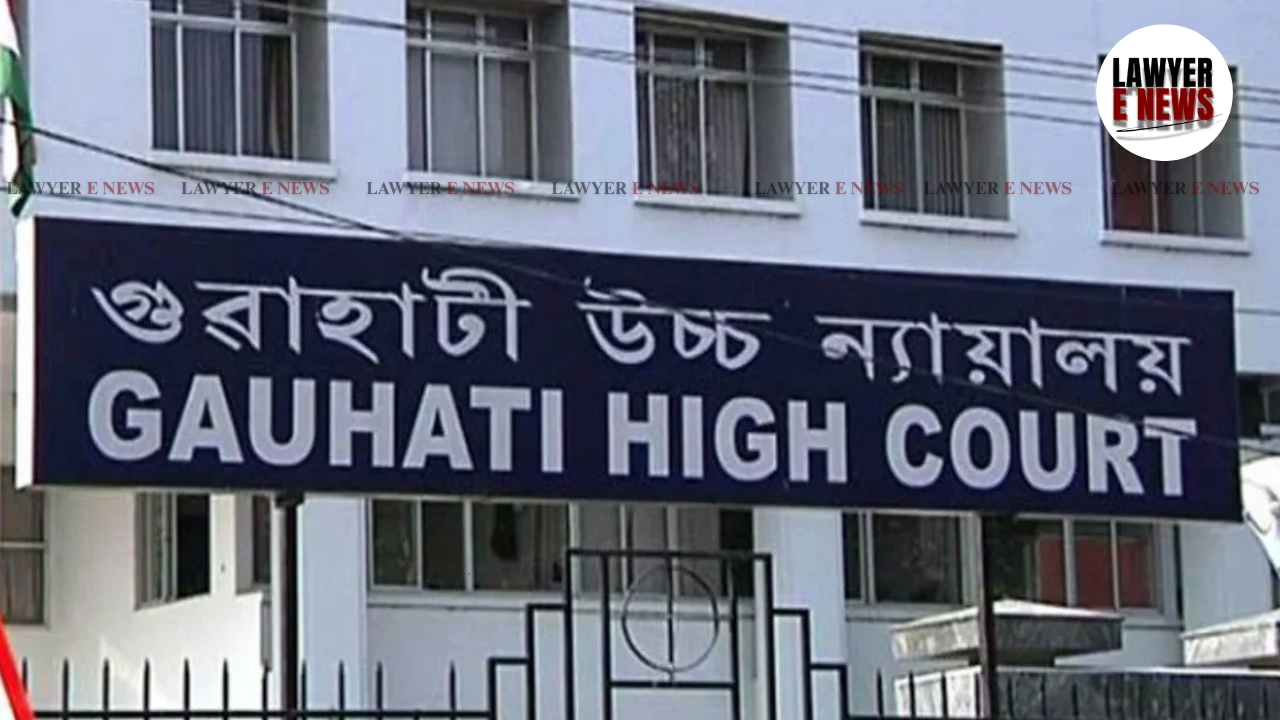
“Absence of Public Witnesses Not Fatal When Official Evidence Is Consistent and Corroborated”, Gauhati High Court, through Justice Susmita Phukan Khaund, delivered a reportable oral judgment in Criminal Revision, examining the legality of a concurrent conviction under Section 143(1)(b) of the Railways Act, 1989 for illegal sale of railway tickets.
While the Court affirmed the conviction of the petitioner Ashok Jha, holding that the prosecution had successfully proved illegal possession and sale of Tatkal railway tickets, it exercised revisional discretion to set aside the sentence of imprisonment, converting it into a fine of ₹10,000, considering the passage of time, mitigating circumstances, and proportionality of punishment.
The prosecution case arose from an incident dated 05 January 2011, when Railway Protection Force (RPF) personnel apprehended the petitioner at Jorhat PRS counter while he was allegedly selling two Tatkal reservation tickets which were not issued in his name.
The case was registered as RPF/POST/MXN Case No. 2/2011 under Section 143 of the Railways Act, 1989. Upon completion of inquiry, a prosecution report was submitted, leading to trial in SRCR Case No. 36/2011, wherein the petitioner was convicted on 30.03.2012 and sentenced to two months’ simple imprisonment with fine of ₹3,000.
The conviction was upheld by the Additional Sessions Judge (FTC), Tinsukia, on 20.02.2015, following which the petitioner invoked the revisional jurisdiction of the High Court under Sections 397 and 401 CrPC.
“Tickets Not in Accused’s Name and No Explanation Given”: Conviction Sustained
The High Court closely examined the evidentiary record and noted that the petitioner was found in possession of two computerized Tatkal tickets, one from Dibrugarh to Delhi and another from Guwahati to Delhi, neither of which bore his name.
Justice Khaund observed that:
“On being confronted, the petitioner could not give satisfactory reply regarding possession of the railway tickets.”
The Court relied on the consistent testimonies of RPF officials and the PRS reservation clerk, who corroborated the seizure and authenticated the tickets and requisition forms. The seizure lists, signatures of the petitioner, and PNR details were duly proved during trial.
The Court found that cross-examination failed to elicit any contradiction under Section 145 of the Indian Evidence Act read with Section 162 CrPC, holding that the prosecution evidence remained “uncontroverted and intact”.
“No Independent Public Witness Is Not a Ground to Discard Prosecution Case”
A central argument of the petitioner was that the search and seizure were illegal, having been conducted without independent public witnesses in a busy railway premises.
Rejecting this contention, the Court accepted the explanation of the RPF that members of the public were unwilling to participate, and emphasised that the presence of an independent PRS official, who signed the seizure lists, lent credibility to the process.
The Court held in clear terms that:
“Absence of independent witnesses is not fatal when procedural integrity is maintained and official testimony is corroborated.”
“Extra-Judicial Confession Alone Not the Basis”: Evidence Found Sufficient
The petitioner further argued that any alleged confession made before RPF officials was inadmissible. The Court clarified that the conviction was not founded solely on any extra-judicial confession, but was supported by material evidence, seizure of tickets, and corroborated oral testimony.
The Court noted that the prosecution proved the case beyond reasonable doubt, and no perversity or illegality could be attributed to the judgments of the courts below.
“After 13 Years, Prison Serves No Purpose”: Sentence Modified
While sustaining the conviction, the High Court took a lenient view on sentencing. Justice Khaund noted that:
“Much water has flowed under the bridge.”
The Court considered that the incident dated back to 2011, the conviction to 2012, and the appellate judgment to 2015. The petitioner was 35 years old, a daily wage earner, and the sole breadwinner of his family.
Although Section 143(1)(b) of the Railways Act permits imprisonment up to three years or fine up to ₹10,000, the Court found that incarceration at this belated stage would be disproportionate.
Accordingly, the sentence of two months’ simple imprisonment was set aside and substituted with a fine of ₹10,000, with a default sentence of three months’ rigorous imprisonment.
The judgment reinforces a crucial principle in criminal jurisprudence: conviction must stand where guilt is proved, but punishment must remain just, humane, and proportionate. The Gauhati High Court struck a careful balance—upholding the rule of law against ticket touting, while ensuring that punishment does not become oppressive due to delay and changed circumstances.
By sustaining the conviction yet modifying the sentence, the Court sent a clear message that economic offences affecting public systems like railways are serious, but judicial compassion has its place where reform, not retribution, serves justice.
Date of Decision: 11 December 2025