
-
by sayum
28 August 2026 2:11 PM







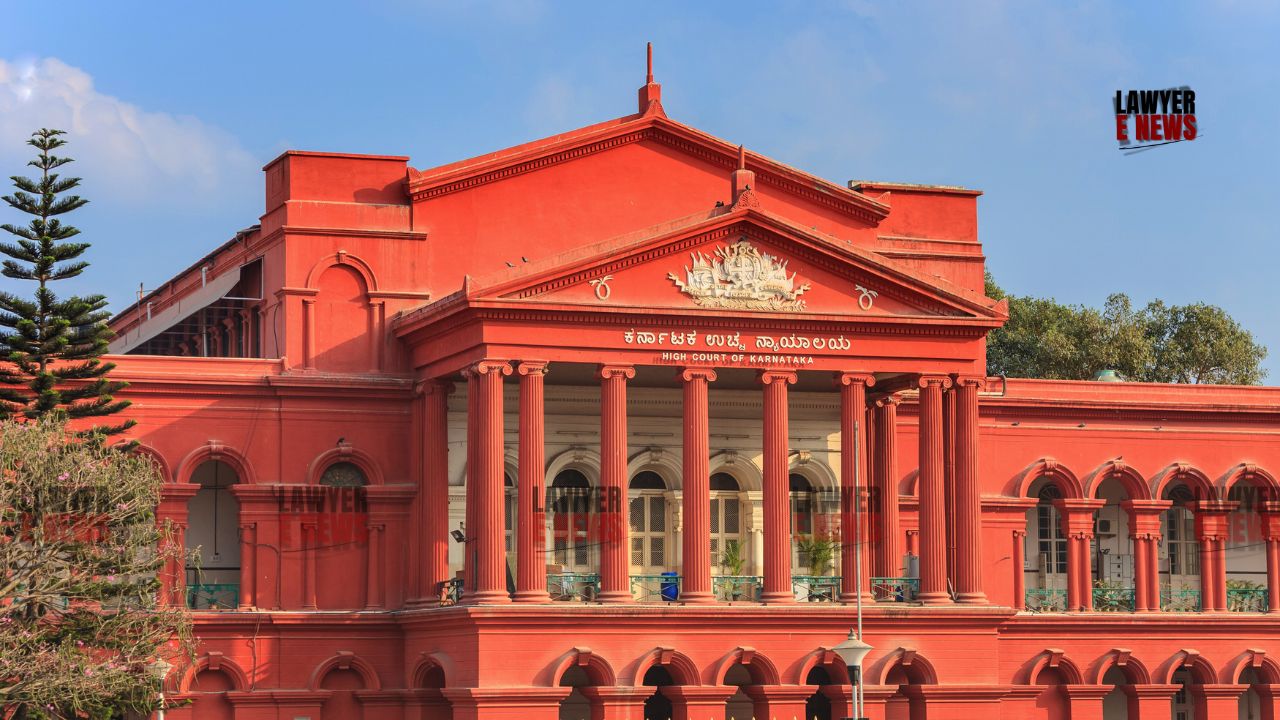
"Keeping a vehicle idle is not serving anybody's interest. It is resulting in damage to the stationary vehicle which is kept within the Magistrate Court complex. Public space is also occupied," High Court of Karnataka, in a significant ruling, has held that seized vehicles should not be allowed to deteriorate in police custody as keeping them idle serves no practical purpose for either the owner or the State.
A single-judge bench of Justice M. Nagaprasanna observed that even if there are allegations that a vehicle was purchased using proceeds of crime, it should generally be released into interim custody subject to adequate security to prevent it from becoming junk.
The petitioner, Suman N.P., was arrayed as an accused in a cheating and forgery case involving a fraudulent property sale in Jayanagar. The respondent police seized his Maxi Cab Urbana car, alleging it was purchased using the Rs. 75 lakh obtained from the complainant through impersonation and fake documents. Both the Magistrate and the Sessions Court had rejected the petitioner’s application for interim custody under Sections 451 and 457 of the CrPC, holding that the vehicle was "proceeds of crime" and required for identification during trial.
The primary question before the court was whether a seized vehicle should be denied interim custody solely because it is alleged to be purchased from the proceeds of a crime. The court also examined whether the continued detention of the vehicle for over 18 months in a police station was legally justifiable when the asset was visibly deteriorating.
Lower Courts Erred In Denying Custody Based On Unproven Allegations
The Court noted that the petitioner’s application for release was dismissed by the trial court and the revisional court on the grounds that the vehicle was purchased from the money received by cheating the complainant. The prosecution had argued that since the investigation revealed the car was an "indirect proceed" of the alleged fraud, it could not be released until the final report was filed.
Court Rejects Argument To Keep Vehicle For Identification
Justice Nagaprasanna observed that the vehicle had been rotting at the jurisdictional police station for the last 18 months. The bench noted that keeping a vehicle stationary for such a prolonged period causes irreparable damage, making it useless for both the petitioner and the prosecution at a later stage of the proceedings.
"The utility of the vehicle would completely vanish if it is kept seized, as it would be of no use either to the owner or to the State."
Reliance On Supreme Court Precedent Regarding Seized Vehicles
The Court placed heavy reliance on the recent Apex Court judgment in Perichi Gounder Vs. Tamil Nadu State (2024). In that case, the Supreme Court had emphasized that keeping vehicles like lorries or cars idle results in the wastage of public space and the destruction of the asset’s value. The High Court noted that the principles laid down by the Apex Court mandate the release of such vehicles upon the furnishing of a bond and an undertaking.
Conditions Safeguard Prosecution Interests Better Than Seizure
The Court held that the concerns of the prosecution regarding the identification of the vehicle or its potential sale could be addressed through stringent conditions rather than continued seizure. By requiring the petitioner to produce the vehicle whenever directed and prohibiting any change in its appearance or ownership, the interests of justice are sufficiently served.
Ratio Decidendi: Physical Preservation Of Asset Value Outweighs Indefinite Seizure
The bench emphasized that the primary objective of Sections 451 and 457 of the CrPC (now Section 528 of the BNSS, 2023) is to ensure that property does not decay while the legal process is underway. The Court remarked that the stagnation of a vehicle leads to a loss of its functional utility, which is a loss to the national economy, regardless of the criminal allegations against the owner.
The Writ Petition was allowed, and the orders of the LVI Additional City Civil and Sessions Judge and the Metropolitan Magistrate were set aside. The Court directed the immediate release of the vehicle to the petitioner’s interim custody within one week, subject to an indemnity bond, a surety for the value estimated in the Police Form (PF), and a prohibition on changing the vehicle's colour or number until the conclusion of the proceedings.
Date of Decision: 09 June 2026





