-
by sayum
29 August 2026 9:28 AM







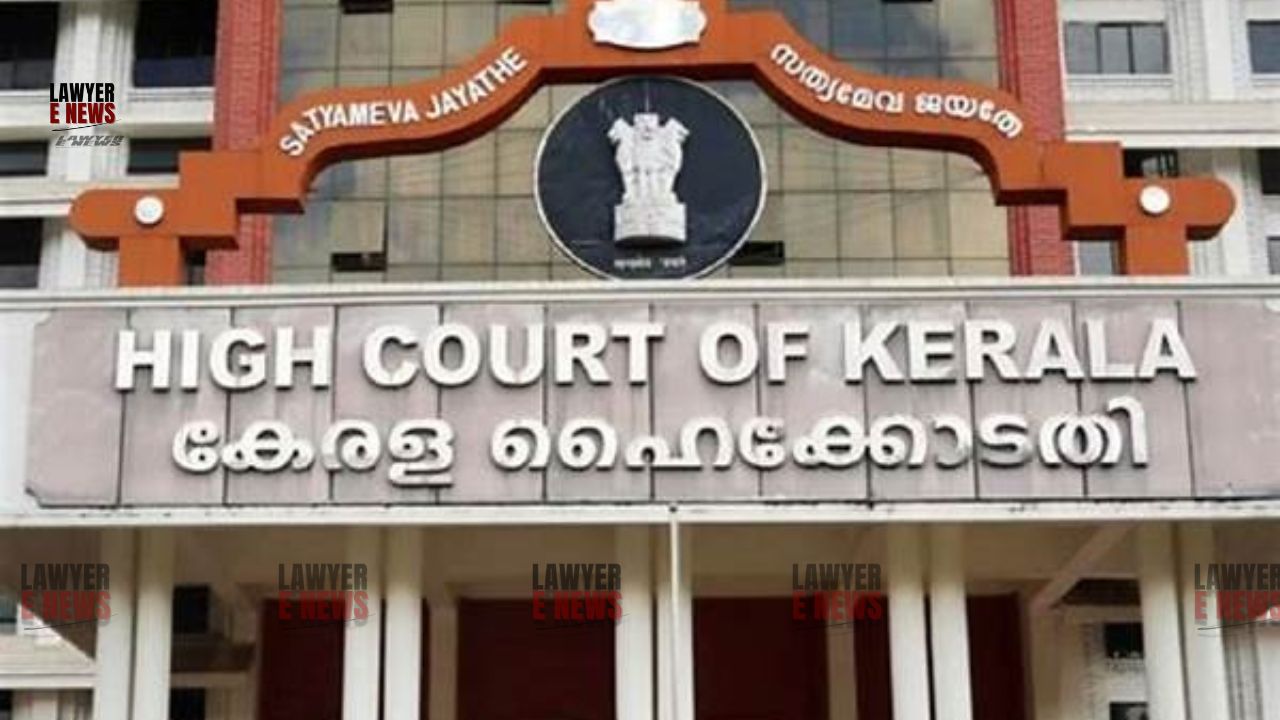
“When contraband is of intermediate quantity and recovery is not from the accused, rigours of Section 37 NDPS Act will not apply”— Kerala High Court (Justice Jobin Sebastian) granted regular bail to the second accused, in a case involving the transportation of 2 kg of ganja, allegedly in a car hired by him. The Court observed that since the quantity of ganja seized was intermediate, Section 37 of the NDPS Act, which imposes stringent conditions for grant of bail in cases involving commercial quantities, was not applicable.
“No Contraband Was Recovered from the Petitioner; He Is Not the Registered Owner of the Vehicle”
The petitioner, Ansari Bandi Muhammed, approached the High Court for regular bail under Sections 20(b)(ii)(B) and 29 of the NDPS Act, after being arrested on August 12, 2025, in connection with Crime No. 53/2023 of the Excise Enforcement and Anti-Narcotic Special Squad, Thrissur. The prosecution alleged that the first accused was caught red-handed on October 11, 2023, with 2 kg of ganja being transported for the purpose of sale in a vehicle allegedly hired by the petitioner.
Despite the serious nature of the accusation, the High Court noted: “Even as per the prosecution case, no contraband was recovered from the possession of the petitioner.”
Further, Justice Sebastian pointed out that the vehicle used, bearing registration number KL-13-AR-1843, was not registered in the name of the petitioner, even though the prosecution claimed that he had hired it. The Court took judicial notice of the lease agreement (Annexure A2) between the petitioner and one Mr. Safeer Khan, and emphasized that the direct nexus between the petitioner and the contraband was, at best, tenuous.
Arrest Based on Alleged Conspiracy and Vehicle Hire
The prosecution’s case was based on the allegation that the petitioner had conspired with the first accused to transport ganja in a car which he had allegedly arranged. The 1st accused was arrested on the spot with the contraband, while the petitioner was only later implicated, based on statements and circumstantial links, including the purported hiring of the vehicle.
The petitioner’s counsel, Mr. P.K. Subhash, argued that:
“The petitioner has no connection either with the contraband seized in this case or with the vehicle from which the same was allegedly seized.”
It was further submitted that the petitioner had been in judicial custody for several weeks, and the investigation had reached an advanced stage, making continued incarceration unnecessary and disproportionate.
The Public Prosecutor, Mr. Sanal P. Raj, opposed the bail, citing the seriousness of the offence and the alleged conspiracy under Section 29 of the NDPS Act.
However, the Court clarified that:
“The mere allegation of conspiracy without credible material linking the accused to possession or knowledge of the contraband is insufficient to attract the rigor of Section 37.”
The Court undertook a textual and contextual interpretation of the NDPS Act, particularly focusing on the quantum of contraband and the nature of involvement of the accused. The seized quantity being 2 kg of ganja, it falls within the category of intermediate quantity under the NDPS Act. Hence, Section 37, which bars bail unless certain twin conditions are satisfied (for commercial quantity), was inapplicable.
“As the quantity of contraband seized in this case is 2 kg of ganja, the rigour contained under Section 37 of the NDPS Act in granting bail is not applicable in this case,” the Court stated categorically.
The Court also held that the petitioner’s custodial interrogation was no longer necessary, and continued incarceration would not serve any meaningful purpose, especially considering the passage of time since the original detection in October 2023.
Bail Granted with Conditions
Justice Jobin Sebastian granted bail, imposing stringent conditions to ensure the petitioner’s cooperation with the ongoing investigation. The operative directions include:
Execution of a bond of ₹1,00,000 with two solvent sureties.
Mandatory appearance every Monday before the Investigating Officer for three months or until the final report is filed.
A bar on the petitioner from leaving the country, committing any offence, or influencing witnesses.
Liberty to the Investigating Officer to move for cancellation of bail if any of these conditions are violated.
The Court also clarified:
“If the petitioner violates any of the above conditions, the investigating officer is at liberty to file an appropriate application for cancellation of bail before the jurisdictional court… irrespective of the fact that this order is passed by this Court.”
The Kerala High Court's judgment reaffirms the principle that bail remains the rule, especially in intermediate quantity NDPS cases where direct recovery from the accused is absent. By distinguishing between commercial and intermediate quantities, the Court underscored the importance of proportionality in deciding bail applications. While not downplaying the seriousness of drug-related offences, the judgment balances individual liberty against the state’s interest in prosecution, in line with constitutional mandates and statutory safeguards under the NDPS Act.
Date of Decision: 01 September 2025