-
by sayum
23 August 2026 2:56 PM







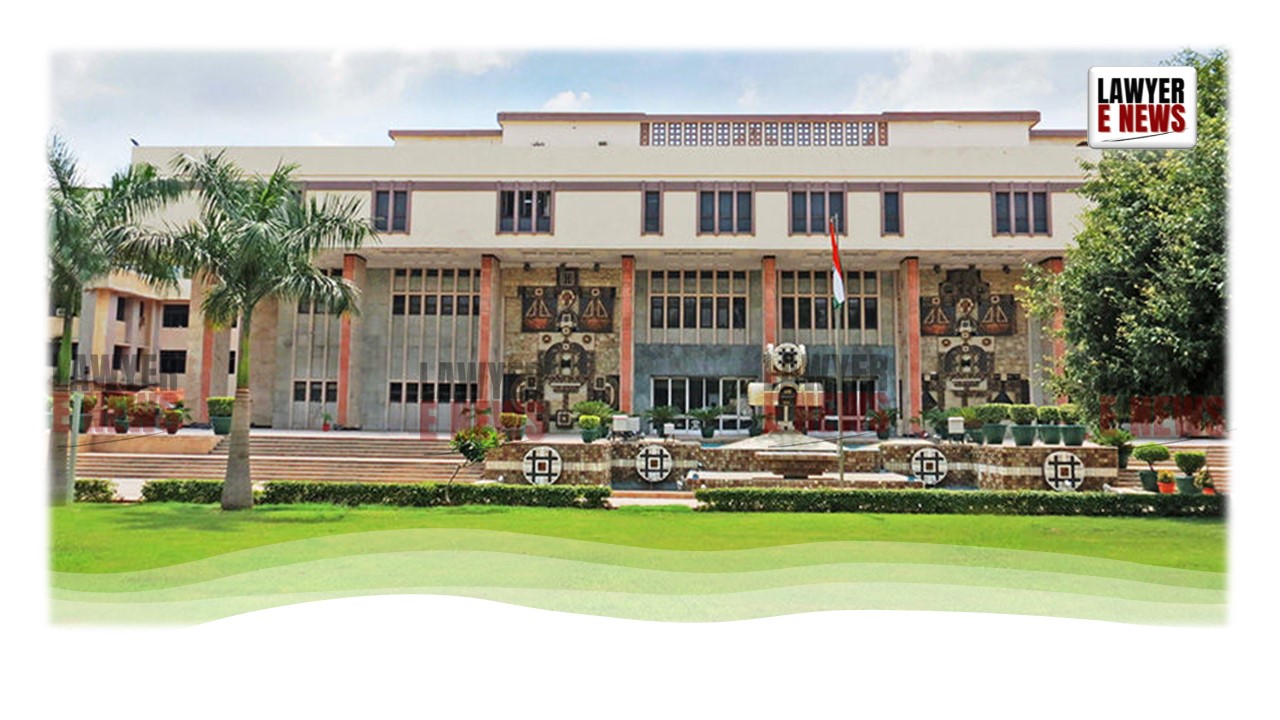
"The power under Section 311 CrPC must be exercised sparingly and only when the evidence sought is essential to the just decision of the case,” In a significant decision highlighting the misuse of procedural provisions in cheque dishonour cases, the Delhi High Court refused to quash an interlocutory order passed by a Magistrate rejecting an application under Section 311 of the Code of Criminal Procedure, 1973. The High Court ruled that invoking Section 311 CrPC to summon records from a different case at the stage of final arguments, without any clear necessity, amounts to an abuse of process. The Court observed that “there is no perversity or illegality in the order of the trial court which would warrant interference under the inherent jurisdiction of this Court under Section 528 of the BNSS.”
The case, titled Shelley Marwah v. State Govt. of NCT of Delhi & Another, involved a petition under Section 528 of the Bhartiya Nagrik Suraksha Sanhita, 2023, which corresponds to Section 482 CrPC, seeking to quash the trial court’s refusal to summon the record of a separate complaint case during the final stages of trial in a Section 138 NI Act complaint concerning a dishonoured cheque of ₹7,00,000/-.
Summoning Record of Another Case to Show Alleged Admission Rejected as Unnecessary and Delayed
The petitioner had sought the summoning of records from Complaint Case No. 13981/2017, arguing that the complainant, through his power of attorney holder, had allegedly admitted receiving payments from the petitioner’s family in that separate matter. It was argued that this evidence could potentially rebut the presumption under Section 139 of the Negotiable Instruments Act, 1881, and support the defence that there was no legally enforceable debt.
However, the trial court rejected the application on February 7, 2025, noting that the case had been at the defence evidence stage since 2019, and that the application to summon records was filed only after the commencement of final arguments. The trial court also found that no witness had made any such admission in the other case, and that the petitioner's application contained contradictions and was an afterthought.
Delhi High Court Upholds Trial Court’s Discretion – No Justification for Interference at Final Stage
Justice Ravinder Dudeja, while upholding the trial court’s decision, emphasised the limited and discretionary nature of the power under Section 311 CrPC, stating: “Section 311 is a discretionary power, and it is to be exercised with caution and only for strong and valid reasons. It cannot be used as a tool to delay or derail a trial.”
The Court noted that Section 311 is not intended to allow litigants to compensate for their own negligence or belated realisations, especially when they have already had ample opportunities during trial to present relevant evidence. The High Court agreed with the trial court’s observation that the application appeared to have been filed to prolong proceedings.
“The petitioner had ample opportunity to summon the record. It is not explained why, if such record was relevant, it was not summoned and placed on record at the earliest opportunity.”
Citing Supreme Court Precedents, Court Warns Against Misuse of Section 311 CrPC
In support of its conclusion, the Court referred to several authoritative judgments of the Supreme Court of India, including Ratanlal v. Prahlad Jat (2017) 9 SCC 340, Satbir Singh v. State of Haryana (2023 SCC OnLine SC 1086), and Vijay Kumar v. State of U.P. (2011) 8 SCC 136. These decisions clearly laid down that:
“Recall is not a matter of course and the discretion given to the Court has to be exercised judicially to prevent failure of justice, not arbitrarily.”
The Court also drew attention to the lack of urgency or life-altering impact in the petitioner’s request, observing that the material sought from the other case did not constitute essential evidence for the decision of the present case.
Petitioner Attempting to Stall Proceedings in Cheque Bounce Case Pending Since 2017: Court
In a strong rebuke of procedural delay, the Court underscored that the underlying Section 138 complaint had been pending since 2017, and the defence had been leading evidence since 2019. Filing such an application during the final stages of trial was seen as an attempt to stall the conclusion of proceedings under the pretext of securing additional evidence.
“Such an application, when filed at the fag end of the trial, without cogent justification, does not inspire confidence. The trial court rightly rejected it.”
The Court added that such tactics, if permitted, would encourage misuse of judicial process, delay adjudication, and prejudice the complainant who had already undergone prolonged litigation.
Court Concludes No Ground for Interference Under Inherent Jurisdiction
Dismissing the petition and all pending applications, Justice Dudeja ruled:
“This Court finds no merit in the petition. The provisions of Section 311 CrPC cannot be allowed to be misused by the petitioner to derail proceedings or to cause inconvenience to the other party, as the same would amount to miscarriage of justice.”
The Court thus declined to exercise its powers under Section 528 of the BNSS, affirming that the trial court had acted within the bounds of law and judicial prudence.
Date of Decision: December 17, 2025