-
by sayum
03 August 2026 10:58 AM







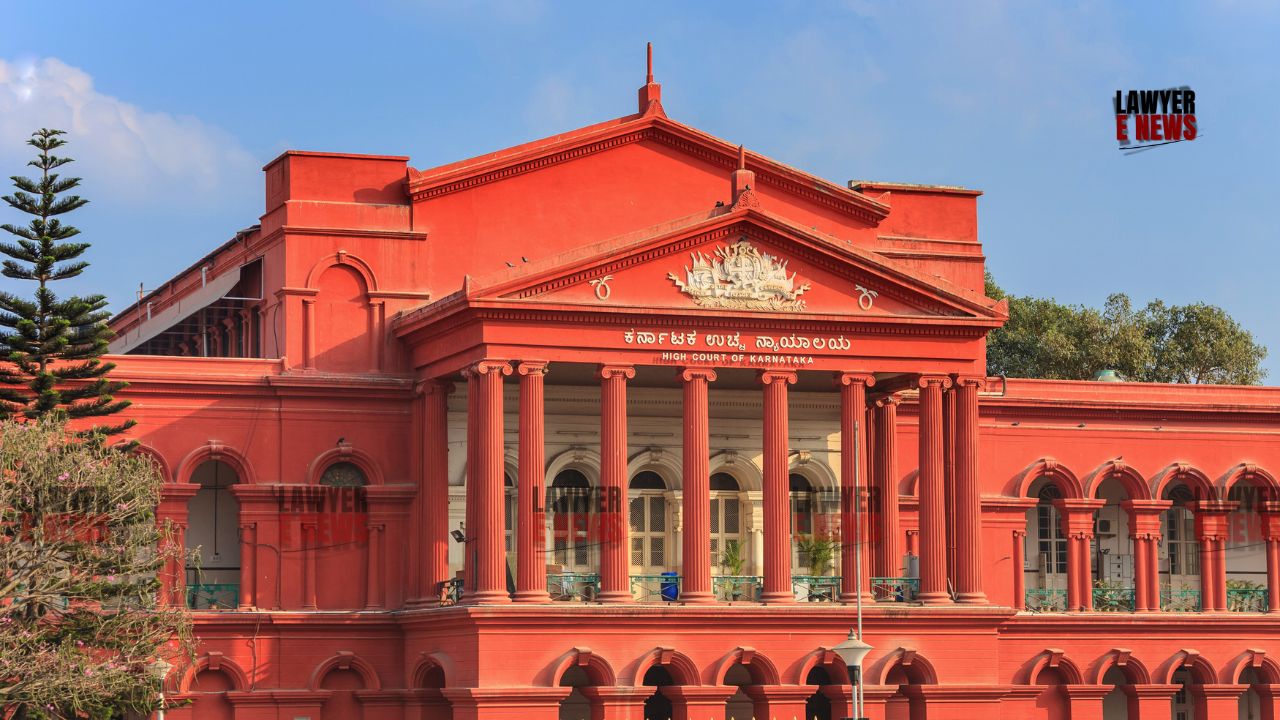
“A paid report obtained from a private laboratory seems to be a frail, unreliable, unsafe, untrustworthy and imprudent form of evidence”— In a seminal ruling High Court of Karnataka, comprising Justice M. Nagaprasanna, allowed a writ petition and quashed the charge sheet against multiple accused in the high-profile ‘Sunset to Sun Rise’ rave party case, laying down that prosecution for drug consumption cannot rest solely on screening reports from private hospitals.
The 'Sunset to Sun Rise' Raid and Subsequent Charges
The dispute arose from a raid conducted by the Central Crime Branch (CCB) on a rave party titled "Vasos Birthday - Sunset to Sun Rise Victory" at G.R. Farmhouse near Electronic City, Bengaluru. Following the raid, the police detained several attendees, including the petitioners, and subjected them to medical examination at Santosh Hospital, a private medical establishment. The urine samples collected allegedly tested positive for multiple narcotic substances, including Cocaine, MDMA, and Amphetamine.
Based exclusively on these reports from the private hospital, the police filed a charge sheet for offences punishable under Section 27(a) and (b) of the Narcotic Drugs and Psychotropic Substances Act, 1985 (NDPS Act), alleging consumption of contraband. The petitioners approached the High Court seeking quashing of the proceedings, arguing that the evidence was legally inadmissible as it violated mandatory statutory protocols regarding forensic testing.
“If these five drugs are consumed by one person at a time, the person can no longer be alive.”
The Statutory Mandate: Public vs. Private Laboratories
The primary contention raised by the defense was the Investigating Agency's reliance on a private laboratory without Magistrate authorization. The Court meticulously examined Standing Order No. 1 of 1988 and the NDPS (Seizure, Storage, Sampling and Disposal) Rules, 2022. Justice Nagaprasanna observed that the law mandates seized samples to be sent to designated Government Forensic Science Laboratories (FSL) or Central Revenue Control Laboratories.
The Bench noted a complete absence of any explanation from the State as to why the samples were diverted to a private hospital instead of the State FSL. The Court held that reports from private laboratories do not enjoy the statutory presumption available to Government Scientific Experts under Section 293 of the CrPC. Citing the Supreme Court’s ruling in Mariam Fasihuddin v. State, the Court reiterated that private lab reports are inherently "frail and unsafe" unless corroborated by substantial proof, which was absent in this case.
“The very report that is provided by the private hospital is seeped in suspicion, as one urine sample cannot project 5 broad band drugs.”
Screening vs. Confirmatory Tests: The Scientific Gap
A critical aspect of the judgment was the distinction between "Screening Tests" and "Confirmatory Tests." The report from Santosh Hospital was merely a preliminary screening report. The Court highlighted that urine screening tests are presumptive in nature and often yield false positives. To sustain a criminal charge, a non-negative screening result must mandatorily be subjected to confirmatory tests using Gas Chromatography (GC) or Mass Spectrometry (MS).
The Court relied on the coordinate bench decision in Sri Pranay Nataraj v. State of Karnataka, applying the principle of parity. Since the prosecution failed to conduct these mandatory confirmatory tests, the allegation of consumption lacked scientific conclusiveness. The Bench remarked on the medical absurdity of the test results, where individual petitioners allegedly tested positive for five different potent drugs simultaneously—a cocktail that the Court noted would likely be fatal, further casting doubt on the reliability of the private lab's methodology.
The Court concluded that continuing criminal proceedings based on such defective evidence would amount to an abuse of the process of law. Consequently, the High Court allowed the petition and quashed the charge sheet in Special Case No. 741 of 2024 insofar as it related to the petitioners. This judgment serves as a stern reminder to investigating agencies that the procedural safeguards in the NDPS Act regarding forensic analysis are non-negotiable and that outsourcing critical forensic duties to private entities without statutory backing will render the prosecution's case void ab initio.
Date of Decision: 28/11/2025