-
by sayum
11 August 2026 2:00 PM







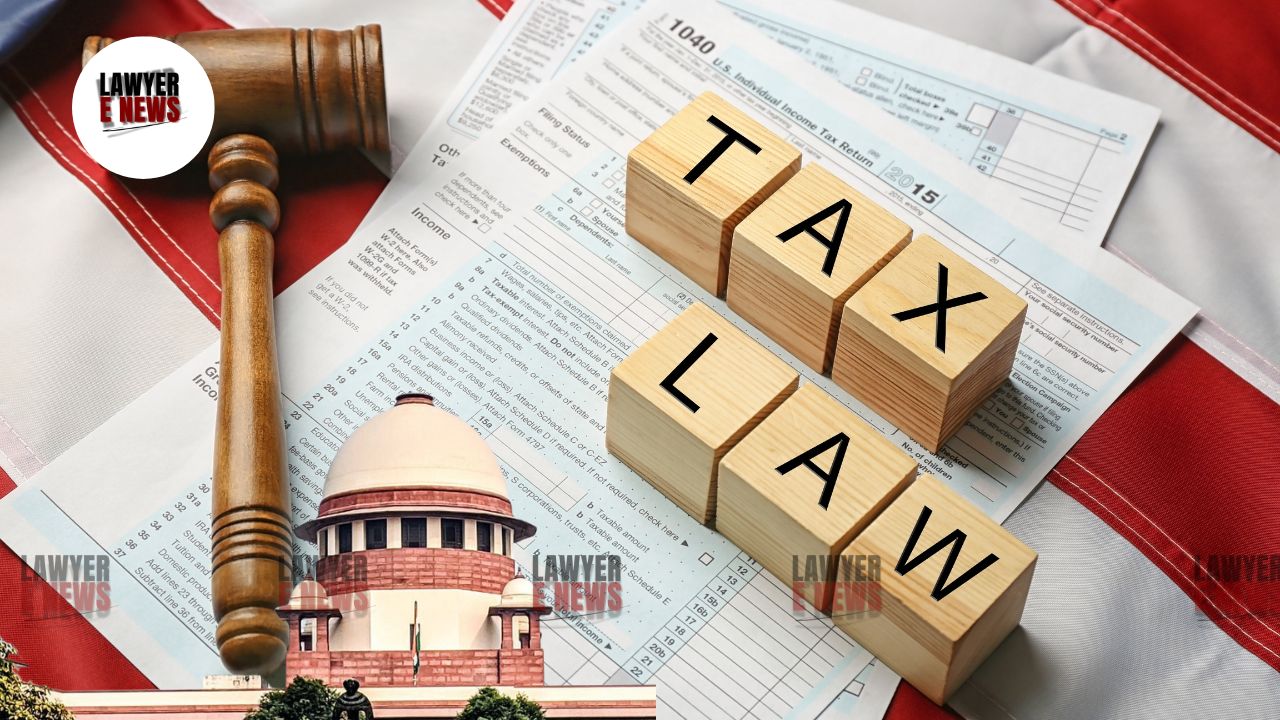
“₹75 Lakh Paid in Cash for Property Sale Is a Direct Violation of Section 269ST of Income Tax Act” — In a significant ruling Supreme Court took strong exception to a property transaction involving ₹75 lakh paid entirely in cash, declaring it a blatant violation of Section 269ST of the Income Tax Act, 1961. The Court ordered that all courts and registration authorities must report such transactions to tax authorities, emphasizing that judiciary cannot remain indifferent to violations that fuel the parallel black economy.
“Ignorance of law is no excuse. When a suit is filed claiming ₹75,00,000/- paid by cash, not only does it create a suspicion on the transaction, but also displays a violation of law.”
The case involved a property dispute where the respondents (plaintiffs in trial court) claimed to have entered into an agreement to sell for ₹9 crore, and further claimed to have paid an advance of ₹75 lakh entirely in cash.
This transaction, according to the Supreme Court, directly contravened Section 269ST of the Income Tax Act, introduced in 2017, which prohibits any person from receiving ₹2 lakh or more in cash in a single transaction.
“Most times, such transactions go unnoticed or are not brought to the knowledge of the Income Tax authorities… When there is a law in place, the same has to be enforced.”
The Court also invoked Section 271DA, which imposes an equal penalty for receiving such amounts in cash without good and sufficient reasons.
Taking a serious view of the black money threat posed by large-scale unreported cash dealings, the Court quoted from the Finance Bill, 2017 and Budget Speech, which introduced Section 269ST to: “… reduce generation and circulation of black money… which adversely affects the revenue of the Government creating a resource crunch for its various welfare programmes.”
The Court stated that: “It is settled position that ignorance in fact is excusable but not the ignorance in law.”
For the first time, the Supreme Court issued binding procedural safeguards to tackle cash transactions in real estate disputes. The Court laid down a clear protocol for judicial and executive authorities:
A. All courts, upon receiving plaints or claims involving cash payments of ₹2 lakh or more, must intimate the jurisdictional Income Tax Department to verify compliance with Section 269ST.
B. The jurisdictional Income Tax authorities must initiate proceedings as per law, including levying penalties under Section 271DA, after due process.
C. If any such transaction comes to light at the time of property registration, the Sub-Registrar must notify the concerned tax office immediately.
D. Where Income Tax authorities detect such violations through other means (searches, assessments, informants), they must report inaction by the registering authority to the Chief Secretary of the State for disciplinary action.
This decision marks a judicial endorsement of anti-black-money enforcement and is the first ruling to formally integrate taxation law compliance into civil judicial proceedings involving real estate.
The Court warned that: “Though the amendment has come into effect from 01.04.2017, we find from the present litigation that the same has not brought the desired change.”
“Most such cash transactions go unnoticed unless courts and public offices act as the first line of compliance.”
Conclusion:
This ruling now compels civil courts, Sub-Registrars, and tax officers to proactively coordinate in detecting and reporting high-value cash transactions, making it clear that property litigants cannot escape tax scrutiny just because the issue is framed as a civil dispute.
“The judiciary cannot be a silent spectator to unlawful practices. Courts must act as sentinels on the ramparts of the Constitution and the rule of law — including tax law.”
Date of Decision: April 16, 2025