-
by sayum
28 August 2026 12:24 PM







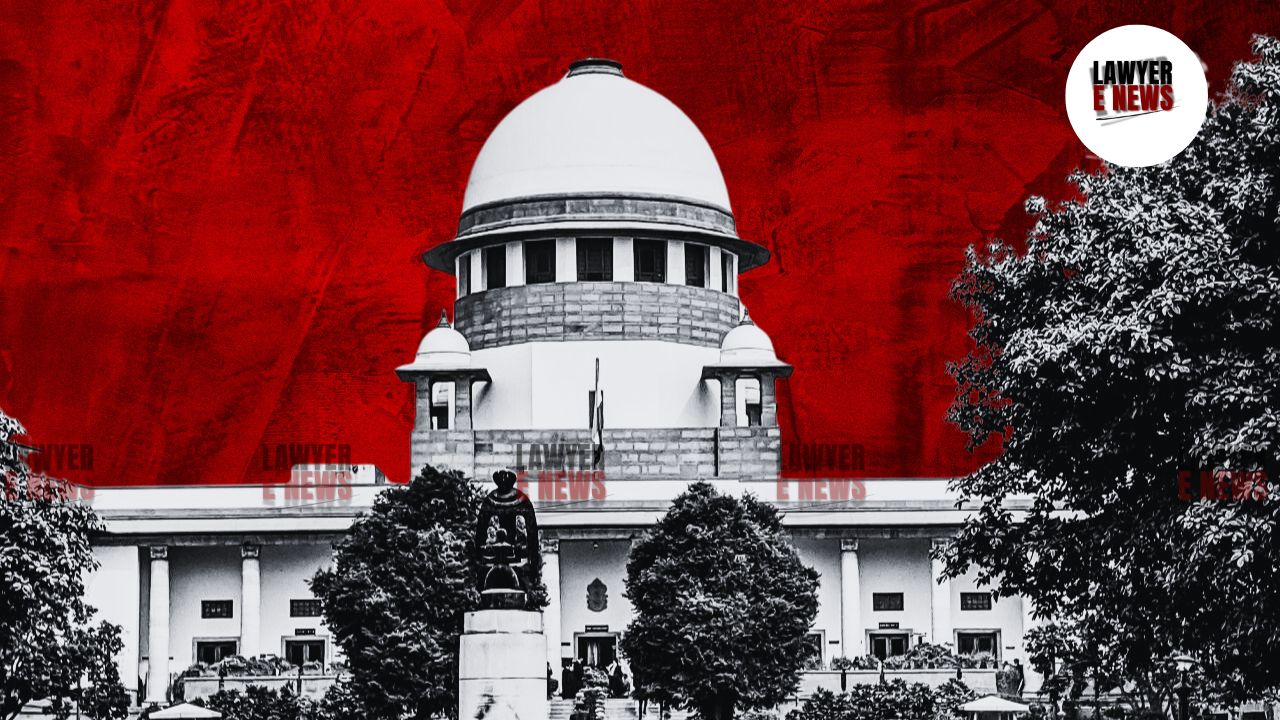
"It is enough if the act complained of results in preventing a public servant in discharge of his lawful duties… It need not be a violent one." — Supreme Court Slams Procedural Error in Ordering Police Investigation for Offence under Section 186 IPC Without Following Section 195 CrPC
"What was the need to involve the police in a complaint lodged by a Civil Judge for the offence punishable under Sections 186 and 341 IPC? Asking the police to investigate... was a very serious error." - In a significant ruling Supreme Court of India settled vital questions of law relating to the scope of obstruction under Section 186 of the Indian Penal Code, and the mandatory procedural safeguards under Section 195 of the Code of Criminal Procedure (CrPC).
Delivering the judgment, Justice J.B. Pardiwala, speaking for the Bench, observed that mere unlawful prevention of a public servant is sufficient to attract Section 186 IPC, and that it was legally impermissible for a Magistrate to refer such a complaint for police investigation under Section 156(3) CrPC without following the mandate of Section 195 CrPC.
The case arose from an incident dated 03.10.2013, in which Ravi Dutt Sharma, a court-appointed Process Server, alleged that he was insulted, detained and humiliated by the then SHO of PS Nand Nagri, Devendra Kumar, when he attempted to serve court summons and warrants. He claimed he was forced to stand with his hands raised and later made to sit on the floor for hours until a head constable arrived and accepted the documents.
This complaint was forwarded by the District and Sessions Judge to the Administrative Civil Judge, who filed a complaint under Section 195 CrPC before the Chief Metropolitan Magistrate (CMM). The CMM, however, instead of directly taking cognizance, ordered registration of an FIR under Sections 186, 341, and 342 IPC, and directed investigation by an officer of ACP rank.
Subsequent challenges before the Sessions Court and the Delhi High Court failed, leading the petitioner to the Supreme Court.
On the Meaning of ‘Obstruction’ under Section 186 IPC
The petitioner argued that Section 186 IPC required use of criminal force, and that mere obstruction or non-cooperation did not suffice.
Rejecting the argument, the Court clarified: "It is enough if the act complained of results in preventing a public servant in discharge of his lawful duties. Any act of causing impediment by unlawfully preventing a public servant in discharge of his functions would be enough to attract Section 186 of the IPC."
The Court relied on multiple precedents, including Santosh Kumar Jain v. The State and State v. Babulal Gaurishanker Misar, and held:
“Obstruction is not confined to physical resistance. Threats, humiliation, deliberate refusal to cooperate, or delay tactics fall within the ambit of obstruction.”
It emphasized that: "Any other interpretation would be to encourage people to take the law into their hands, frustrate the investigation of crimes and thwart public justice."
On the Magistrate’s Error in Referring the Complaint for Police Investigation
The most striking part of the judgment was the Supreme Court's disapproval of the Magistrate's order for police investigation under Section 156(3) CrPC.
The Bench observed: “The Chief Metropolitan Magistrate should have straightaway taken cognizance upon the said complaint and issued process to the petitioner… Asking the police to investigate… was a very serious error.”
It noted that when a public servant or judge lodges a complaint under Section 195 CrPC, the Magistrate is not required to direct police investigation, especially when the complaint is clear and supported by judicial authority:
“There is a lot of sanctity attached to a complaint lodged by none other than a Civil Judge… In such circumstances, we do not approve of the order of police investigation under Section 156(3) CrPC.”
On Section 195 CrPC and Its Mandatory Nature
The Court reiterated the mandatory nature of Section 195 CrPC, stating: “The provisions of Section 195 CrPC are mandatory. Non-compliance of it would vitiate the prosecution and all other consequential orders.”
The Bench clarified that Section 195(1)(a)(i) bars courts from taking cognizance of offences under Sections 172 to 188 IPC, including Section 186 IPC, except upon a written complaint by the concerned public servant or their administrative superior.
Critically, the Court held: “The trial under Section 186 IPC without such a complaint is void ab initio. Cognizance taken in violation of this requirement is without jurisdiction.”
It further cautioned: “Courts must see through any attempt to render Section 195 CrPC nugatory by hiding the real nature of the transaction by verbal jugglery.”
On FIR Registration and Investigation Despite Section 195 CrPC
While the Court disapproved of the Magistrate’s order for police investigation, it clarified that Section 195 CrPC does not bar police investigation per se, but only bars the court from taking cognizance of certain offences without proper complaint.
“There is no bar against the registration of a criminal case or investigation by the police… The bar under Section 195 CrPC kicks in only at the stage of cognizance.”
It noted that: “The concerned court can file a complaint based on the FIR and material collected during investigation, but must follow the procedure under Section 340 CrPC.”
On Whether Section 341 IPC Can Be Split from Section 186 IPC
The Court addressed whether a prosecution could proceed for Section 341 IPC (wrongful restraint) even if Section 186 IPC was barred by Section 195 CrPC.
Referring to State of U.P. v. Suresh Chandra Srivastava and Durgacharan Naik v. State of Orissa, the Court held:
“If the offences form an integral part of the same transaction, the bar under Section 195 CrPC will extend to all such connected offences.”
However, it also acknowledged that: “It cannot be laid down as a straitjacket formula… The Court must apply the twin tests: whether the additional offences are invoked to evade Section 195, and whether the facts primarily disclose an offence requiring a public servant’s complaint.”
Summarizing its decision, the Supreme Court observed: “This entire prosecution for the alleged offence is to uphold the dignity of the court. However, it has been twelve years but no one has been able to uphold the dignity of the court by proceeding in the right direction.”
The Court dismissed the petition but left it open for the petitioner to raise the bar under Section 195 CrPC at the trial stage if a chargesheet is eventually filed.
In a strong procedural directive, the Court ordered: “Registry shall circulate one copy each of this judgment to all the High Courts.”
Date of Decision: 20th August 2025