-
by sayum
23 August 2026 2:56 PM







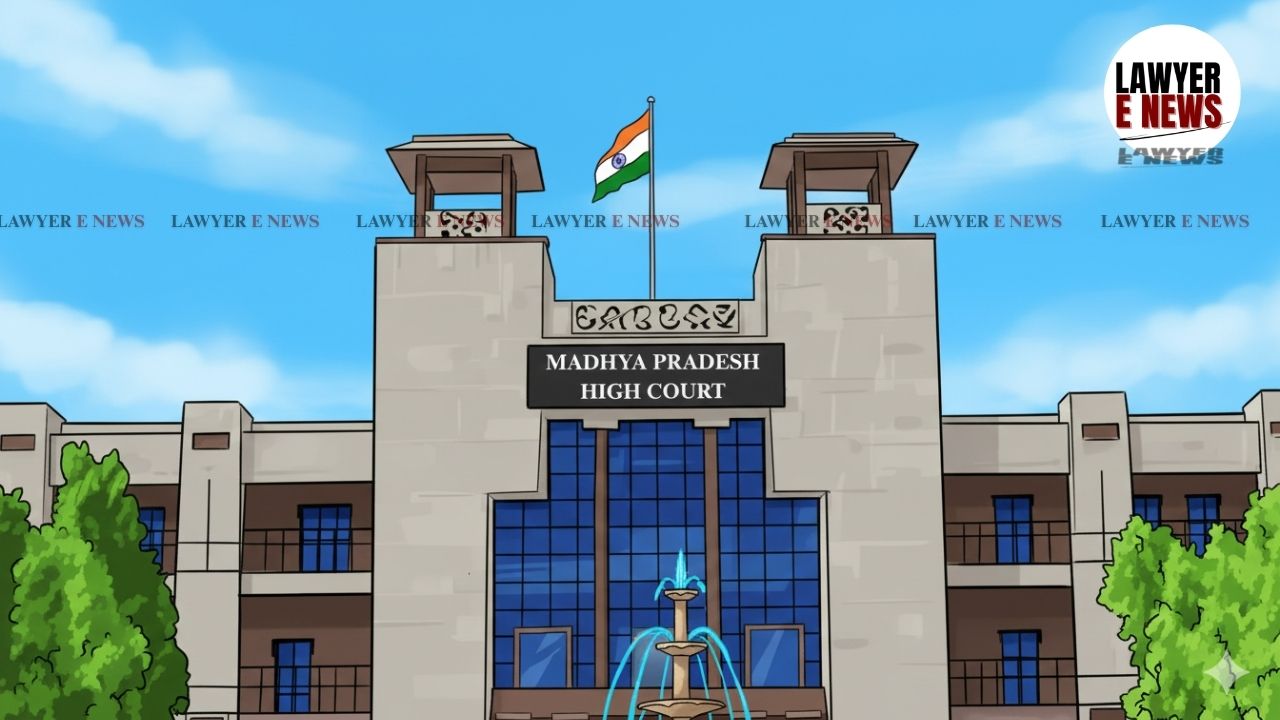
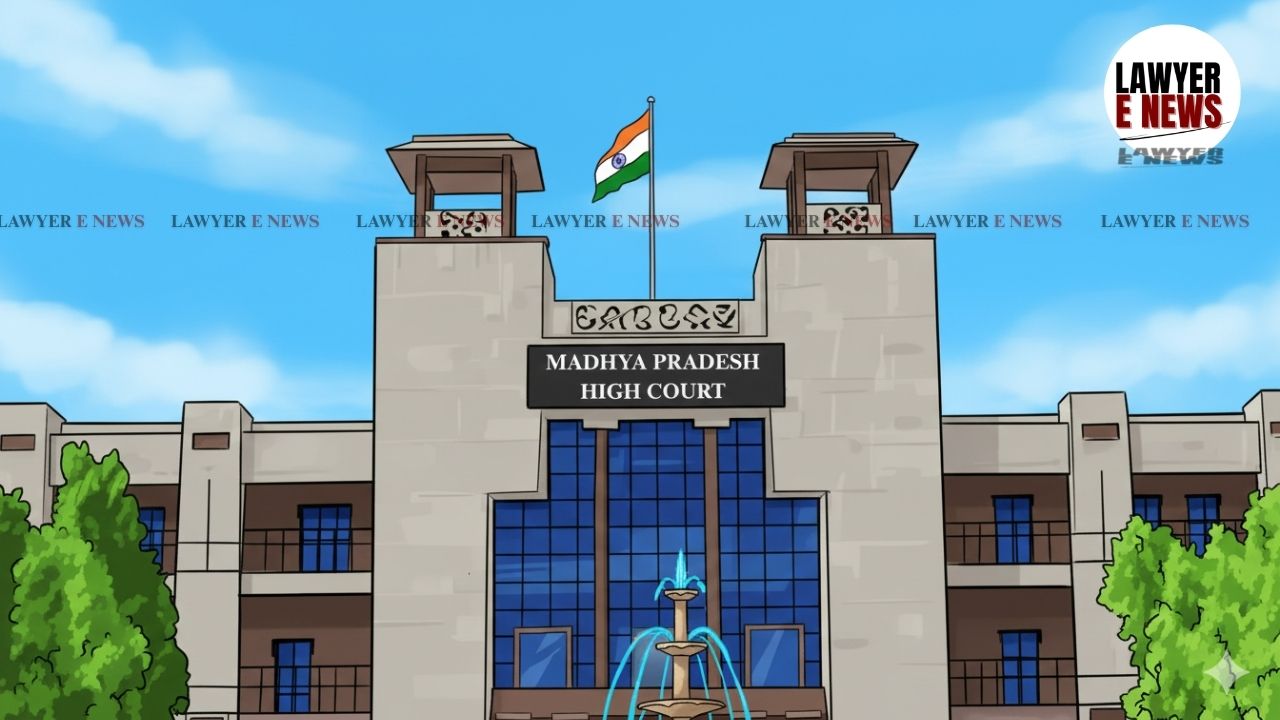
"Mere Filing of a Photocopy Without Establishing Its Origin, Chain of Custody, or Comparison with Original Is Legally Insufficient", In a decisive ruling Madhya Pradesh High Court dismissed a petition under Article 227 of the Constitution in Misc. Petition No. 6529 of 2025, upholding the Trial Court’s refusal to allow the petitioners to lead secondary evidence based on a mere photocopy of an alleged family consent letter. The Court held that failure to lay the foundational requirements under Sections 63 and 65 of the Indian Evidence Act, 1872 renders such secondary evidence inadmissible.
Justice Vivek Jain, while rejecting the petition filed by Smt. Saeeda Bi and Others, reiterated the principle that:
"Permitting a party to lead secondary evidence is an exception and not the rule. A photocopy cannot be admitted unless it is shown how, when, and by whom it was made from the original. Mere assertion of loss or denial by the other party is not enough."
Article 227 Cannot Be Invoked to Bypass Evidentiary Norms: Eight-Month Delay in Petition Also Found Inexplicable
The petition was filed challenging the Trial Court’s order dated 06.03.2025, which had rejected an application under Section 65 of the Evidence Act. The petitioners sought to produce a photocopy of a family consent letter, claiming the original was in the possession of the defendants, who had denied custody when called upon under Order 11 Rule 12 CPC.
However, the High Court questioned both the timing and motive of the petition, noting that it was filed eight months after the impugned order, and only when the matter was listed for final arguments. This delay, the Court found, undermined the bona fides of the petitioners:
"This petition, filed in November 2025, after an unexplained eight-month delay from the Trial Court's rejection in March 2025, appears strategic rather than genuine."
Photocopy Lacks Foundational Facts: No Clarity on When, How, or From Whom It Was Made
The petitioners had merely pleaded that the original document was “destroyed by defendants” and filed a photocopy, claiming it to be a valid secondary evidence. However, the Court noted a complete absence of critical details that could make the photocopy legally admissible under Sections 63(2) or 63(3):
"No pleading exists regarding how the copy was created, who possessed the original at the time of copying, under what circumstances it was made, and how it came into the petitioners’ possession." [Para 5]
The Court further noted that the photocopy was attested by a Gazetted Officer in 2010, which raised additional questions as to whether the petitioners ever had the original and when the attested copy was prepared:
"If the photocopy was attested in 2010, it implies that the original was available at the time. Why then is there no clarity on when it was lost or misplaced?" [Para 6]
Photocopy Must Be True Copy Compared With the Original – Not Just a Reproduction
Referring to Section 63 of the Evidence Act, the Court emphasized that secondary evidence includes only those copies:
In this case, the petitioners failed to demonstrate either of these conditions, rendering their plea legally unsustainable. As per Illustration (a) to Section 63:
"A photograph of an original is secondary evidence only if it is proved that the thing photographed was the original."
Thus, a mere photocopy, without satisfying these statutory tests, does not qualify as secondary evidence.
Consistent Judicial View Against Admitting Unauthenticated Photocopies: Secondary Evidence Is Not a Loophole
The High Court relied on a string of precedents to fortify its rejection of the petitioners’ claim, including:
In Makhanlal (supra), the Court had emphatically held:
"Secondary evidence must be authenticated by foundational evidence that the copy is, in fact, a true copy of the original. Mere filing of a photocopy is insufficient."
Similarly, in Anandram (2023), the Court reiterated:
"Photocopy without any revelation of sources is not permissible to be tendered as secondary evidence. Section 65 does not validate a copy of a copy."
The Bench also cited United India Assurance Co. Ltd. v. Anbari, (2000) 10 SCC 523, where the Supreme Court rejected the validity of a photocopy in the absence of proven authenticity.
Stamp Act Angle: Insufficiently Stamped Originals Cannot Be Proved Through Photocopy Either
While not directly the case here, the Court also noted that where originals are insufficiently stamped, photocopies of such instruments are inadmissible, citing Hariom Agrawal v. Prakash Chand Malviya, (2007) 8 SCC 514.
This highlights the dual requirement of both evidentiary and fiscal compliance when seeking to admit documentary evidence, especially in civil disputes involving rights and entitlements.
Petition Dismissed, Costs Imposed, Trial Court Order Upheld
Upholding the Trial Court’s rejection of the application under Section 65, the High Court found no grounds for supervisory interference under Article 227 of the Constitution, observing:
"No grave miscarriage of justice is demonstrated, and the Trial Court’s view is supported by both fact and law."
Accordingly, the petition was dismissed with costs, and the order of the Trial Court was affirmed in full.
Date of Decision: 16 December 2025