-
by sayum
29 August 2026 3:15 PM







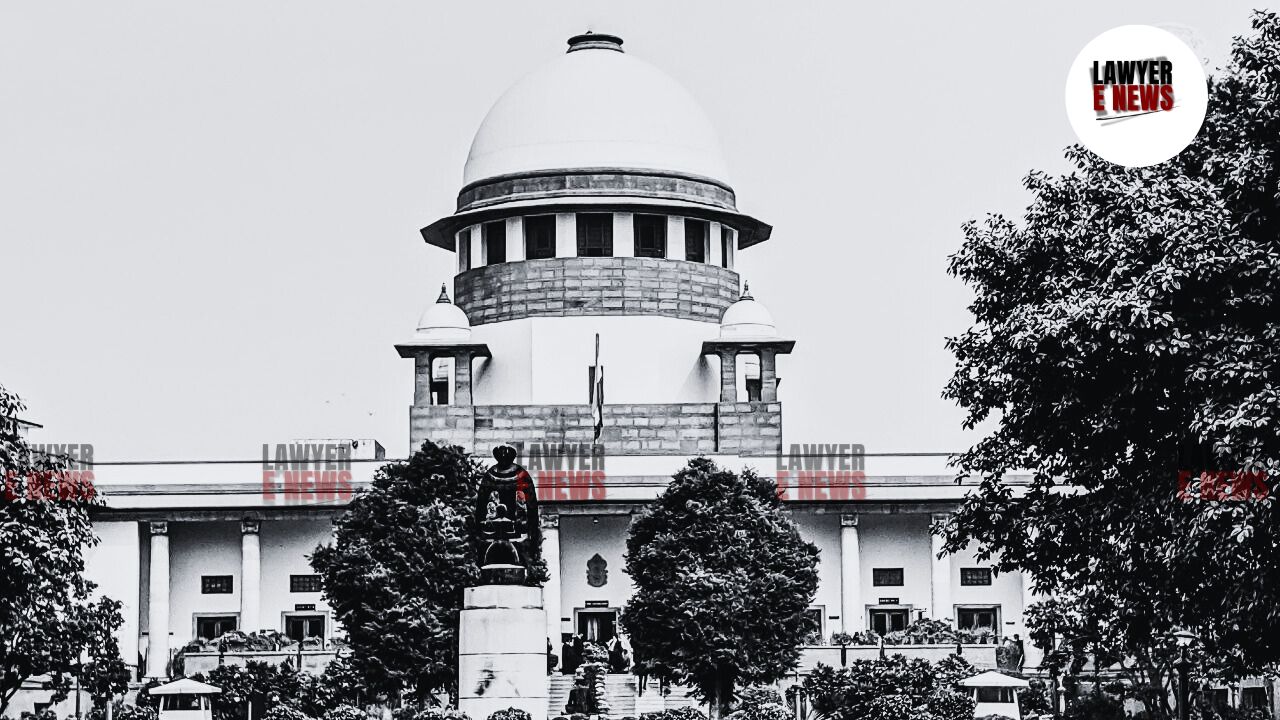
“…including directions to lodge an FIR”: Bench recalls 13.12.2024 consent order; report due by Oct-end, relist in Nov 2025 - Supreme Court of India (Justices P.S. Narasimha and Atul S. Chandurkar) ordered a full inquiry by the Bar Council of India into allegations that a forged “settlement” and unauthorized appearances led to the consent disposal of an SLP in Bipin Bihari Sinha @ Bipin Prasad Singh v. Harish Jaiswal. The Court—having recalled its 13.12.2024 consent order—restored SLP(C) No. 25905/2024, directed the BCI to file a report by the end of October 2025, and listed the matter in the first week of November 2025.
The litigation stems from a specific performance suit based on a 1986 “Mahadnama.” The Trial Court (2 0.06.2015) dismissed the claim; the First Appellate Court (29.10.2016) and the Patna High Court (Second Appeal No. 598 of 2016, 15.07.2024) affirmed those findings. The High Court matter is the origin of the SLP.
“The appellant is the plaintiff who filed a suit for specific performance… dismissed by the Trial Court… affirmed by the first appellate Court as well as the High Court…”
On 13.12.2024, the SLP was disposed of on consent after counsel said the parties had executed an MOU dated 24.10.2024; the Court allowed the appeal, set aside the Patna High Court’s judgment, and directed a decree in terms of the settlement. The record also reflects respondent-side appearances that day.
“There shall be a decree in terms of the … Settlement Agreement/Memorandum of understanding dated 24.10.2024.”
Shortly thereafter, Harish Jaiswal moved MA Diary No. 7144/2025 asserting that he never executed any settlement, never engaged any counsel, and that a fraudulent caveat/appearance facilitated a consent order behind his back—calling the “settlement” “forged and fabricated.”
“This shocking revelation has laid bare a meticulously crafted conspiracy… to secure an order in favour of the Petitioner.”
Two interlocking questions animated the Court’s intervention: Was the consent order procured by fraud on the Court (via a fabricated settlement)? And were the recorded respondent-side appearances authorized at all? On 13.05.2025, the Bench recorded that four advocates had appeared “on caveat” for Jaiswal in December 2024; yet, when examined in May, two of those named disclaimed any engagement.
“How and at whose instance it was made to appear as if the respondent counsels were engaged… requires inquiry.”
The May order therefore directed a preliminary inquiry by a Senior Officer nominated by the Secretary-General, explicitly noting that further action could include directions to lodge an FIR. It simultaneously recalled the December consent order and restored the SLP. (The text shows “13.12.2014,” which—read in context—appears to be a typographical error for 13.12.2024.)
“…action, including directions to lodge an FIR…”
At the hearing, the Court noted appearances and sought assistance from the President, Supreme Court Advocate-on-Record Association. It concluded that the facts leading to the consent disposal require detailed examination, and that the “role of advocates” in the preparation, filing, and conduct “need to be enquired into.”
“The role of advocates involved in preparation of the settlement agreement, it’s filing and conduct of the proceedings also need to be enquired into.”
The Bench then directed the Bar Council of India to conduct a detailed inquiry and submit a report by the end of October 2025, with the matter to be listed in the first week of November 2025. The judges reiterated that they were not drawing conclusions pending institutional fact-finding.
“List in the first week of November, 2025.”
The record also preserves the December 13, 2024 proceedings—Leave granted; Civil Appeal allowed in terms of Signed Order—which the Court has now recalled, re-opening the case on merits.
The Supreme Court has reset the clock: consent decrees must rest on genuine authority and informed participation. By recalling the 13.12.2024 order, restoring the SLP, and commissioning the BCI to probe—with FIR directions on the table—the Bench signals that engineered “consent” and unauthorized representations will invite strict disciplinary and criminal consequences, while ensuring that the dispute returns to an adjudicatory track.
Date of Decision: 05.08.2025