
-
by sayum
26 August 2026 9:49 AM







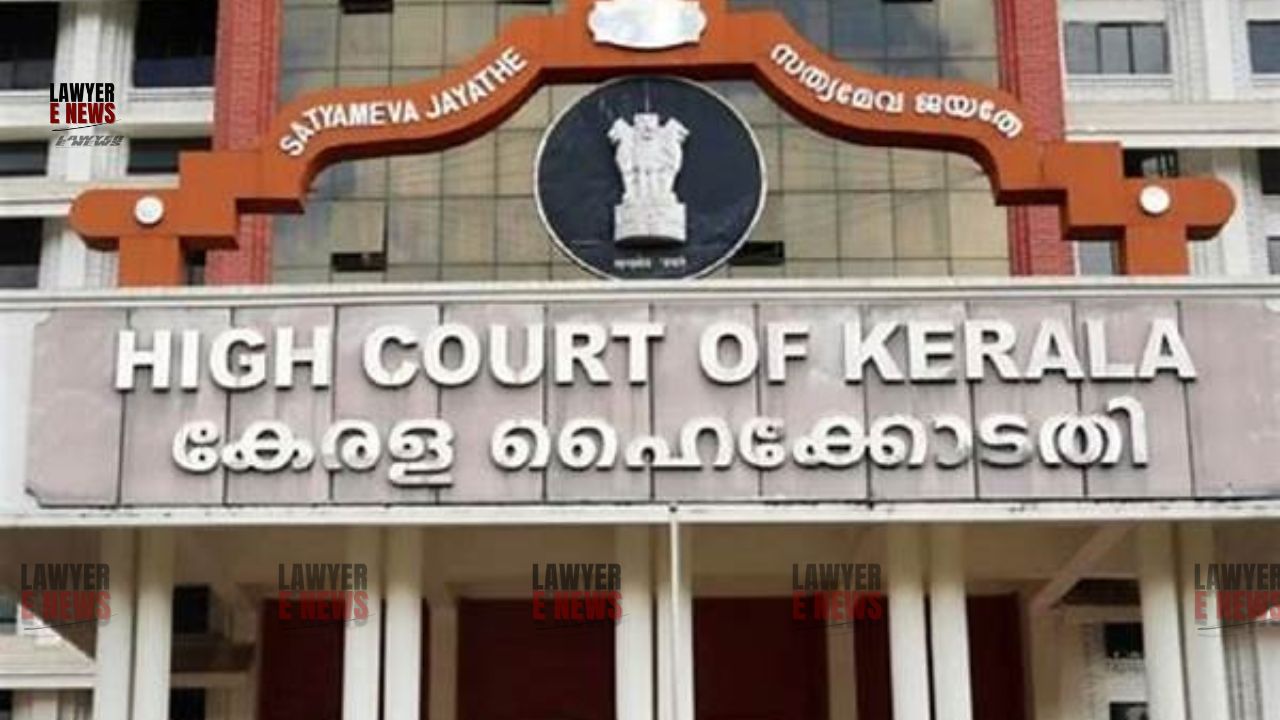
In a significant ruling reaffirming the primacy of Article 21 over statutory embargoes, the Kerala High Court on 24 February 2026 allowed Criminal Appeal and granted bail to the 9th accused in a high-profile NIA case alleging conspiracy to revive the LTTE, narcotics trafficking, and arms procurement.
The Division Bench of Justice Sushrut Arvind Dharmadhikari and Justice P. V. Balakrishnan held that prolonged incarceration of more than four years, coupled with no realistic prospect of early trial, entitles the accused to bail notwithstanding the restrictions under Sections 43-D(5) and 43-D(7) of the Unlawful Activities (Prevention) Act, 1967.
The Court categorically ruled that “the constitutional right of speedy trial will have precedence over the strict provisions such as Sections 43-D(5) and also 43-D(7) of the UA(P) Act.”
“Article 21 Applies To All Persons”: Court Rejects Bar Against Bail For Foreign National
In Satkunam @ Sabesan v. Union of India, the appellant, a Sri Lankan national and the 9th accused in SC No. 4/2021/NIA before the Special Court for NIA Cases, Ernakulam, challenged the order dated 22.04.2024 rejecting his bail plea.
Charged under Sections 120B and 125 IPC, Sections 18, 20, 38, 39 and 40 of the UA(P) Act, Sections 7 and 25(1AA) of the Arms Act, and multiple provisions of the NDPS Act including Section 37, the appellant had been in custody since 05.10.2021.
With 209 witnesses and 446 documents cited, and the trial court reporting that trial may commence only in January 2027 and conclude by December 2027, the High Court was confronted with a crucial constitutional question: can statutory restrictions override the right to speedy trial?
The answer was a firm no.
The prosecution alleged that the appellant, a former LTTE cadre and refugee residing in Chennai, conspired with co-accused to revive the LTTE and wage war against Sri Lanka.
It was alleged that the accused were involved in trafficking 300.323 kilograms of heroin, procuring five Type-56 rifles with 1000 rounds of ammunition, and raising funds through narcotics and arms deals, including hawala and gold transactions. The prosecution further alleged that funds were converted into movable and immovable properties to finance terrorist activities.
The NIA opposed bail, contending that the accusations were prima facie true, that the appellant had criminal antecedents, and that Section 43-D(5) and 43-D(7) of the UA(P) Act barred release, especially since the appellant was a foreign national who had entered India illegally.
The principal issue before the Court was whether prolonged incarceration without likelihood of early trial could justify grant of bail despite statutory bars under Section 43-D(5) and 43-D(7) of the UA(P) Act and Section 37 of the NDPS Act.
The Bench relied extensively on the Supreme Court’s landmark ruling in Union of India v. K.A. Najeeb, wherein it was held:
“It is thus clear to us that the presence of statutory restrictions like S.43-D(5) of UAPA per–se does not oust the ability of Constitutional Courts to grant bail on grounds of violation of Part III of the Constitution… the rigours of such provisions will melt down where there is no likelihood of trial being completed within a reasonable time.”
The High Court further cited Shoma Kanti Sen v. State of Maharashtra, where the Supreme Court held that long incarceration is a valid ground for bail under Article 21 despite statutory restrictions.
In Athar Parwez v. Union of India, the Apex Court reiterated:
“Constitutional right of speedy trial in such circumstances will have precedence over the bar / strict provisions of the statute and cannot be made the sole reason for denial of bail.”
Relying on Javed Gulam Nabi Shaikh v. State of Maharashtra, the Bench observed that where the State cannot ensure speedy trial, it cannot oppose bail merely on the ground of seriousness of the crime.
Significantly, the Court also addressed the prosecution’s argument under Section 43-D(7) UA(P) Act, which places restrictions on granting bail to non-citizens. Referring to Chairman, Railway Board v. Chandrima Das, the Bench held that Article 21 is available “not only to every citizen of the country, but also to a person, who may not be a citizen.”
The Court made it clear that the meaning of “life” under Article 21 cannot be narrowed down and applies equally to foreign nationals.
Observations On Pre-Trial Detention And Proportionality
The Bench reiterated the Supreme Court’s position in Mohd. Muslim Alias Hussain v. State (NCT of Delhi) that even the stringent bar under Section 37 NDPS Act cannot justify indefinite incarceration.
It emphasized that “more the rigour, the quicker the adjudication ought to be.”
With the appellant having undergone more than four years and four months in custody, and trial unlikely to conclude before late 2027, the Court found continued detention disproportionate and excessive.
Bail Conditions And Safeguards
While granting bail, the Court imposed stringent safeguards, including execution of a bond of Rs.1,00,000 with two solvent sureties, surrender of passport, restriction on leaving Kerala without prior permission, mandatory reporting before the local SHO on first and third Saturdays, furnishing of updated residential address and mobile number, prohibition on tampering with evidence, and prohibition on engaging in similar activities.
The prosecution was granted liberty to seek cancellation of bail in case of violation.
The Kerala High Court’s ruling is a powerful reaffirmation that statutory embargoes under anti-terror laws cannot eclipse constitutional guarantees. By harmonising legislative intent with constitutional supremacy, the Court underscored that indefinite pre-trial incarceration cannot become punishment before conviction.
The judgment reinforces a growing judicial trend that “with passage of time, the effect of these statutory provisions will have to be diluted to give way to protect the Constitutional rights.”
The Criminal Appeal was allowed and the order rejecting bail was set aside.
Date of Decision: 24/02/2026